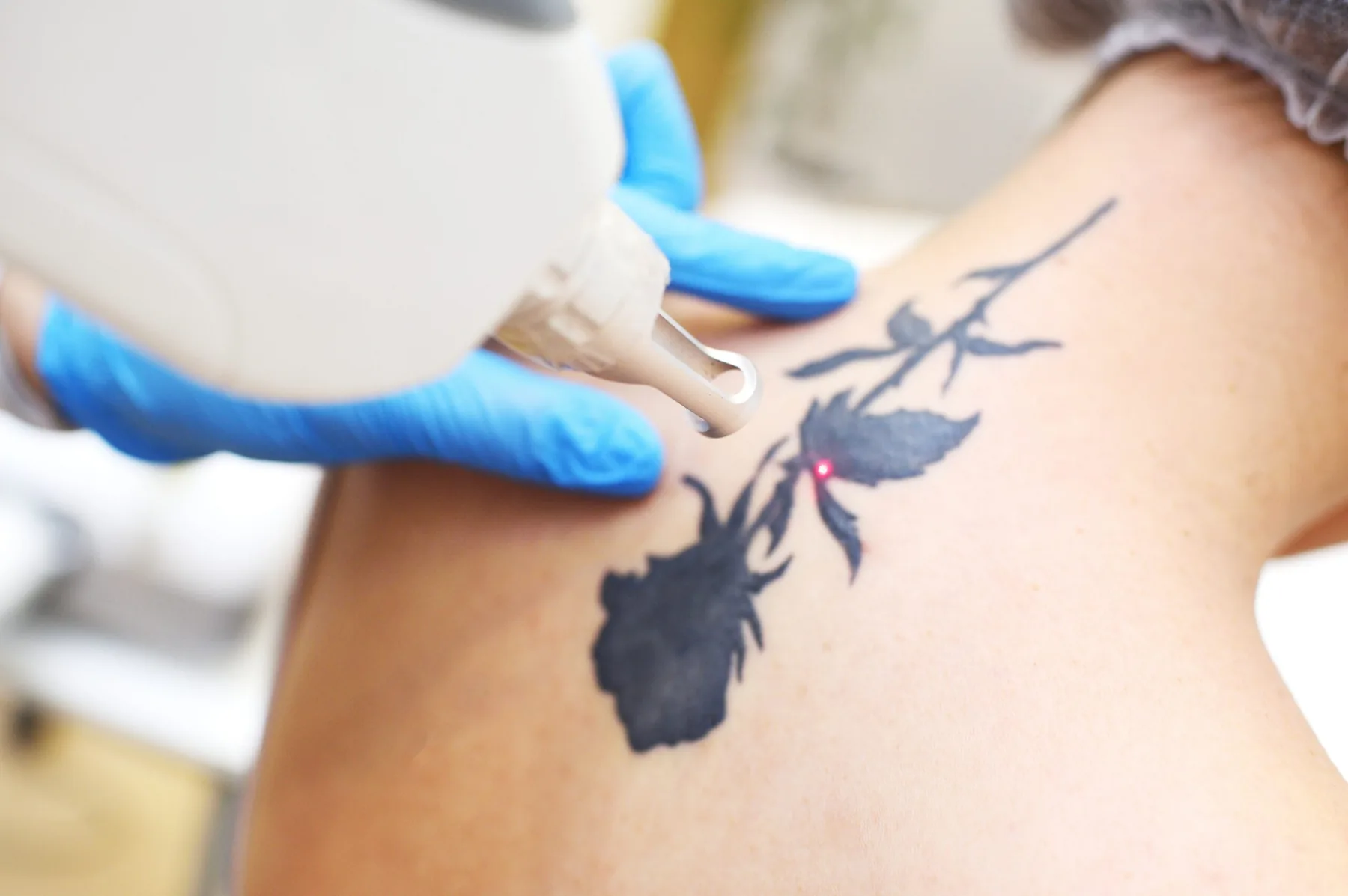
Surgical scar revision NJ uses a physician-calibrated laser to soften and flatten raised, discolored, or thickened surgical scars. At Laser Eraser, a doctor targets excess pigment and stimulates collagen remodeling so the scar blends more evenly with surrounding skin, typically over a series of spaced sessions rather than a single visit.
What Surgical Scar Revision Treats
Every surgical incision heals by laying down new collagen, and the way that collagen organizes determines how a scar ultimately looks. Some scars fade quietly on their own. Others stay raised, turn pink, brown, or purple, tighten as they mature, or thicken into a firm ridge along the incision line. Scars from C-sections, appendectomies, joint and orthopedic surgery, cosmetic procedures, cardiac and abdominal operations, and mole or lesion excisions all fall within what laser scar revision can address.
Laser scar revision is not the same as cutting the scar out. Instead of a second surgery, it uses focused light energy to remodel the tissue you already have. That makes it a lower-risk option for many patients who want their scar less visible, more comfortable, and better matched to the skin around it, without another incision and a new healing timeline.
- Raised or thickened incision lines (hypertrophic scarring)
- Scars that are darker or redder than surrounding skin
- Firm, tight, or restrictive scar bands
- Cosmetic surgery and C-section scars
- Older mature scars that never fully faded
How Laser Treatment Improves a Surgical Scar
A surgical scar has two problems that lasers address in two different ways. The first is color. Scars that read red, brown, or purple carry excess pigment and dilated vessels trapped in the healed tissue. The PicoWay picosecond laser delivers ultra-short pulses of energy that break up that unwanted pigment into particles small enough for your body to clear, so the scar gradually shifts back toward your natural skin tone.
The second problem is texture. Raised, firm, or uneven scars are the result of disorganized collagen. Laser energy creates controlled micro-stimulation in the deeper skin that signals the body to break down that old, stiff collagen and rebuild fresh, better-aligned tissue in its place. This collagen remodeling is what softens the ridge, relaxes tightness, and smooths the surface over time. Because both mechanisms work gradually, the improvement you see is progressive across your treatment plan rather than instant.
Licensed Provider-Led Calibration for Your Scar
No two surgical scars are identical, and the settings that help one scar can harm another. At Laser Eraser, a physician, not a technician or spa aesthetician, evaluates and treats your scar. Founder Dr. Alvaro Alban is a New Jersey emergency-medicine physician who pursued specialized laser training at the Institute for Laser Medicine in Skippack, Pennsylvania, and every treatment at the practice is clinician-administered.
That medical oversight matters most with scar tissue. Your physician assesses how old the scar is, whether it is raised or flat, how much color it holds, your skin tone, and how your body tends to heal, then dials in the laser's energy, spot size, and pacing accordingly. An overly aggressive setting on scar tissue can trigger irritation or new pigment changes; a setting that is too cautious does little. Calibrating between those extremes is a clinical judgment, and it is the core reason a physician-led practice is a genuine advantage over franchise and spa alternatives.
Honest Expectations: Sessions and Results
Surgical scar revision is a process, not a one-visit fix. Most patients need a series of sessions, often in the range of three to six, spaced several weeks apart so the skin can heal and remodel between visits. Older, thicker, or more discolored scars generally need more sessions than newer, flatter ones. Your physician will give you a realistic estimate at your consultation based on your specific scar.
It is also important to be honest about the goal. Laser scar revision aims to make a scar significantly less noticeable, softer, and better blended, not to erase it completely or return the skin to exactly how it looked before surgery. Some scars respond dramatically; others improve more modestly. Because this is a cosmetic treatment, results vary from person to person, and no ethical provider can guarantee a specific outcome. What we can promise is a physician's honest assessment of what is achievable for your scar before you commit.
Safe Across Skin Tones
Concern about laser treatment on richer skin tones is well founded, because the wrong wavelength or energy setting can leave darker or lighter patches on melanin-rich skin. This is exactly where physician calibration protects you. The PicoWay laser's picosecond pulses deliver energy in bursts short enough to fragment pigment while limiting heat spread to the surrounding skin, which lowers the risk of pigment complications when the settings are chosen correctly.
During your consultation, your physician considers your Fitzpatrick skin type and adjusts the treatment plan to your tone, and may recommend a conservative test approach and specific pre- and post-care to further reduce risk. The goal is meaningful improvement of your scar with the safest possible protocol for your individual skin.
Frequently asked questions
Laser treatment can make a surgical scar significantly less visible, flatter, and better blended, but it does not erase a scar entirely. The realistic goal is meaningful improvement in color and texture so the scar draws far less attention. Your physician will give you an honest assessment of what is achievable for your specific scar at your free consultation.
Most patients need a series of sessions, often around three to six, spaced several weeks apart to allow healing and collagen remodeling between visits. Older, thicker, or more discolored scars typically require more sessions than newer, flatter ones. Because every scar is different, your physician provides a personalized estimate after evaluating your scar in person.
Yes, when the laser is properly calibrated by a physician. The PicoWay laser uses ultra-short picosecond pulses that limit heat spread, and your physician tailors the settings to your Fitzpatrick skin type to reduce the risk of pigment changes on melanin-rich skin. A conservative, individualized protocol is central to how we treat every skin tone.
In general, yes. Laser scar revision works on healed scar tissue rather than an open or recent incision, though some newer scars respond very well once healing is complete. The best time to begin varies by procedure and how your skin recovers, so bring details about your surgery to your free consultation and your physician will advise on timing.
Cost depends on the scar's size, age, and the number of sessions your physician recommends, so an accurate quote requires an in-person evaluation. Laser Eraser offers a free consultation and free, no-obligation quotes with no hidden fees. Because scar revision is cosmetic, it is generally not covered by insurance.