Acne scar removal in NJ uses a physician-calibrated PicoWay laser to break up scar tissue, stimulate fresh collagen, and target the brown or red discoloration acne leaves behind. At Laser Eraser, a licensed medical provider performs every session, so treatment is tuned to your specific scars and skin tone. Most people need a series of visits.
What Acne Scarring Actually Is
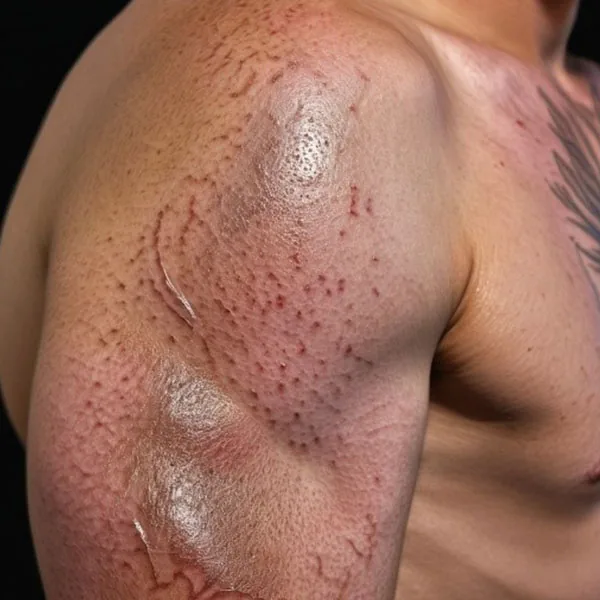
Acne scars are not one problem but several. When a breakout damages the deeper layers of skin, the body's repair process can go two ways: it either overproduces or underproduces collagen. Underproduction leaves the depressed, textured marks people call "pitted" or atrophic scars: icepick, boxcar, and rolling scars. Overproduction can leave a raised scar. Separately, inflammation often leaves flat brown or reddish-purple marks known as post-inflammatory hyperpigmentation and erythema, which are technically discoloration rather than true scars but read as scarring in the mirror.
Understanding which type you have matters, because the strategy differs. A rolling scar responds to remodeling the collagen underneath it, while a brown post-acne mark responds to breaking up trapped pigment. Most people have a mix, which is exactly why a one-size-fits-all setting rarely works. At Laser Eraser, the first step is a free consultation where a physician looks at your skin in person and identifies what you are dealing with before recommending anything.
How Laser Treatment Helps
The PicoWay picosecond laser delivers energy in ultra-short pulses measured in trillionths of a second. That speed lets it work through two mechanisms at once. First, it creates a controlled response beneath the skin's surface that signals the body to build new collagen and elastin, gradually filling and softening depressed scars from below. Second, the same laser fractures excess pigment in post-acne brown marks into tiny particles your body can clear naturally, evening out tone.
Because the pulses are so short, much of the work happens with less heat spread to surrounding tissue than older, longer-pulse lasers. For acne scarring that means the goal is genuine improvement in texture and tone across a series of visits, not an overnight erasure. Skin remodeling is a biological process that unfolds over weeks between sessions, which is why patience and a planned series produce the best-looking results.
- Collagen remodeling to lift and smooth pitted, atrophic scars over time
- Pigment targeting to fade brown post-inflammatory marks
- Short picosecond pulses designed to limit heat to surrounding skin
- Progressive, cumulative improvement rather than a single dramatic session
Why a Licensed Provider Calibrates Every Session
Acne-scarred skin is often still reactive, and the exact same laser can either help or aggravate depending on how it is set. At Laser Eraser a doctor, not a technician, evaluates your scars and dials in the parameters for each visit. Laser Eraser was founded by three physicians — Dr. Alvaro Alban, Dr. Len Hobson, and Dr. Dominic Ruocco. Dr. Alban, an emergency-medicine physician in New Jersey, pursued specialized laser training at the Institute for Laser Medicine in Skippack, Pennsylvania. Every treatment at the practice is clinician-administered.
That medical oversight is a real differentiator from spa or franchise settings. A physician can read how your skin is responding between sessions, adjust intensity up or down, recognize when to pause, and manage the expectations honestly. It also means that if your acne is still active, the doctor can talk through timing so you are treating scars, not chasing new breakouts.
Honest Session Expectations
Acne scar improvement is a series, not a single appointment. Many people see meaningful change over roughly three to six sessions, though the exact number depends on how deep your scars are, whether the main issue is texture or pigment, and how your individual skin remodels collagen. Deeper icepick and boxcar scars generally take longer than surface discoloration.
Sessions are typically spaced several weeks apart to give your skin time to rebuild between visits. Some mild redness or swelling right after treatment is normal and usually settles quickly. It is important to be clear-eyed: laser treatment can substantially soften and blur acne scars and even out tone, but it does not promise to erase every scar completely. Your physician will give you a realistic picture of what your specific skin can achieve at your consultation.
Safety Across Skin Tones
Skin tone is a central consideration in acne scar treatment, because richer, more melanated skin can be more prone to pigment changes if a laser is used carelessly. This is precisely where physician calibration earns its keep. The PicoWay platform is customized to your skin type, and a doctor sets conservative, appropriate parameters and can build in test spots when caution is warranted.
Rather than promising that laser is right for every single case, Laser Eraser's approach is to assess your skin honestly first. For some patients that means a carefully staged plan; for others the physician may recommend a different pace. The free consultation exists so that decision is made in person, based on your actual skin, before any treatment begins.
Frequently asked questions
Laser treatment can significantly soften and blur acne scars and even out post-acne discoloration, but it does not guarantee complete erasure of every scar. Depressed scars improve as new collagen forms, while brown marks fade as pigment is cleared. Results build over a series of sessions, and a physician will give you a realistic estimate at your free consultation.
Many people see meaningful improvement over roughly three to six sessions, though the exact number depends on scar depth, whether your main concern is texture or pigment, and how your skin remodels collagen. Deeper icepick and boxcar scars generally take longer than surface discoloration. Your physician will map out a realistic plan after examining your skin in person.
Safety in richer skin tones depends heavily on how the laser is calibrated, which is why a physician sets the parameters for every session at Laser Eraser. The PicoWay laser is customized to your skin type, and the doctor can use conservative settings and test spots when appropriate. The free consultation lets us assess your specific skin honestly before any treatment.
Most people find the sensation manageable and describe treatments as quick. You may feel a brief snapping or warm sensation during the laser pulses, and some mild redness or swelling afterward is normal and usually settles quickly. Because a physician oversees each session, comfort and appropriate settings are part of how your treatment is planned.
It depends, which is why a physician evaluation matters. Treating scars is most effective once acne is reasonably controlled, so you are improving existing marks rather than chasing new ones. At your free consultation, the doctor will review your skin and advise on the right timing so your treatment plan actually holds its results.