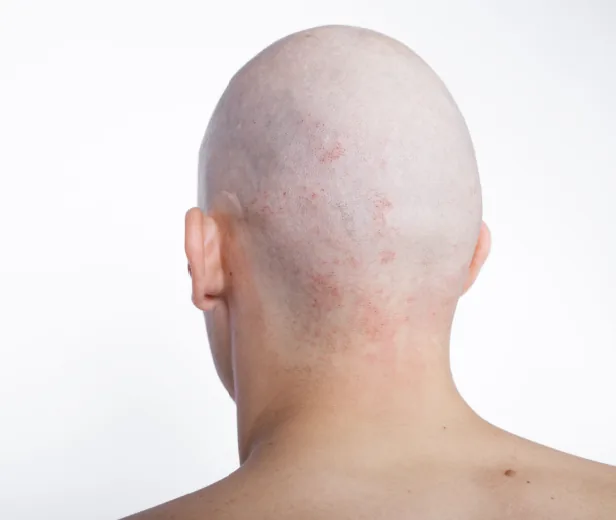
Yes, scalp micropigmentation can be removed. A tattoo removal laser breaks the tiny pigment dots into particles your body clears, usually over a few sessions spaced weeks apart. At Laser Eraser, a licensed provider uses the PicoWay picosecond laser to fully remove SMP or lighten it for a redo, at our Clark and Paramus, NJ offices.
What Is SMP Removal?
Scalp micropigmentation, or SMP, is a cosmetic tattoo. A practitioner places thousands of tiny pigment dots in the scalp to mimic closely shaved hair follicles, disguise thinning or camouflage scars. The International Society of Hair Restoration Surgery (ISHRS) puts it plainly: any pigment applied to the skin with a needle is a tattoo. That is why the reliable way to remove or significantly fade SMP is with a laser that targets the pigment itself.
People come to us for SMP removal in NJ for a few common reasons. The hairline was placed too low or too straight and now looks unnatural. The dots were too large, too dense or too dark, so instead of reading as stubble they read as a solid patch. The pigment shifted to a blue, green or reddish tone. Or you simply changed your mind and want your natural scalp back. Whatever brought you here, SMP can be laser-treated, and we will walk you through what is realistic for your case.
Why Scalp Micropigmentation Goes Wrong
Good SMP is shallow, dotted and gray. The ISHRS describes needle depths of usually about 0.5 mm, a carbon-based grayscale pigment, and machines and needles made specifically for scalp work. The scalp has more oil glands than anywhere else on the body, so pigment placed too deep can spread and look blotchy. When conventional tattoo ink is used, the ISHRS notes the color can turn from black or brown to a shade no human head has, like blue or orange.
A 2025 study from Korea looked at 120 people who needed corrective treatment after unsatisfactory SMP. Most of them, 89.2 percent, had their original SMP done at a tattoo or beauty facility. Their corrections included laser tattoo removal followed by new SMP, laser removal alone, and hair transplant surgery. The authors concluded that satisfactory results can be achieved through the right revision, done by experienced medical professionals.
How the PicoWay Laser Removes Scalp Micropigmentation
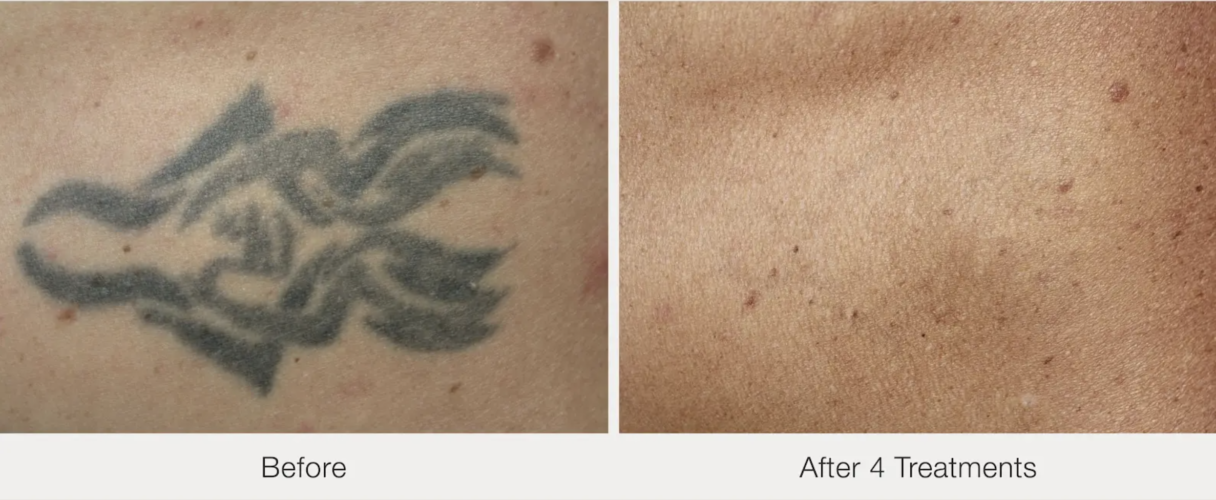
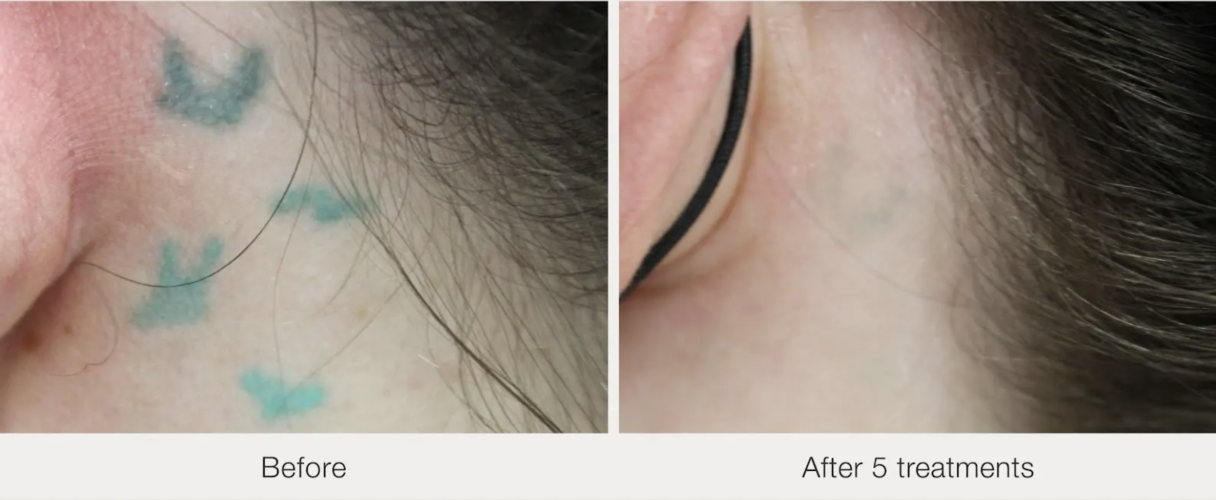
Laser Eraser removes SMP with the PicoWay picosecond laser, the same technology we use for body tattoos. Each pulse lasts trillionths of a second and works mainly through a fast photomechanical effect: it strikes each pigment dot so quickly that the dot shatters into tiny particles. Your immune and lymphatic systems then carry those particles away over the weeks after each visit.
The research on picosecond SMP removal is small but encouraging. A 2020 case series in Lasers in Surgery and Medicine treated four patients with unwanted SMP using a 1064 nm picosecond Nd:YAG laser, and all four cleared within 1 to 3 sessions with no unexpected side effects. PicoWay's 1064 nm wavelength is FDA-cleared for all Fitzpatrick skin types (record K220853). Four patients is not a guarantee, so treat these numbers as a sign of what is possible, not a forecast for you.
SMP still needs physician judgment. The dots are small and shallow, the pigment used may not be what you were told, and the area often includes existing hair. A 2026 case report described SMP that changed color during laser treatment before it was eventually fully removed. Our providers set every session for your skin type, the pigment's color and depth, and your goal.
Full SMP Removal or a Partial Fade?
You do not have to commit to complete removal. Many clients want to soften an overly dense or dark result, correct a heavy hairline, or lighten the scalp so a skilled SMP artist can redo the work more naturally. Others want every dot gone.
There is one honest caveat. The ISHRS warns that removing small selected patches of SMP is often suboptimal, because a cleared spot will not match the older dots around it, and new SMP in one area always looks crisper and darker than the rest. If only one area bothers you, your provider will talk through whether fading that zone, fading everything evenly, or clearing the whole area and starting fresh is most likely to look natural.
| Your goal | What we usually plan | Trade-off to know |
|---|---|---|
| Erase SMP completely | Treat every pigmented area until the dots clear | Most sessions; results vary with depth and pigment |
| Redo SMP with a new artist | Lighten the whole area evenly to give a clean canvas | Fewer sessions than full removal; you will need the new artist after |
| Fix only a low or harsh hairline | Fade the hairline zone, then reassess | Faded dots may not match the rest, so a wider fade can look better |
| Dots look too dark or blotchy | Even lightening across the area | Blurred dots from deep pigment can take longer |
| Pigment turned blue or gray | Test the response, then a full plan | Color can change during treatment before it clears |
Will SMP Removal Affect My Hair?
Hair is a fair worry on the scalp. The ISHRS reports that laser removal of SMP usually leaves hair growth undisturbed, and contrasts it with removing a traditional tattoo from the scalp, which it says risks hair loss. It also notes that SMP pigment is meant to sit very shallow, while conventional tattoo ink on the scalp is generally placed deeper.
If you still have hair in the treated area, tell us at your consultation, especially if you are planning or have had a hair transplant. Your provider will explain how the session is set up around your hair and what to watch for afterward.
What to Expect During and After Treatment
How long a session takes depends on how much of the scalp is treated. The scalp is a sensitive area and sensation varies from person to person. The FDA compares laser tattoo removal to a thin rubber band snapping against the skin, and Laser Eraser uses topical numbing and cooling to keep you comfortable. We will talk you through exactly what to expect before we begin.
Afterward the scalp often looks pink or slightly swollen and feels tender for a short time, like a mild sunburn. In the 2020 case series, aftercare was a simple ointment twice a day for 3 to 7 days, with a check-up 3 to 4 weeks later. The American Academy of Dermatology (AAD) advises protecting treated skin from the sun for 3 months, and the ISHRS stresses sun protection for the head. A hat that blocks light works better than hoping sunscreen stays on a shaved scalp.
Because your body needs time to clear the shattered pigment, sessions are spaced several weeks apart. You will usually see the dots lighten gradually from one visit to the next rather than all at once. Our day-by-day aftercare guide covers healing and the warning signs that mean you should call us.
Honest Expectations: How Many SMP Removal Sessions?
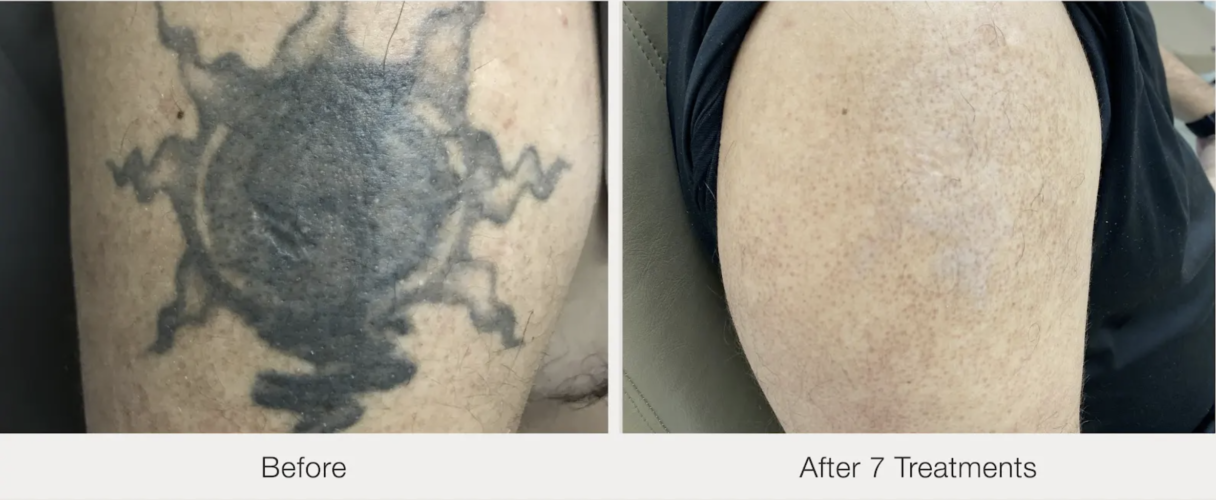
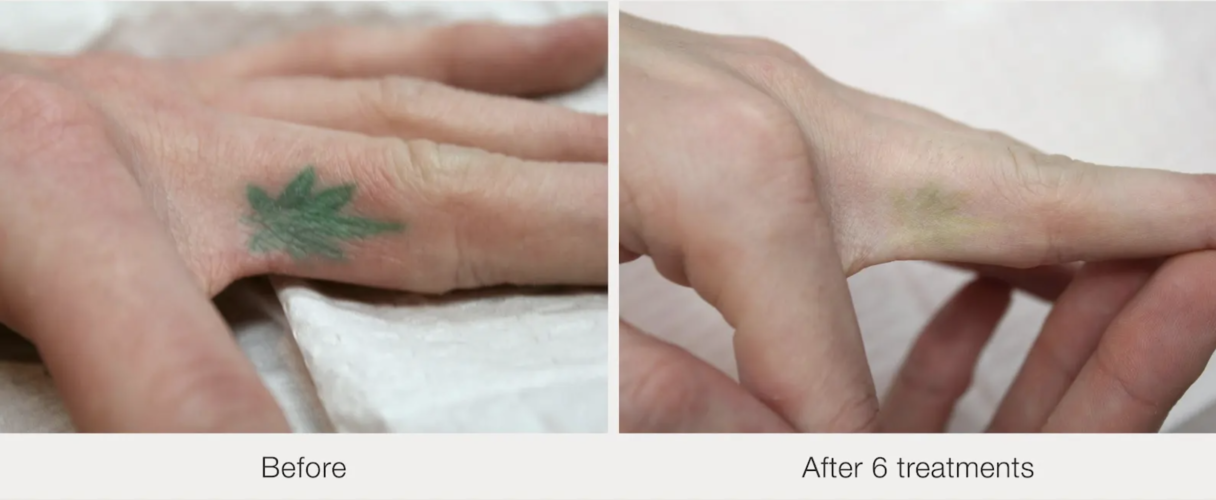
SMP removal is a medical process that usually takes more than one visit. The number depends on how densely the pigment was applied, how deep and large the dots are, which pigment was used, and your skin type and healing. The ISHRS notes that some SMP can clear in as little as one session, while pigment that was applied repeatedly or placed deeper needs more. Denser, darker or more recent work generally needs more sessions than lighter, older or sparser work.
No reputable provider can promise that every case reaches complete clearance in a fixed number of visits. What we can promise is honesty. At your free consultation, a provider looks at your scalp in person, explains what is realistic for your goal, whether that is full removal or a partial correction, and gives you a clear plan before you decide. There is no obligation to book.
Looking for SMP in New Jersey? Read This First
Many people find this page while researching new scalp micropigmentation in New Jersey. Laser Eraser removes and fades SMP; we do not apply it. If you are choosing an SMP practitioner, a few checks now can save you a correction later.
In New Jersey, the Department of Health says scalp micropigmentation falls under the same requirements as general permanent cosmetics in its body art rules (N.J.A.C. 8:27). Practitioners must complete a 100-hour basic permanent cosmetics course, and body art establishments are licensed and inspected by the local health department. The ISHRS adds that there is no international licensing body for SMP, so look at a practitioner's training and body of work.
- Ask whether the shop is licensed by its local health department, as New Jersey requires.
- Ask what pigment is used. The ISHRS prefers a carbon-only grayscale SMP pigment over standard tattoo ink.
- Look for consistent photos with the same lighting and angles, or see results in person.
- Ask how a low or harsh hairline would be corrected if you do not like it.
- If you want an old SMP lightened before a redo, book a removal consultation first.
Why Physician-Led SMP Removal Matters
Removing pigment from the scalp is a medical procedure, and at Laser Eraser it is treated like one. The practice is physician-led and clinician-administered, founded by three physicians: Dr. Alvaro Alban, Dr. Len Hobson and Dr. Dominic Ruocco. Dr. Alban, an emergency-medicine physician in New Jersey, trained at the Institute for Laser Medicine in Skippack, Pennsylvania. Every treatment session is performed by a licensed medical provider, and you can check each provider's New Jersey license on our team page.
That matters with SMP: the scalp is delicate, pigments can react in unexpected ways, and protecting the skin and any existing hair takes clinical judgment. The FDA clears tattoo removal lasers for use by, or under the supervision of, a health care professional. Having a physician-led team assess your scalp, choose the settings and oversee your safety is a different standard from a setting where a technician runs the device alone. You can read what patients say about their visits on our reviews page.
SMP Removal Cost and Financing
Not knowing the final cost is one of the most stressful parts of any removal. Laser Eraser uses flat-rate Complete Removal Packages: one price that covers the sessions you need, rather than charging visit by visit. Because scalp areas and goals vary, and some clients want a partial correction rather than full removal, your SMP case is quoted at your free consultation so the plan fits what you actually need.
Financing is available through Cherry, our primary financing partner, and you can prequalify with a soft credit check. Cosmetic pigment removal is generally not covered by insurance, so the free consult is where you get real answers: an in-person look at your scalp, a session estimate and a clear price with no obligation to book.
- Flat-rate Complete Removal Packages priced by size
- One price covers your planned sessions, no per-visit surprises
- Financing through Cherry, with no hard credit pull to prequalify
- Partial-fade corrections quoted individually at your free consult
Two New Jersey Locations for SMP Removal
Laser Eraser treats SMP removal patients at two New Jersey offices: Clark at 77 Central Ave, Suite 2, in Union County, and Paramus at 193 NJ-17, Suite C, in Bergen County. Free consultations are available at both, with same-day visits when availability allows. Book online or call, and whether you want your scalp micropigmentation completely erased or softened for a redo, we will give you a straight answer about your options.
Complete Removal Packages by Size
8–12 sessions · every session includedOne flat price covers all the sessions your tattoo needs — no per-visit billing. Every tattoo is priced individually, so we give you an exact quote free at your consultation.
Every tattoo is priced individually. Book a free consultation for your exact quote — no obligation.
Get Your Free QuoteFrequently asked questions
Yes. SMP is a cosmetic tattoo, and its pigment can be broken down with a laser. At Laser Eraser, our PicoWay picosecond laser shatters the scalp pigment so your body clears it over a series of clinician-administered sessions. We can fully remove it or lighten it, depending on your goal.
Often, yes. In a small 2020 case series, all four patients cleared their SMP within 1 to 3 picosecond laser sessions, and the ISHRS says some SMP clears in a single session. Pigment that was placed deeper or applied many times can take longer, and no provider can guarantee complete clearance, so you get a realistic estimate at your consultation.
Yes. Many clients want a partial fade, softening dots that are too dense or dark, correcting a heavy hairline, or lightening the scalp so an artist can redo the SMP more naturally. Fading one small patch can leave it mismatched with the dots around it, so we plan the fade around how the whole scalp will look.
It varies. The number depends on how dense, dark, deep and recent the pigment is, plus your skin type and healing. SMP is often shallower than a body tattoo, and published cases have cleared in 1 to 3 sessions, but pigment can be less predictable than standard tattoo ink, so we give you a personalized estimate in person at your free consultation.
The scalp is sensitive, and sensation varies, but sessions are quick and we use topical numbing and cooling. The ISHRS reports that laser removal of SMP usually leaves hair growth undisturbed. A provider chooses settings to target pigment while protecting your skin, and we give you clear aftercare for the tender days afterward.
SMP fades over time. The ISHRS says well-placed SMP lasts about 5 to 10 years, that sun exposure fades it faster, and that some people have yearly touch-ups. Fading is gradual and uneven, which is one reason people seek removal or a lighten-and-redo instead of waiting for it to disappear.
Yes. Laser Eraser is physician-led and clinician-administered, founded by three physicians: Dr. Alvaro Alban, Dr. Len Hobson and Dr. Dominic Ruocco. Every treatment session is performed by a licensed medical provider. Scalp pigment removal takes clinical judgment to protect delicate skin and existing hair.
We use flat-rate Complete Removal Packages, so one price covers your planned sessions, and financing is available through Cherry. Because treatment areas and goals differ, and partial corrections are common, your exact price is quoted at a free, no-obligation consultation.
Sources
- International Society of Hair Restoration Surgery: Scalp Micropigmentation (SMP)
- Wu, Successful treatment of scalp micropigmentation with 1064 nm picosecond Nd:YAG laser, Lasers Surg Med 2020
- Park et al., Revision for unsatisfactory outcomes of scalp micropigmentation, Int J Dermatol 2025
- Hobayan and Shipp, Color change followed by complete removal of scalp micropigmentation with nanosecond Nd:YAG laser, Dermatol Surg 2026
- FDA: Tattoo Removal: Options and Results
- American Academy of Dermatology: Tattoo removal: Lasers outshine other methods
- FDA 510(k) record K220853: PicoWay Laser System
- New Jersey Department of Health: Body Art (N.J.A.C. 8:27)