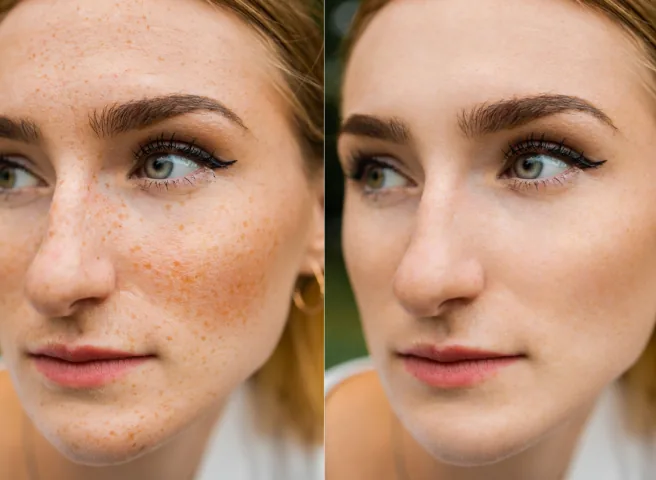
Hyperpigmentation treatment in NJ uses the PicoWay picosecond laser to break up excess melanin so the body can clear it, evening out dark patches over a series of sessions. At Laser Eraser, a licensed medical provider calibrates each pulse to your Fitzpatrick skin type, and most patients see meaningful fading across roughly 3 to 6 visits.
What Hyperpigmentation Is — and Why It Lingers
Hyperpigmentation is a catch-all for areas of skin that turn darker than the surrounding tone because pigment-producing cells overproduce melanin. It shows up as sun spots and age spots after years of UV exposure, as post-inflammatory hyperpigmentation (PIH) left behind by acne, ingrown hairs, or minor injuries, and as flat brown patches from friction or hormonal shifts. The color sits at different depths — some pigment is shallow in the epidermis, some drifts deeper into the dermis — which is a big reason topical creams alone often stall.
Left untreated, many of these marks fade slowly or not at all, and inconsistent sun exposure can deepen them again. The goal of in-office treatment isn't to bleach the skin but to physically fragment the excess pigment so your own immune system can carry it away, allowing surrounding tone to reassert itself. Because pigment behaves differently by depth and by skin type, matching the right energy to the right target matters more here than in almost any other cosmetic concern.
How the PicoWay® Laser Targets Pigment
Laser Eraser uses the PicoWay® picosecond laser — the same technology behind our tattoo removal work, and for a related reason: both tattoo ink and excess melanin are dense clusters of pigment the body struggles to clear on its own. PicoWay delivers ultra-short pulses measured in trillionths of a second. That speed produces a photoacoustic effect, shattering pigment into microscopic particles through pressure rather than sustained heat.
Less heat in the tissue means the surrounding skin is spared, which is what makes picosecond energy well suited to pigment concerns where thermal injury could otherwise trigger more darkening. Once the melanin is fragmented, your lymphatic system gradually flushes the particles away over the weeks between sessions, and the patch lightens step by step. On appropriate scar and textural concerns, the same controlled energy also encourages gentle collagen remodeling in the treated area, supporting smoother, more even-looking skin over time.
- Picosecond pulses fragment melanin by pressure, not prolonged heat
- Fragmented pigment is cleared naturally by the body between visits
- Lower thermal load helps protect surrounding skin from new darkening
- One core platform, physician-tuned per concern and skin tone
Licensed Provider-Led Calibration for Your Skin
Every treatment at Laser Eraser is performed by a licensed medical provider, not delegated to a spa technician. Our co-founder Dr. Alvaro Alban is a New Jersey emergency-medicine physician who pursued specialized laser training at the Institute for Laser Medicine in Skippack, Pennsylvania. That medical oversight is the difference-maker with pigment: the same setting that clears a sun spot on lighter skin can be too aggressive on richer skin tones, where excess energy risks the very thing you're trying to fix.
Before your first pulse, we assess where your pigment sits, what caused it, and where you fall on the Fitzpatrick scale, then dial wavelength, spot size, and energy to that reading. We often begin conservatively and reassess your response, adjusting from session to session rather than running a one-size protocol. Because hyperpigmentation can mimic or overlap with conditions that need a different approach, a physician evaluation also helps make sure a laser is genuinely the right tool for your skin before we begin.
Honest Session Expectations
There's no single-visit shortcut with pigment. Most people need roughly 3 to 6 sessions spaced several weeks apart, because the body needs time to clear fragmented melanin and because we deliberately work in measured steps to protect your skin. Superficial sun spots often respond faster; deeper or hormonally driven pigment tends to take longer and may need periodic maintenance, since the underlying triggers don't disappear.
Immediately after a session, treated spots may look slightly darker or develop a fine crust before they flake and fade — a normal part of the process. Daily broad-spectrum sunscreen is non-negotiable during and after your course of care, because fresh UV exposure is the fastest way to undo progress or invite new pigment. We set realistic goals at your free consultation and won't promise complete erasure for every case; what we do promise is honest, measured, physician-guided care and clear expectations before you commit.
Safe Across a Range of Skin Tones
Deeper skin tones have historically been underserved by laser pigment treatment because the wrong device or the wrong setting can spark post-inflammatory hyperpigmentation — a darkening rebound. The PicoWay platform's short pulse duration and lower thermal footprint give us a wider safety margin, and physician calibration is what turns that potential into a genuinely tailored plan for your Fitzpatrick type.
We take a cautious-first stance: conservative starting energy, close monitoring of how your skin responds, and adjustments made in the room rather than assumed in advance. If your skin history or the nature of your pigment suggests a laser isn't the best path, we'll tell you that directly at your consultation. The whole point of a doctor-led practice is judgment, not just a machine.
Frequently asked questions
Most patients need roughly 3 to 6 PicoWay sessions spaced several weeks apart. Superficial sun spots often clear faster, while deeper or hormonally driven pigment can take longer and may need occasional maintenance. Your physician sets a realistic count at your free consultation after evaluating where your pigment sits and how your skin responds.
Yes, when it's done carefully. The PicoWay laser's ultra-short pulses deliver less heat, giving richer skin tones a wider safety margin against rebound darkening. Just as important, a physician calibrates energy to your Fitzpatrick type and starts conservatively, adjusting each visit — which is exactly why doctor-led treatment matters for deeper skin.
Most patients describe brief snapping or tingling sensations rather than significant pain, and sessions are quick. Because the PicoWay pulses are so short, discomfort is limited and manageable for the small areas typical of pigment work. Your physician can discuss comfort measures at your consultation and will tailor the approach to your tolerance.
Treated pigment that's cleared is gone, but the triggers behind it aren't. New sun exposure, hormonal shifts, or fresh breakouts can create new dark spots over time. Daily broad-spectrum sunscreen dramatically protects your results, and some patients schedule occasional maintenance sessions to keep tone even, especially with hormonally driven patterns.
Creams and peels work mainly at the skin's surface, so they often stall on pigment that sits deeper. The PicoWay laser reaches pigment topical products can't and fragments it physically for the body to clear. Because it's a medical laser tuned by a physician, it also lets us target stubborn or deeper marks more precisely.
No — laser pigment and cosmetic scar treatment are considered elective and generally aren't covered by insurance. That's why we offer a free, no-obligation consultation to assess your skin and outline a plan, along with monthly payment options so you can spread the cost without hidden fees.