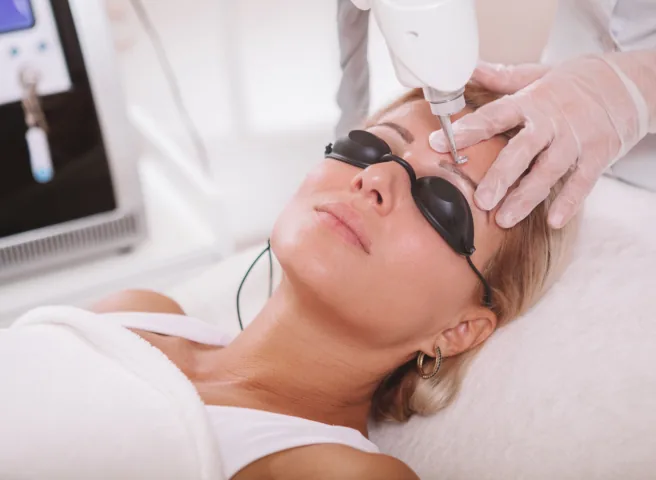
Eyebrow tattoo removal uses a laser to break microblading and permanent-makeup pigment into particles your body clears over several sessions. Brow inks can shift color, so at Laser Eraser a licensed provider checks your pigment first, can test a small spot, and shields your eyes at every visit in our Clark and Paramus, NJ offices.
Why Permanent Brows Stop Looking Right
Microblading and permanent-makeup brows are designed to last, but styles change, pigments migrate, and what looked crisp two years ago can fade to a warm tone, blur outside its original shape, or sit too dark and too low for the brow you want today. If you are searching for eyebrow tattoo removal in NJ, you are usually not starting from zero. You are trying to correct or clear work someone else already put on your face.
The FDA describes both problems in its fact sheet on permanent makeup: pigment can migrate beyond where it was placed and look blurred, and makeup that looked flattering at first may later clash with changing skin tones and facial contours. Neither means anything went wrong with your skin. It means the brow no longer fits your face.
That makes brow removal different from removing a tattoo on an arm. The area is small, it frames your whole face, and it sits just above your eyes. This is why a physician-led, test-first approach matters more here than almost anywhere else, and why we treat cosmetic brow removal as a medical procedure rather than a quick add-on.
How PicoWay Removes Microblading and Powder-Brow Ink
Laser Eraser uses the PicoWay picosecond laser to remove eyebrow and permanent-makeup pigment. Each pulse lasts trillionths of a second and hits the pigment so fast that it shatters into tiny particles. The FDA explains the next step simply: the body's immune system clears those particles over time, so the brow lightens gradually in the weeks after each visit.
Speed matters on the face. A 2023 review of 11 studies on lasers for eyebrow microblading and cosmetic tattoo pigment concluded that picosecond Nd:YAG lasers were quicker and more effective than older Q-switched Nd:YAG lasers for eyebrow tattoos. PicoWay's FDA record (K220853) clears its 1064 nm wavelength for all Fitzpatrick skin types and its 532 nm wavelength for skin types I to III, which is one reason settings are chosen for your skin and not copied from the last patient.
Permanent-makeup inks are not standardized the way traditional black tattoo ink often is, so the correct settings for one person can be wrong for another. Every session is performed by a licensed medical provider who adjusts the plan to your pigment and your skin.
Can Eyebrow Tattoo Removal Make Brows Darker or Change Color?
It can, and a good provider tells you before treatment, not after. The FDA says flesh-colored tattoos, white ink and permanent makeup are particularly tricky because the pigment can oxidize, or turn black, when treated by laser, and that oxidized pigment is no longer treatable by laser. A clinical review explains why brows are prone to it: cosmetic inks often contain red, brown, flesh and white pigments made with iron oxides and titanium dioxide, which may turn black after Q-switched laser treatment. This is called paradoxical darkening.
Picosecond lasers lower the odds but do not remove them. The same 2023 review found paradoxical darkening less common with picosecond lasers than with Q-switched lasers. A second effect surprises people more often: hidden colors. In a five-year chart review of 76 patients treated for eyeliner and eyebrow tattoos, 26.3 percent of cases showed colors after the first treatment that were not visible before, such as red, orange, yellow, green or blue. A 2025 case series described ten women whose eyebrow tattoos turned red, orange or yellow within days of a first laser session; the six who were treated further improved significantly.
This is why a physician looks at your pigment before anything else, and why our providers can build in a small test spot when caution is warranted. Clinical reviews recommend considering test spots for cosmetic tattoos where darkening is likely. A test spot shows how your ink behaves before your whole brow is treated.
What Your Brows Look Like Now, and What It May Mean
No one can predict exactly how a brow tattoo will respond from a photo, but what you see in the mirror gives useful clues. This table shows what a provider weighs at your consultation. It is a starting point for that conversation, not a diagnosis.
| What you see now | What it may mean | What we check first |
|---|---|---|
| Gray, black or dark brown strokes | Dark pigment; the FDA lists black and dark blue as the easiest colors to remove | Depth, density and your skin type |
| Warm red, orange or rust-toned brows | Often iron oxide pigments, which can darken when lasered | Whether a test spot should come first |
| Pale, peach or nude correction over old brows | Flesh and white inks can contain titanium dioxide, which may turn black | Test spot and a slower plan |
| Faded brows with patchy color | Hidden colors may appear after the first session | Photos at each visit to track changes |
| Brows that were corrected or redone | Several pigments layered together, which reviews call typical of permanent makeup | What was used before, and when |
| A raised, itchy or swollen brow tattoo | Possibly a reaction to the pigment, which needs a medical look first | Whether laser is appropriate at all |
Eye Safety and Your Brow Hairs During Treatment
Your brows sit right above your eyes, so eye protection is part of every session at Laser Eraser. A clinical review of laser tattoo removal sets the standard: patients wear protective goggles or external metal eye shields, and when the area treated is on the eyelid or near the eye socket, metal shields placed over the eye itself are used. The provider and anyone else in the room wear goggles made for the laser's wavelength.
Many people also ask whether they will lose their natural brow hair. The 76-patient chart review above reported no documented cases of hair loss (hypotrichosis), scarring or burns, and its authors advise planning for both eye and hair protection. That is reassuring, but it is one practice's records, so ask your provider how your brow hairs will be protected and what they have seen in skin like yours.
Laser vs Saline and Other Ways to Remove Eyebrow Tattoos
Laser is the most common method health care professionals use to remove or lighten tattoos, according to the FDA. Saline removal, offered by many brow studios, works differently: the skin is opened with a tattoo needle and a salt solution is used to lift pigment as the area scabs and heals. We compare the two in detail on our laser vs saline removal page.
Some clinicians use ablative lasers such as carbon dioxide (CO2) for cosmetic tattoos, because these lasers vaporize the skin layer rather than targeting the ink, so the ink does not darken. The FDA notes that methods which wound the skin above the pigment give highly variable results with a greater potential for scarring. Laser Eraser treats with PicoWay, and your provider will tell you honestly if another approach would suit your brows better.
Home methods are the ones to avoid. The FDA has not approved any tattoo removal cream or do-it-yourself kit, says these products cannot reach pigment in the deeper skin, and warns they may cause rashes, burns or scars. The American Academy of Dermatology (AAD) warns that rubbing salt into the skin at home is extremely painful and can lead to a serious infection and a scar. On the face, that risk is not worth taking.
How Many Sessions Eyebrow Tattoo Removal Takes
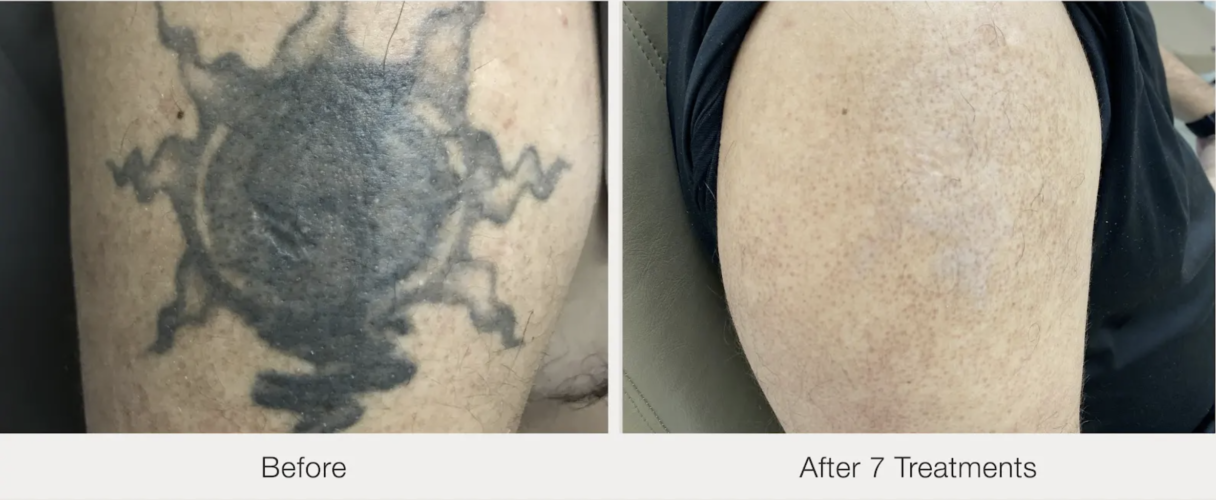
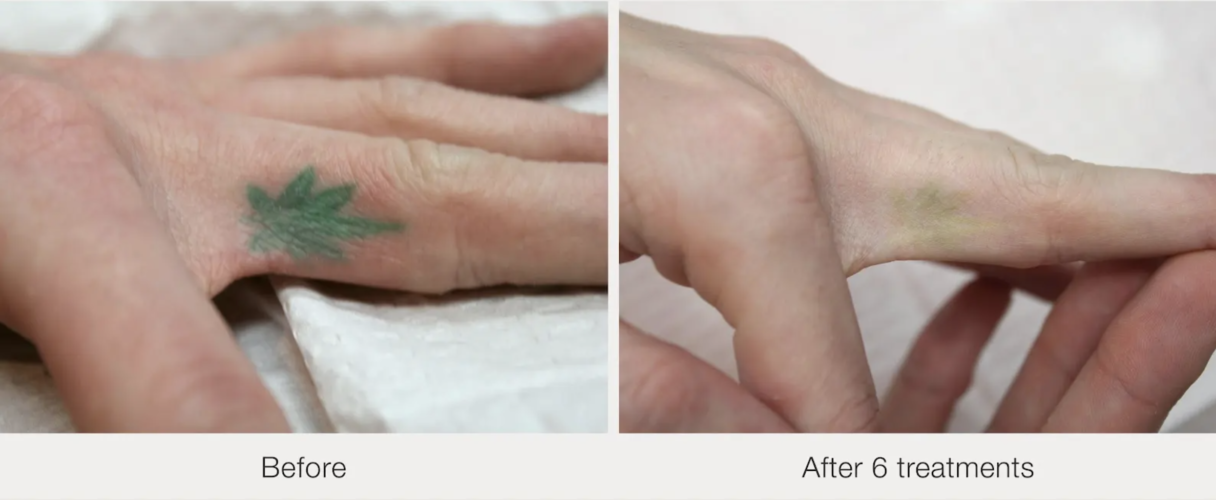
Removing eyebrow or microblading pigment usually takes several sessions spaced weeks apart, so your body has time to clear the shattered ink between visits. The FDA says the number of treatments depends on factors such as the tattoo's size and colors, and that complete removal can take many treatments and in some cases may not be possible. Brows are small, but their ink can be dense, layered or mixed.
For a rough sense of scale, the New York chart review reported an average of 2.8 treatments across its eyeliner and eyebrow cases. That is one clinic's average, not a promise, and your number depends on how much pigment was deposited, how deep it sits, which inks were used, how faded the brows already are, and how your skin heals. Your provider gives you a realistic estimate at your free consultation after looking at your brows in person.
No responsible provider guarantees complete clearance for every case. What we promise is careful medical oversight, honest expectations, and a plan built around your brows, including the option to stop at a lighter result if you plan to have them redone.
- Physician-led assessment, with a test spot when caution is warranted
- Short, precise sessions with protective eye shielding
- Several sessions spaced weeks apart for gradual clearing
- A personalized session estimate at your free consultation
- Straight answers about color shifts and how they are managed
Does Eyebrow Tattoo Removal Hurt?
Most people describe it as quick and sharp rather than unbearable. The FDA compares laser tattoo removal to snapping a thin rubber band against the skin, and the AAD notes a numbing cream or a numbing injection can be used to prevent discomfort. Laser Eraser uses topical numbing and cooling. Our guide to numbing options for tattoo removal explains the choices.
One microblading-removal patient put it plainly in her Google review on our reviews page: "I'm not going to lie and tell you that the procedure was painless, but that's the cost of vanity and I had already been forewarned." Being forewarned is the point. You will know what to expect before the first pulse.
Before Your Brow Appointment: A Short Checklist
A few details make your consultation more useful and your treatment safer. The AAD lists your health, your medicines and any history of raised scars among the things a provider must consider before laser tattoo removal, and a clinical review adds past isotretinoin (Accutane) use, cold sores (herpes), a tendency to form keloids and sun habits.
- Tell us about every medicine and supplement you take, including any past isotretinoin. Our guide on medications and health conditions explains why.
- Mention cold sores, keloids or raised scars, even from years ago.
- If you are pregnant or breastfeeding, wait: the AAD says people who are pregnant or breastfeeding should not be treated.
- Skip brow makeup and skin products on the area that day, so the skin is clean.
- Avoid tanning the area before your visit.
- If you know who did your brows or what pigment was used, bring it, along with old photos.
Healing After Eyebrow Tattoo Removal
Expect some redness, swelling and possibly light blistering or crusting over the treated brow for a few days. The AAD says you may need to wash the area and apply an ointment for a few days, keep it moisturized and covered until the skin heals, and protect treated skin from the sun for 3 months. Do not pick at crusts or cover healing skin with brow makeup.
Our day-by-day aftercare guide walks through each stage and the warning signs that mean you should call us, such as spreading redness, pus, fever or worsening pain.
Who Should Remove Eyebrow Tattoos in New Jersey
In New Jersey, microblading is regulated as permanent cosmetics. The NJ Department of Health states that microblading is, by definition, micropigmentation, covered by its body art rules (N.J.A.C. 8:27), and that body art establishments are licensed and inspected by the local health department. Removing that pigment with a laser is a different matter: the FDA clears tattoo removal lasers for use by, or under the supervision of, a health care professional.
Laser Eraser is physician-led and clinician-administered, founded by three physicians: Dr. Alvaro Alban, Dr. Len Hobson and Dr. Dominic Ruocco. Dr. Alban, an emergency-medicine physician in New Jersey, trained at the Institute for Laser Medicine in Skippack, Pennsylvania. You can see each provider's New Jersey license number on our team page and check it yourself.
Having a physician assess unpredictable cosmetic pigment, choose the laser settings and manage your safety near the eyes is the difference we stand behind. If you are comparing clinics, our guide to choosing a tattoo removal provider in NJ lists the questions worth asking.
Eyebrow Tattoo Removal Cost in NJ
Eyebrow removal is priced the same way as any tattoo at Laser Eraser: through Complete Removal Packages based on tattoo size, from Extra Small (up to 1 square inch) up to XXL. One flat package price covers the sessions your brows need, so you are not paying visit by visit. Your exact price is quoted at your free consultation once a provider has seen your pigment.
Cosmetic tattoo removal is generally not covered by insurance. If you want to spread the cost out, you can prequalify with Cherry with a soft credit check and no hard pull. See pricing and packages for how the size tiers work.
We see patients at two New Jersey offices: Clark (77 Central Ave, Suite 2, Union County, (848) 304-3075) and Paramus (193 NJ-17, Suite C, Bergen County, (201) 743-3737). Book a free consultation online or by phone, and we will take a careful look at your brows.
Complete Removal Packages by Size
8–12 sessions · every session includedOne flat price covers all the sessions your tattoo needs — no per-visit billing. Every tattoo is priced individually, so we give you an exact quote free at your consultation.
Every tattoo is priced individually. Book a free consultation for your exact quote — no obligation.
Get Your Free QuoteFrequently asked questions
Yes. The PicoWay picosecond laser can break down microblading and permanent-makeup pigment so your body clears it over several sessions. Because cosmetic brow inks vary and can behave unpredictably, Laser Eraser starts with a physician-led assessment and, when caution is warranted, a small test spot before treating the whole brow.
It can. Some cosmetic brow inks contain iron oxide or titanium dioxide that may turn darker or gray when lasered, and hidden red, orange or yellow tones can appear after a first session. This is why your pigment is assessed first. Further sessions sometimes lighten darkened ink, but the FDA says oxidized pigment is no longer treatable by laser.
Often, but not always completely. A 76-patient chart review of eyeliner and eyebrow laser removal concluded it can be safe and effective, while the FDA notes complete removal may not be possible in some cases. Results depend on the pigment, how deep it sits and how your skin responds, so your provider gives you a realistic goal at your free consultation.
It varies by pigment type, depth, how faded the brows already are and your skin, so it is case by case. Lighter, older microblading can clear faster than dense permanent makeup. One published chart review averaged 2.8 treatments. You will get a personalized estimate at your free consultation after a provider sees your brows.
In most published reports, natural brow hair is not lost. A five-year chart review of 76 patients found no documented hair loss, scarring or burns, and its authors recommend protecting both the eyes and the hair. Ask your provider how your brow hairs will be protected during treatment.
Yes, when done by a licensed medical provider with proper precautions. Clinical guidance calls for protective goggles or metal eye shields, and internal eye shields when treating on the eyelid or near the eye socket. At Laser Eraser, every session is clinician-administered with protective eye shielding.
There is no proven natural or at-home method. The FDA has not approved any tattoo removal cream or kit, says they cannot reach pigment in the deeper skin, and warns they may cause rashes, burns or scars. The AAD warns that salt rubbing at home can cause infection and scarring. Laser treatment by a licensed provider is the safer route.
Laser Eraser uses flat-rate Complete Removal Packages priced by tattoo size, with one price covering your sessions. Financing through Cherry is available with a soft credit check. Your exact brow price is quoted at a free consultation, with no obligation to book.
Sources
- FDA: Tattoo Removal: Options and Results
- FDA: Tattoos and Permanent Makeup: Fact Sheet
- American Academy of Dermatology: Tattoo removal: Lasers outshine other methods
- Ho and Goh, Laser tattoo removal: a clinical update, J Cutan Aesthet Surg 2015
- Geisler et al., Lasers for eyebrow microblading and cosmetic tattoo pigment, Lasers Med Sci 2023
- Kream et al., Laser removal of eyeliner and eyebrow tattoos: chart review, J Clin Aesthet Dermatol 2023
- AlJasser et al., Unusual color changes of eyebrow tattoo after laser, Photobiomodul Photomed Laser Surg 2025
- McIlwee and Alster, Treatment of cosmetic tattoos: a review and case analysis, Dermatol Surg 2018
- Tattoo pigment in situ as a determinant of laser treatment response, J Clin Med 2026
- FDA 510(k) record K220853: PicoWay Laser System
- New Jersey Department of Health: Body Art (N.J.A.C. 8:27)