
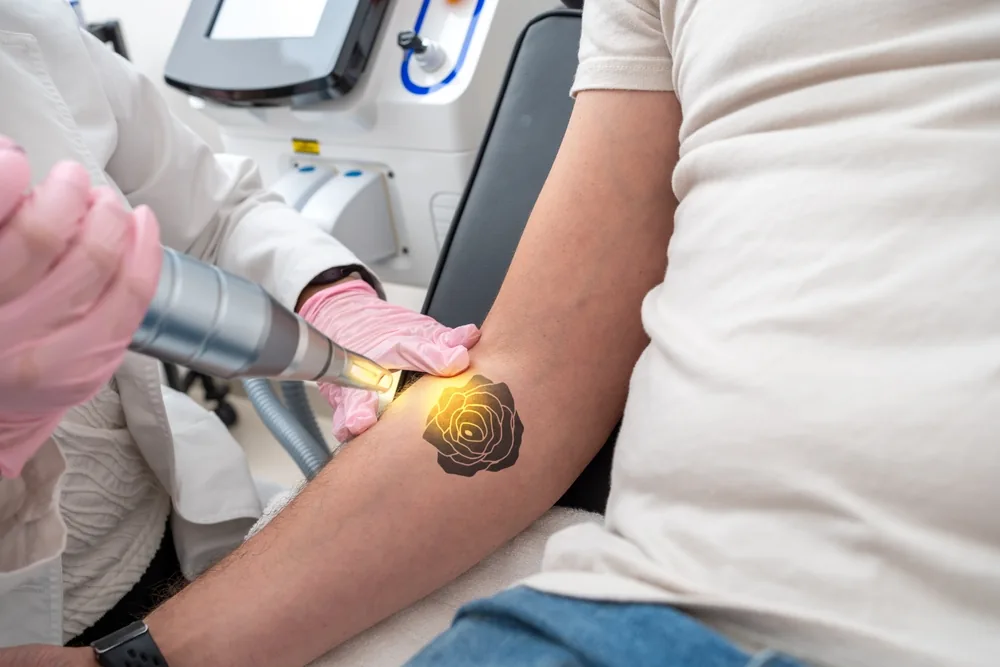
For the first 24 hours after laser tattoo removal, keep the bandage on, ice the area, and avoid moisture and pressure. Over days 2 to 7, expect redness, mild swelling, blistering, and peeling, keep it clean, moisturized, and covered. Never pick scabs, and strictly protect the area from sun between sessions.
The first 24 hours: what to do immediately after your session
Right after treatment, the laser has fragmented ink beneath your skin and your body has begun an inflammatory healing response. The area will look and feel like a fresh sunburn, warm, pink or red, and slightly raised. This is normal and expected. Your only job in the first day is to keep the skin calm, clean, and protected while that reaction settles.
Before you leave, we bandage the area and walk you through this exact routine. Follow it closely, the first 24 hours set the tone for how cleanly the treated skin heals before your next visit.
- Leave the initial bandage on for the time we specify, usually the first several hours to 24 hours.
- Ice the area through a cloth in short intervals (about 10 minutes on, 10 minutes off) to ease heat and swelling.
- Keep the area dry, avoid soaking, sweating, or heavy pressure on the spot.
- Take acetaminophen for soreness if needed, and check with us before using anti-inflammatories like ibuprofen.
- Do not scratch, rub, or pop anything, let the skin do its work undisturbed.
Days 2 to 7: managing blistering, redness, and peeling
The first week is the most active phase of healing, and it is when patients get nervous. Blisters, scabs, mild swelling, and peeling can all appear, and every one of them can be completely normal. Blistering in particular looks dramatic but is simply your body pulling fluid to the surface as it clears fragmented ink. The single most important rule this week is hands off: do not pop blisters or pick scabs, because that is the main cause of scarring and delayed fading.
Once the initial bandage comes off, switch to gentle daily care. Wash the area softly with mild soap and water, pat it dry, apply a thin layer of a plain healing ointment, and keep it loosely covered if it is still open or weeping. A blister that opens on its own is fine, keep it clean and let the skin over it heal naturally.
| What you see | Normal or not | What to do |
|---|---|---|
| Redness and mild swelling | Normal | Ice as needed, keep clean and moisturized. |
| Small to medium blisters | Normal | Leave intact, do not pop, cover loosely and let them drain on their own. |
| Scabbing or light crusting | Normal | Keep moisturized, never pick, let scabs fall off naturally. |
| Peeling or flaking skin | Normal | Do not peel it off, moisturize and let it shed on its own. |
| Temporary skin lightening (frosting fades to pale) | Usually normal | Protect from sun, mention it at your next visit. |
| Spreading redness, pus, heat, fever | Not normal | Call us, these can signal infection (see red flags below). |
Weeks 2 to 4: the fading phase
By the second week the surface has usually closed and the drama is over. Now the quieter, more rewarding phase begins. Beneath the skin, your lymphatic system is carrying away the shattered ink particles, and the tattoo gradually looks lighter, blurrier, or patchy. This fading continues for weeks after a single session, which is exactly why we space appointments out rather than rushing them.
Even though the skin looks healed, it is still recovering and is more vulnerable to the sun and irritation. Keep moisturizing, keep protecting the area, and resist the urge to judge your final result yet. Some fading is immediate, but the bulk of it happens slowly between sessions as your body does the clearing work.
- Expect the tattoo to look lighter, blurrier, or broken up, not gone.
- Moisturize daily to keep healing skin supple and comfortable.
- Keep the area out of direct sun and covered or under SPF 30+ when outdoors.
- Do not book your next session before the skin has fully recovered, we time it for you.
Why we wait 6 to 8 weeks between sessions
Removal is a partnership between the laser and your immune system. The PicoWay picosecond laser shatters ink into particles small enough for your body to carry away, but that clearing takes time. Treating too soon, before the skin has healed and the previous round of ink has cleared, raises the risk of side effects without speeding up your result.
Complete removal typically takes 8 to 12 sessions, spaced roughly 6 to 8 weeks apart, though this varies with ink color, tattoo age, depth, placement, and your skin type. Black ink usually clears fastest, while colors like green and yellow can take longer. At your free consultation we map out a realistic timeline and, with our flat-rate complete removal packages, every session you need is covered.
Between sessions: do's and don'ts
What you do in the weeks between appointments matters as much as what happens in the chair. The goal is simple: protect the treated skin, support your body's clearing process, and avoid anything that irritates the area or drives blood and heat into it before it has healed.
| Do | Don't |
|---|---|
| Keep the area clean, dry, and moisturized while it heals | Pick, scratch, or pop blisters and scabs |
| Cover the area or use SPF 30+ once healed and exposed | Expose the treated skin to direct sun or tanning beds |
| Wear loose clothing over the treated spot | Soak in pools, hot tubs, or baths until fully healed |
| Stay hydrated and support your overall health | Do intense workouts or heavy sweating in the first few days |
| Wait until the skin is fully healed to exercise hard | Drink heavy alcohol right around treatment, it can worsen swelling |
| Ask us before applying any new products to the area | Shave, scrub, or exfoliate the area while it is healing |
Summer-specific aftercare: the sun rules
Sun is the number-one enemy of clean tattoo removal, and summer is when patients get into trouble. Freshly treated and healing skin is highly vulnerable to UV light, which can cause hyperpigmentation (darkening), hypopigmentation (lightening), and blistering, and a tan over the tattoo can force us to lower laser energy or delay treatment altogether. You can absolutely get removed during the summer, you just have to be disciplined about protection.
The core rule: keep the treated area out of direct sun before and after every session, and never come to an appointment with a fresh tan or sunburn over the tattoo. Once the skin has healed, cover it or use a broad-spectrum SPF 30 or higher any time it will see daylight.
- Avoid direct sun on the treated area for the full healing window after each session.
- Never tan (sun or bed) the tattoo, before or during your removal course.
- Apply broad-spectrum SPF 30+ to healed skin whenever it is exposed.
- Cover the area with clothing when possible, physical shade beats sunscreen alone.
- Reschedule if you show up with a sunburn or fresh tan over the tattoo.
Aftercare for sensitive areas: hands, neck, and face
Some locations need extra attention. The hands and fingers move and get washed constantly, so bandages loosen and skin dries out faster, reapply ointment more often and keep the area covered when you can. The neck and face are highly visible and have thinner, more reactive skin, so redness and swelling can look more pronounced even when healing is completely normal.
For any sensitive area, be gentle: no scrubbing, no makeup or lotions over broken skin, and diligent sun protection since these spots are almost always exposed. Because our treatment is physician-led rather than handed to a technician, we tailor both the laser settings and the aftercare plan to the specific area and your skin type, and we are only a call away if anything looks off.
- Hands and fingers: reapply ointment often, keep covered, avoid heavy hand-washing right over the spot.
- Neck and face: expect more visible redness, avoid makeup over healing skin, protect from sun.
- All sensitive areas: no exfoliating, scrubbing, or friction while healing.
- When in doubt about a delicate area, call us before applying anything new.
Products we recommend, and what to avoid
Simple and gentle wins. Healing tattoo-removal skin does best with plain, fragrance-free products, mild cleanser, a basic healing ointment or moisturizer, and a broad-spectrum sunscreen once the skin has closed. You do not need anything fancy or medicated unless we specifically recommend it for your situation.
Just as important is what to keep away. Avoid harsh actives, fragrances, and anything that exfoliates or irritates while the area is healing. We will give you specific guidance at your visit, and if you are unsure whether a product is safe to use on the area, ask us first.
| Recommended | Avoid |
|---|---|
| Gentle, fragrance-free cleanser | Harsh or antibacterial scrubbing soaps |
| Plain healing ointment or basic moisturizer | Fragranced lotions and heavily perfumed creams |
| Broad-spectrum SPF 30+ on healed skin | Retinoids, acids, and exfoliating actives on the area |
| Loose, breathable clothing over the spot | Makeup or self-tanner over healing skin |
| Cool compresses for comfort | Picking tools, pumice, or exfoliating mitts |
When to call us: red flags versus normal healing
Most of what looks alarming, blisters, scabs, temporary skin lightening, is a normal part of healing and needs nothing but patience and clean care. But a small number of signs deserve a phone call, because they can point to infection or a reaction that we want to see. When in doubt, reach out, it is always better to check.
Call us at the Clark office at (848) 304-3075 or the Paramus office at (201) 743-3737 if you notice any of the warning signs below. As a physician-led practice, we can assess complications directly and guide you on next steps.
- Normal: redness, mild swelling, blisters, scabbing, peeling, and gradual fading.
- Call us: spreading redness or red streaks radiating from the area.
- Call us: pus, oozing that worsens, or a foul odor from the site.
- Call us: increasing pain, warmth, or hardness after the first few days.
- Call us: fever or feeling generally unwell after a session.
- Call us: any signs of an allergic reaction, or anything that simply worries you.
Frequently asked questions
The surface usually closes within one to two weeks, but fading continues underneath for several weeks as your body clears the ink. We space sessions roughly 6 to 8 weeks apart so the skin fully recovers before the next treatment.
Yes. Blistering is a common, normal part of healing as your body pulls fluid to the surface to clear fragmented ink. Leave blisters intact, do not pop them, and let them drain on their own. Popping or picking is the main cause of scarring.
Keep the area dry while the initial bandage is on. After that you can shower normally, just be gentle, avoid soaking, hot tubs, pools, and baths until the skin has fully closed, and pat the area dry rather than rubbing it.
Avoid intense workouts and heavy sweating for the first few days, since sweat and friction can irritate healing skin and raise infection risk. Light activity is usually fine sooner, but let comfort and how the area looks be your guide.
Keep the treated area out of direct sun during the healing window after each session, and never tan the tattoo during your removal course. Once healed, cover it or use broad-spectrum SPF 30 or higher whenever it is exposed.
When treatment is physician-led and you follow aftercare, scarring is uncommon. The biggest risk factor is picking scabs or popping blisters. Keep the area clean, moisturized, protected from sun, and undisturbed, and call us if anything looks concerning.