
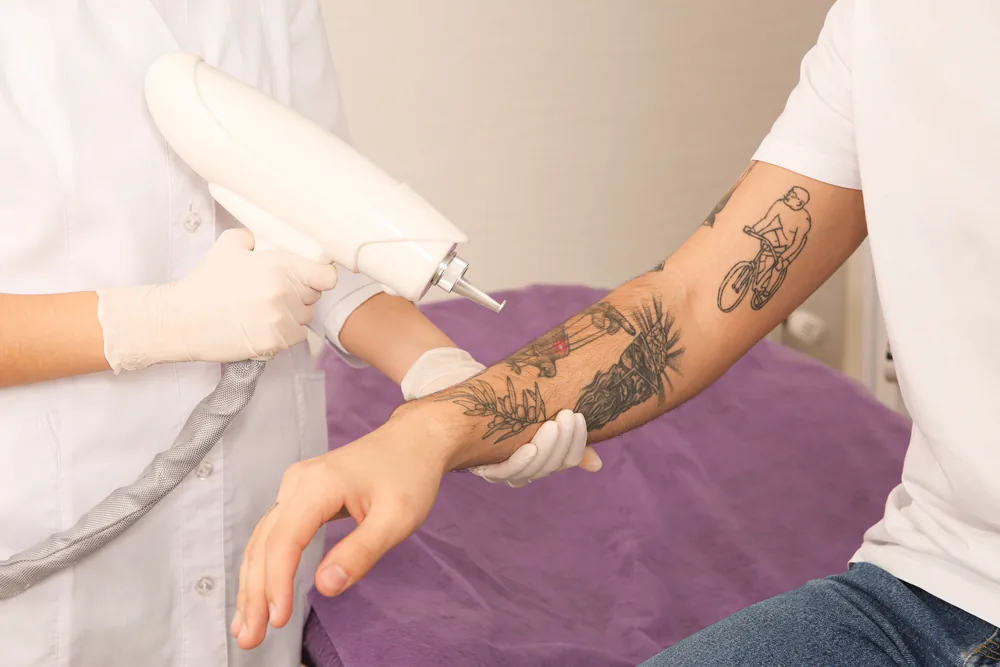
After your first laser tattoo removal session, keep the area clean, dry, and covered for the first 24 hours, apply a thin layer of healing ointment, and avoid sun, soaking, and picking. Mild redness, swelling, and blistering are normal. Most people heal within one to two weeks.
What's Normal in the First 24-72 Hours
Right after your first PicoWay session, the treated skin will look and feel a little like a mild sunburn. That reaction is expected and actually part of how the laser works: it shatters the ink so your body's immune system can clear it over the following weeks. Knowing what's normal keeps you from worrying over changes that are simply part of healing.
Because a licensed medical provider performs every treatment at Laser Eraser, you'll leave your appointment with clear instructions tailored to your skin type, ink colors, and the size of your piece. This page is a general guide to reinforce what your doctor told you in person, not a replacement for it.
- Redness and mild swelling around the tattoo
- A temporary white or gray "frosting" that fades within minutes to an hour
- Tenderness or a warm, sunburn-like sensation
- Small blisters or scabs forming over the next day or two
- Slight pinpoint bruising, especially on arms and legs
Do: The First-Week Care Routine
Gentle, consistent care in the first week protects your skin and helps each session do its job. Keep the routine simple and let the area heal on its own schedule.
- Leave the initial bandage on for the first 24 hours as directed
- Gently wash with lukewarm water and mild, fragrance-free soap, then pat dry
- Apply a thin layer of a plain healing ointment (such as Aquaphor or petroleum jelly)
- Keep the area loosely covered with a clean, non-stick dressing if it's oozing or rubbing against clothing
- Elevate and use a cool compress over clothing for short periods to ease swelling
- Take acetaminophen (Tylenol) if you need something for discomfort
- Wear loose, breathable clothing over the treated skin
Don't: What to Avoid While You Heal
Most healing setbacks come from irritation, moisture, or sun exposure. Avoiding a short list of things gives your skin the best chance to recover cleanly and keeps your results on track for the next session.
- Don't pick, pop, scratch, or peel blisters and scabs — let them resolve naturally
- Don't soak the area: no baths, hot tubs, pools, or ocean until fully healed
- Don't expose the treated skin to direct sun; cover it or use SPF 30+ once healed
- Don't apply makeup, lotions, perfumes, or harsh products to the area
- Don't shave, exfoliate, or scrub over the tattoo while it's healing
- Don't take ibuprofen or aspirin in the first day or two unless your doctor okays it (they can increase bruising)
- Don't work out intensely or do anything that causes heavy sweating or friction for 48-72 hours
Managing Blisters, Swelling, and Discomfort
Blistering after laser tattoo removal can look alarming but is a common and expected reaction, particularly after your first session or over bony, thin-skinned areas like ankles and wrists. Blisters are your body's way of protecting the healing skin underneath. The most important rule is to leave them intact; the fluid inside is sterile and shields the new skin.
Swelling is usually most noticeable in the first two days and then steadily improves. Cool compresses (applied over clothing, never ice directly on skin), keeping the area elevated when possible, and loose clothing all help. Discomfort is typically mild and short-lived, and acetaminophen is usually enough to stay comfortable.
Protecting Your Results Between Sessions
Complete tattoo removal typically takes 8 to 12 PicoWay sessions spaced several weeks apart, so how you care for your skin between visits genuinely affects your outcome. The single most important habit is sun protection: a tanned or sunburned area cannot be safely treated and may need to be rescheduled, which slows your progress.
Once the skin has fully healed, keep the tattoo covered or apply a broad-spectrum SPF 30 or higher whenever it's exposed. Staying hydrated, avoiding smoking, and giving the area time to fully recover before your next appointment all support your body's natural ink-clearing process.
- Wait until skin is completely healed before your next session
- Keep the treated area out of direct sun and use SPF 30+ once healed
- Stay hydrated to support your immune system's ink clearance
- Follow the session spacing your physician recommends — don't rush it
When to Call the Office
Serious complications after laser tattoo removal are uncommon, but it's always okay to call us if something doesn't feel right. Trust your instincts. Reach out to the Clark office at (848) 304-3075 or Paramus at (201) 743-3737 if you notice any signs of infection or a reaction that seems beyond normal healing.
Signs worth a call include spreading redness or red streaks, increasing pain after the first few days, warmth and pus or foul-smelling drainage, a fever, or blisters and swelling that keep getting worse instead of better. We'd always rather hear from you early than have you wait it out.
- Fever or chills
- Spreading redness, red streaks, or increasing warmth around the area
- Pus, foul odor, or drainage that worsens after day two or three
- Pain that intensifies instead of easing over the first few days
- Any reaction that feels unusual or is causing you concern
Frequently asked questions
Most people heal within one to two weeks after their first laser tattoo removal session. Redness and swelling ease within a few days, while any blisters or scabs resolve over the following week or so. Larger tattoos and areas with thinner skin can take a little longer to fully recover.
Yes, blistering is a common and expected reaction, especially after your first session or over bony areas like ankles and wrists. Blisters protect the healing skin beneath them, so leave them intact and don't pop them. They usually resolve on their own within a week. Call us if they worsen or show signs of infection.
You can shower the next day using lukewarm water and mild soap; just avoid soaking, hot water, and scrubbing the area. Skip intense workouts, heavy sweating, and friction over the tattoo for about 48 to 72 hours, since sweat and rubbing can irritate healing skin and disturb blisters or scabs.
Wait until the skin has fully healed before applying sunscreen directly to the tattoo. Until then, keep the area covered and out of direct sun. Once healed, use a broad-spectrum SPF 30 or higher whenever the area is exposed. Sun protection between sessions protects your results and prevents rescheduling.
Call the Clark office at (848) 304-3075 or Paramus at (201) 743-3737 if you develop a fever, spreading redness or red streaks, pus or foul-smelling drainage, worsening pain after the first few days, or any reaction that feels unusual. Early complications are uncommon, but we'd rather hear from you than have you wait.