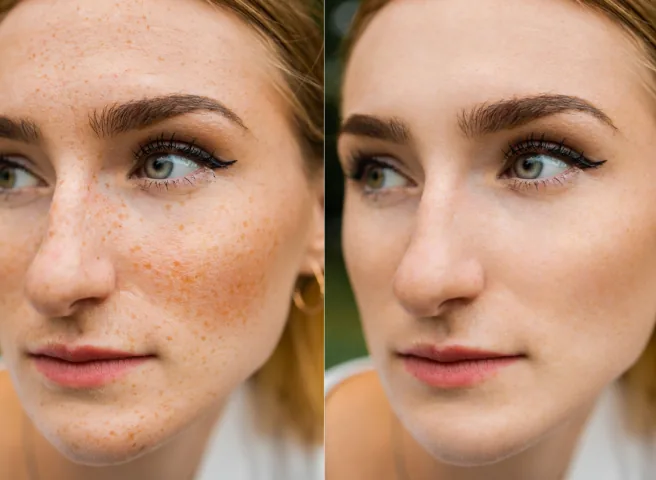
Melasma treatment at Laser Eraser uses the PicoWay® picosecond laser, carefully calibrated by a physician, to gently break up excess pigment without over-heating the skin. Because melasma is stubborn and easily aggravated, every case is doctor-evaluated at our Clark and Paramus, NJ offices and paired with realistic, honest expectations.
What Melasma Is — and Why It's Different
Melasma is a chronic pigment condition that shows up as symmetrical brown or grayish-brown patches, most often across the cheeks, forehead, upper lip, and bridge of the nose. Unlike a single sun spot, it tends to appear in larger, blotchy fields and is driven by a mix of triggers: UV and even visible light, hormonal shifts (pregnancy and birth control are common ones, which is why it's sometimes called 'the mask of pregnancy'), heat, and genetics. It's more common in women and in people with medium-to-deep skin tones, and it can wax and wane for years.
The reason melasma deserves its own conversation is that it behaves very differently from ordinary hyperpigmentation. The excess pigment can sit at the surface, deep in the skin, or both, and the melanin-producing cells behind it are essentially 'primed' to overreact. That means anything that irritates the skin — including an overly aggressive laser — can actually make melasma worse rather than better, sometimes long after the treatment. Honesty about this is the whole point of a physician evaluation.
We want you to hear this up front: melasma is managed, not simply 'removed.' There is no single treatment that permanently cures it for everyone, and even good results can fade back over time if triggers aren't controlled. Our job is to reduce the appearance of the patches as safely as possible and to give you a realistic plan — not to promise a flawless, permanent result we can't guarantee.
- Symmetrical brown/gray patches on the cheeks, forehead, upper lip, and nose
- Triggered by UV and visible light, hormones, heat, and genetics
- Pigment can sit shallow, deep, or both — which changes the approach
- Prone to rebound and worsening if treated too aggressively
How PicoWay® Laser Helps Melasma
We treat with the PicoWay® picosecond laser, the same core technology behind our tattoo work, because the underlying goal is similar: target unwanted pigment while disturbing the surrounding skin as little as possible. PicoWay delivers energy in ultra-short picosecond pulses that are absorbed by the concentrated melanin in a melasma patch and fracture it into finer particles your body can gradually clear. Crucially, those pulses are brief enough to fragment pigment while limiting the spread of heat into the skin.
That low-heat, photomechanical approach matters more for melasma than for almost any other pigment concern. Older, more thermal lasers can deposit enough heat to inflame melasma-prone skin and trigger a rebound — the patches coming back darker. By working in gentle, precisely-targeted bursts rather than aggressive heating, PicoWay lets a physician chip away at pigment conservatively, often across several light sessions rather than one strong one.
It's important to be clear about what the laser is and isn't. For melasma, PicoWay is one tool used carefully within a broader plan that almost always includes strict sun protection and, where appropriate, topical therapy your physician may recommend or coordinate. Laser alone is rarely the whole answer for melasma, and any clinic that frames it as a guaranteed one-and-done fix is not being straight with you.
What Treatment Looks Like
Everything begins with a free, no-pressure consultation. A physician examines your patches — their color, distribution, and how deep the pigment appears to sit — and reviews your skin type, sun habits, and any hormonal triggers. This is also where we confirm that what you're seeing is melasma rather than simple sun damage or post-inflammatory marks, because that distinction completely changes the plan. You'll leave understanding what's realistic for your particular case and roughly what to expect.
When laser is appropriate, we favor a conservative, staged approach: gentle settings, often a small test area first, and multiple lighter sessions spaced several weeks apart rather than a few aggressive ones. Many melasma patients need somewhere in the range of three to six sessions to see meaningful improvement, and that number is an honest estimate, not a promise — some skin responds faster, some slower, and some cases call for us to slow down or adjust course if the skin signals it's being pushed too hard.
Aftercare is where melasma results are truly won or lost. Because UV and even visible light are among the strongest triggers, daily broad-spectrum sunscreen and sun avoidance aren't optional add-ons — they're central to keeping pigment from rebounding between and after sessions. We give you clear, simple instructions, and we'll be candid throughout about how your skin is responding so the plan stays safe.
- Free physician consultation to confirm melasma and map your triggers
- Conservative PicoWay® settings, often starting with a test area
- Typically 3–6 lighter sessions spaced several weeks apart
- Strict daily sun protection as a core part of the plan, not an afterthought
Licensed Provider Calibration and Skin-Tone Safety
Melasma is most common in medium-to-deep skin tones, and those are exactly the skin types where a melanin-targeting laser demands the most caution. Push the energy too hard and you risk the very outcomes you're trying to avoid: rebound darkening (post-inflammatory hyperpigmentation) or, less commonly, lightened spots. This is a major reason we keep melasma treatment physician-led rather than handing it to a technician working from a fixed protocol.
A doctor evaluating your skin in person can read your Fitzpatrick skin type, judge how reactive your melasma looks, and dial PicoWay's settings down to match — then adjust based on how you actually heal. The picosecond pulse width helps by fracturing pigment with minimal heat, but the settings, spacing, and pace still have to be chosen thoughtfully for each person. When appropriate we deliberately go gradual, treating conservatively and reassessing rather than chasing fast results at the expense of your skin.
This is also where honest expectation-setting matters most. Because melasma is a chronic, trigger-driven condition, our aim is safe, visible improvement and long-term management — softer, lighter patches you maintain with sun protection — not a guaranteed permanent cure. If your evaluation suggests laser isn't the right first step for your particular melasma, we'll tell you that too, and point you toward a safer strategy.
Frequently asked questions
Not permanently for most people. Melasma is a chronic, trigger-driven condition, so the realistic goal is meaningful improvement and long-term management rather than a guaranteed cure. PicoWay® laser, used conservatively by a physician alongside strict sun protection, can noticeably lighten patches, but they can rebound if triggers like sun and hormones aren't controlled.
Many melasma patients need roughly three to six lighter PicoWay® sessions spaced several weeks apart, though this is an honest estimate rather than a promise. Because melasma is easily aggravated, we favor gentle, staged treatment and adjust the pace based on how your skin responds. Your physician gives you a personalized estimate at your free consultation.
It can be, but only with real caution. Melasma is common in deeper skin tones, which also carry more risk of rebound darkening from an aggressive laser. Because a physician evaluates your skin type and chooses conservative PicoWay® settings — often with a test area first — we can pursue improvement while respecting your skin's tolerance.
Melasma-prone skin is 'primed' to overreact, so heat and irritation can trigger rebound pigmentation that leaves patches darker than before. Older, more thermal lasers are especially risky. PicoWay's ultra-short picosecond pulses fracture pigment with minimal heat, and a physician deliberately using gentle, conservative settings further lowers that risk.
No. Melasma treatment is cosmetic, so it generally isn't covered by insurance. Instead of an insurance claim, we offer a free physician consultation so you understand your plan and pricing up front, along with free, no-obligation quotes to make care manageable.