
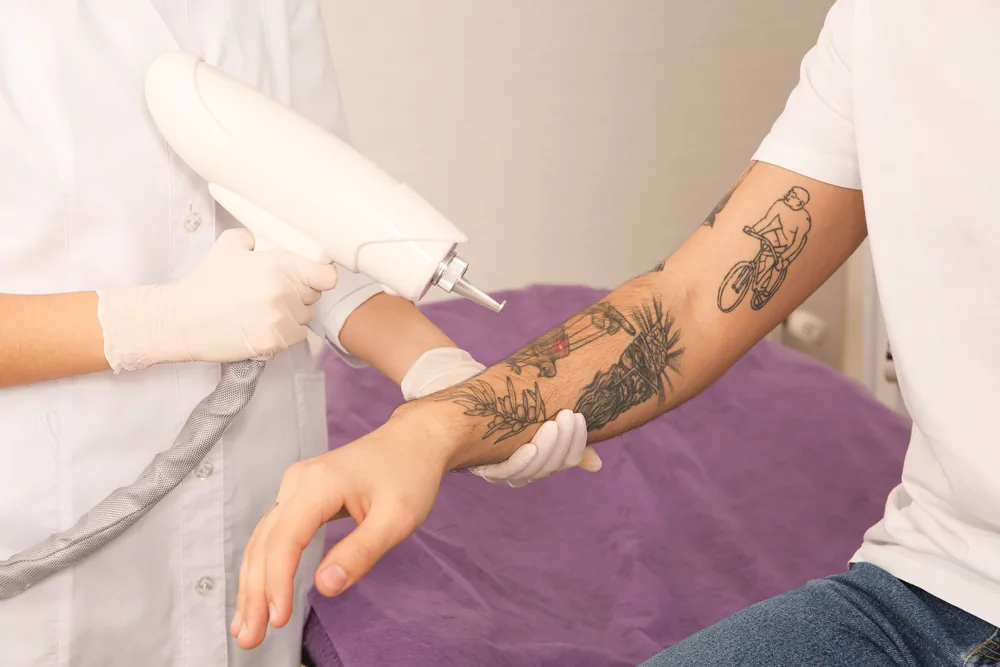
Your first laser tattoo removal session takes about 10 to 30 minutes. After a consultation, we numb and cool the skin, then use the PicoWay laser to shatter the ink into tiny particles. You may feel brief snapping heat and see temporary whitening, then heal over the next few weeks.
Before you arrive: the consultation
Every tattoo behaves differently under the laser, so we never treat one without looking at it first. Your complimentary consultation is where we set honest expectations and build a plan around your specific ink, not a generic template.
It is also the moment to ask anything on your mind, whether that is pain, healing time, or how many visits you should budget for. There is no such thing as a silly question here.
- We examine your tattoo's size, colors, age, and placement on the body.
- We review your medical history to confirm laser removal is safe for you.
- We give you a realistic session estimate and a flat-rate package that covers the full removal.
Getting the skin ready
On treatment day, prep is quick and focused on your comfort. We clean the area and shave it if needed so the laser reaches the ink without interference.
- A numbing cream or cooling method is applied to reduce discomfort.
- You are given protective eyewear to shield your eyes from the laser light.
- We confirm the plan with you one more time before we begin.
The PicoWay treatment itself
This is the part most people worry about, and it is usually shorter and more manageable than expected. We use the PicoWay picosecond laser, calibrated to your specific ink colors and skin type. Instead of relying on heat alone, it delivers ultra-fast pulses that shatter pigment into particles small enough for your body to clear.
Most first sessions run 10 to 30 minutes depending on tattoo size. Many patients describe the sensation as a rubber-band snap or brief bursts of warmth. Because this is clinician-administered, the settings are dialed in by a licensed medical provider watching how your skin responds in real time.
Right after your session
The skin reacts immediately, and every response you see is expected. A temporary whitening or frosting over the tattoo is simply the laser's effect on the ink and fades within minutes to hours.
- Mild redness, swelling, or tenderness around the area.
- A temporary frosting or whitening effect over the ink.
- Occasionally small blisters or scabs, which are a normal part of healing.
- We apply a soothing ointment and a bandage before you leave.
Aftercare that protects your results
How you care for the skin between visits directly affects your outcome. The goal is simple: keep it clean, protected, and undisturbed while your immune system does the work of flushing the fragmented ink.
- Keep the area clean and dry for the first 24 hours.
- Avoid direct sun and apply sunscreen to healing skin.
- Do not pick at scabs or blisters, which helps prevent scarring.
- Stay hydrated and rested to support your body's natural clearing process.
What happens between sessions
Laser tattoo removal is a gradual process, and patience is part of it. Over the following weeks your immune system continues breaking down and carrying away the shattered ink, which is why we space visits out rather than rushing them.
Sessions are typically scheduled 6 to 8 weeks apart to let your skin fully recover and the fading to progress. Most tattoos need 8 to 12 sessions for complete removal, though ink color, depth, and placement all influence the exact number. You should notice meaningful lightening after the first few visits.
Complete Removal Packages by Size
8–12 sessions · every session includedOne flat price covers all the sessions your tattoo needs — no per-visit billing. Every tattoo is priced individually, so we give you an exact quote free at your consultation.
Every tattoo is priced individually. Book a free consultation for your exact quote — no obligation.
Get Your Free QuoteFrequently asked questions
Most patients compare it to a rubber-band snap or short bursts of heat. We apply numbing cream or cooling first, and many people find it more tolerable than they expected. Because a physician controls the settings, we can adjust for your comfort during treatment.
Plan for the visit overall, but the laser portion itself is usually 10 to 30 minutes depending on the size of your tattoo. Smaller pieces are often done in well under 15 minutes.
Fading is gradual because your body clears the ink over time. Most patients see noticeable lightening after the first few sessions, with complete removal typically requiring 8 to 12 visits spaced 6 to 8 weeks apart.
Yes. Mild frosting, redness, swelling, and occasional small blisters or scabs are a normal part of healing. Keep the area clean and dry and avoid picking so the skin recovers without scarring.
We offer flat-rate packages that cover every session needed for full removal, tailored to your tattoo, which saves roughly 38% versus paying per session. You will get an exact quote at your free consultation.