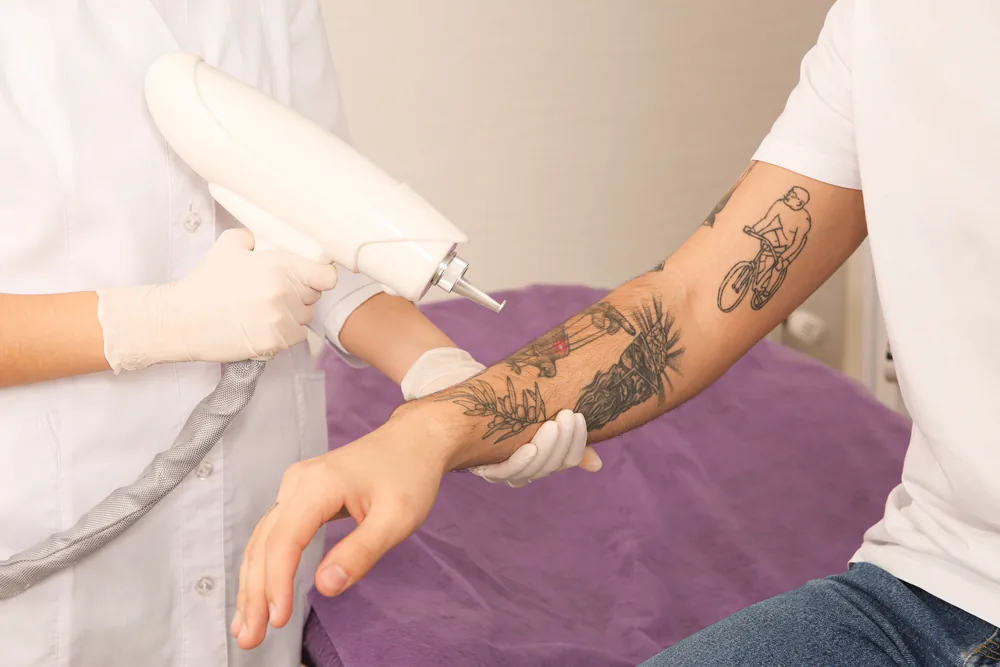
Yes, laser tattoo removal is safe for skin of color when the right laser and the right operator are used. The PicoWay picosecond laser delivers energy in ultra-short pulses that shatter ink while sparing surrounding melanin, and physician oversight lets settings be tuned to Fitzpatrick IV-VI skin, minimizing the pigment-change risks that older lasers carried.
Is Tattoo Removal Safe for Skin of Color?
Yes. For people with deeper skin tones, laser tattoo removal is safe and effective when two conditions are met: the clinic uses a picosecond laser like PicoWay, and treatment settings are chosen and supervised by an experienced provider who understands how melanin interacts with laser light. The reputation tattoo removal earned decades ago, of being risky for darker skin, comes from older technology and untrained operators, not from the procedure itself.
The core challenge is that melanin, the pigment that gives skin its color, absorbs some of the same laser wavelengths that target tattoo ink. In deeper skin, there is simply more melanin competing for that energy. The goal of skilled treatment is to break down the ink while leaving that melanin undisturbed. Modern lasers and careful physician technique make that balance achievable, which is why Dr. Alvaro Alban treats a diverse range of skin tones at Laser Eraser's Clark and Paramus, NJ clinics.
The Historical Problem: Older Lasers and Darker Skin Tones
For years, patients with skin of color were quietly steered away from tattoo removal, and the caution was not unfounded given the tools of the time. The first generation of removal lasers were nanosecond Q-switched devices. They cleared ink largely through heat, delivering energy in pulses measured in billionths of a second, which was fast by the standards of the era but slow enough that heat spread into the surrounding skin.
That spread of heat is the crux of the problem for deeper skin. Because melanin absorbs laser energy alongside the ink, a longer, hotter pulse could damage the pigment-producing cells around the tattoo. The results were the complications that gave the procedure its cautious reputation: hypopigmentation, where treated skin turns lighter than the skin around it, and hyperpigmentation, where it darkens. On lighter skin these effects were less visible and less likely; on Fitzpatrick IV, V, and VI skin they were a real and discouraging risk.
The honest takeaway is that the old warnings reflected old equipment. The technology has changed, and so has what people with skin of color can safely expect.
How PicoWay Changed the Equation
The breakthrough was speed. PicoWay is a picosecond laser, meaning it delivers energy in pulses measured in trillionths of a second, roughly a thousand times shorter than the nanosecond pulses of older Q-switched devices. That single change reshapes the safety picture for deeper skin tones.
Because each pulse is so brief, the laser shatters ink primarily through a rapid mechanical shockwave, a photoacoustic effect, rather than through sustained heat. The ink is fractured into particles small enough for the body's immune system to carry away, but the energy is gone before meaningful heat can build up in the surrounding tissue. Less heat transfer means far less collateral stress on the melanin-producing cells that deeper skin has in greater supply, which is exactly what lowers the risk of pigment change.
PicoWay also offers multiple wavelengths, including 1064nm and 532nm. The 1064nm wavelength is particularly valuable for skin of color because it is absorbed less strongly by surface melanin, letting energy reach the ink with a wider margin of safety for the skin itself. Choosing the right wavelength for the right ink and the right skin tone is part of what makes a customized, physician-directed approach effective.
| Feature | Older Q-Switched Lasers | PicoWay Picosecond Laser |
|---|---|---|
| Pulse duration | Nanoseconds (billionths of a sec) | Picoseconds (trillionths of a sec) |
| Primary mechanism | More heat-based | Photoacoustic shockwave |
| Heat spread to skin | Higher | Substantially lower |
| Pigment-change risk (deep skin) | Higher concern | Reduced with proper settings |
| Wavelength options | Often limited | Multiple, incl. skin-tone-friendly 1064nm |
What Fitzpatrick Types IV-VI Can Realistically Expect
The Fitzpatrick scale classifies skin by how it responds to sun, from Type I (very fair, always burns) to Type VI (deeply pigmented, rarely burns). Types IV through VI cover the range most often described as skin of color, including many Mediterranean, Hispanic, Middle Eastern, South Asian, and Black patients. Knowing your Fitzpatrick type helps a provider choose safe, effective settings, and it is one of the first things assessed at a consultation.
For deeper skin tones, the honest expectation is this: removal is achievable, but the approach is usually more conservative than on very light skin. To protect the surrounding melanin, a physician often uses somewhat gentler energy settings and may space sessions a little further apart to give skin full time to recover between visits. That patience is a feature, not a delay, it is what keeps the skin safe.
In practical terms, that can mean the total number of sessions runs toward the higher end of the typical range. Most tattoos take roughly 8 to 12 sessions to clear regardless of skin tone, and deeper skin may sit at the upper part of that band. Ink color still matters as much as skin tone: black ink responds most predictably, while greens, light blues, and some yellows are more stubborn for everyone. We set these expectations honestly at your consultation and never guarantee complete clearance for every case, because responsible medicine means being candid about what your specific tattoo and skin will allow.
- Fitzpatrick IV: olive to light-brown skin (many Mediterranean, Hispanic, and Asian patients)
- Fitzpatrick V: brown skin (many Middle Eastern, South Asian, and Latin American patients)
- Fitzpatrick VI: deeply pigmented brown to black skin
- Deeper tones often use gentler settings and slightly longer intervals between sessions
- Expect a session count toward the higher end of the usual 8-12 range, depending on ink
Hyperpigmentation and Hypopigmentation: Managing the Real Risks
The two pigment changes worth understanding are hyperpigmentation and hypopigmentation. Hyperpigmentation is temporary darkening of the treated skin, often a response to inflammation, and it is more common in skin of color. In most cases it fades on its own over weeks to months, and it can be minimized with the right settings and diligent aftercare. Hypopigmentation is lightening of the skin, which can be slower to resolve and is the change providers work hardest to avoid on deeper tones.
Both risks are reduced dramatically by the combination that defines good care for skin of color: a picosecond laser to limit heat, conservative energy levels chosen for your Fitzpatrick type, adequate healing time between sessions, and disciplined sun protection. Sun exposure is the single biggest avoidable trigger for pigment problems, because tanned skin holds more active melanin for the laser to inadvertently target.
This is why we ask patients to avoid sun and tanning on the treatment area before and between sessions, to use broad-spectrum SPF diligently, and to follow aftercare instructions closely. Protecting your skin is a shared effort, and it is one of the most important things within your control.
- Hyperpigmentation (darkening): usually temporary, more common in deeper skin, typically fades
- Hypopigmentation (lightening): less common with modern technique, the change we most work to prevent
- Avoid sun and tanning beds before, during, and after your treatment course
- Use broad-spectrum SPF and follow all aftercare guidance to protect healing skin
- Report any unexpected changes so your provider can adjust the plan
Why Physician Oversight Matters for Skin of Color
The same laser can produce very different outcomes in different hands. For skin of color specifically, the operator's judgment is as important as the machine, because safe treatment depends on selecting the right wavelength, energy level, spot size, and session spacing for your individual skin and ink. A device on a preset is not a substitute for clinical judgment.
Laser Eraser is physician-led. Treatments are performed and supervised by Dr. Alvaro Alban, a New Jersey physician with an emergency-medicine background and specialized laser training from the Institute for Laser Medicine in Skippack, Pennsylvania. A physician can assess your Fitzpatrick type, review medications and skin conditions that affect pigment, recognize and manage a reaction early, and adjust the plan session by session as your skin responds. That is a meaningful difference from a technician-run, machine-preset model.
For patients who have been told, or who simply assume, that their skin tone rules out tattoo removal, physician oversight is often the difference between being turned away and being treated safely. The right questions get asked, the settings get individualized, and the plan bends to your skin rather than the other way around.
Before You Book: Questions to Ask Any Provider
Not every clinic that offers tattoo removal is equipped to treat deeper skin tones well. Before you commit anywhere, use these questions to gauge whether a provider understands skin of color. The answers tell you a great deal about how your treatment will be handled and how your skin will be protected.
- What laser do you use, and is it a picosecond device like PicoWay?
- Who performs the treatment, a physician or a technician, and who sets the parameters?
- How do you adjust settings for Fitzpatrick IV-VI skin specifically?
- How do you reduce the risk of hyperpigmentation and hypopigmentation?
- How do you space sessions for deeper skin, and how many might I need?
- Can I see before-and-after results on skin tones similar to mine?
- What aftercare and sun-protection plan do you recommend between sessions?
What Results Look Like on Diverse Skin Tones
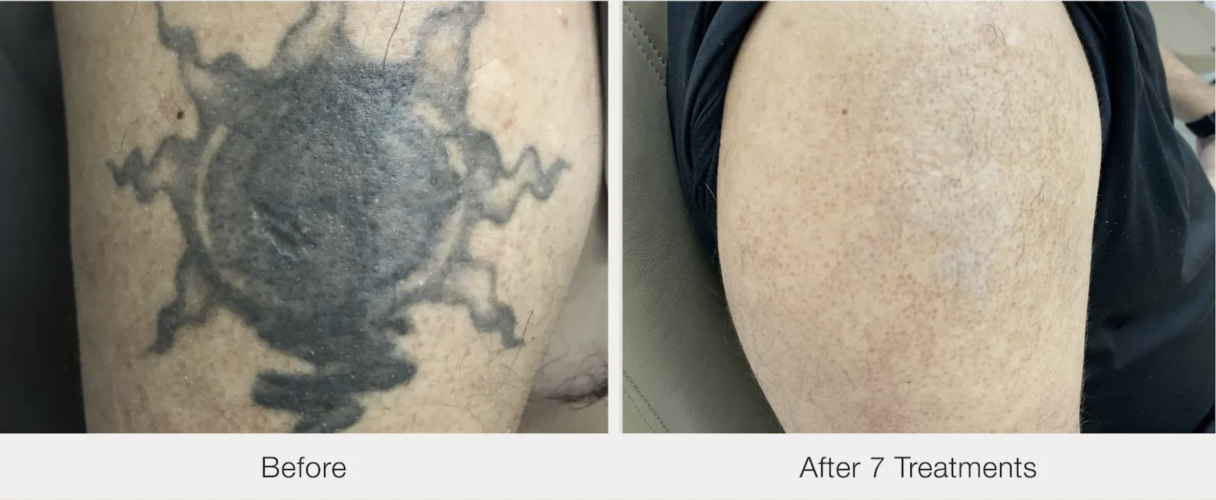
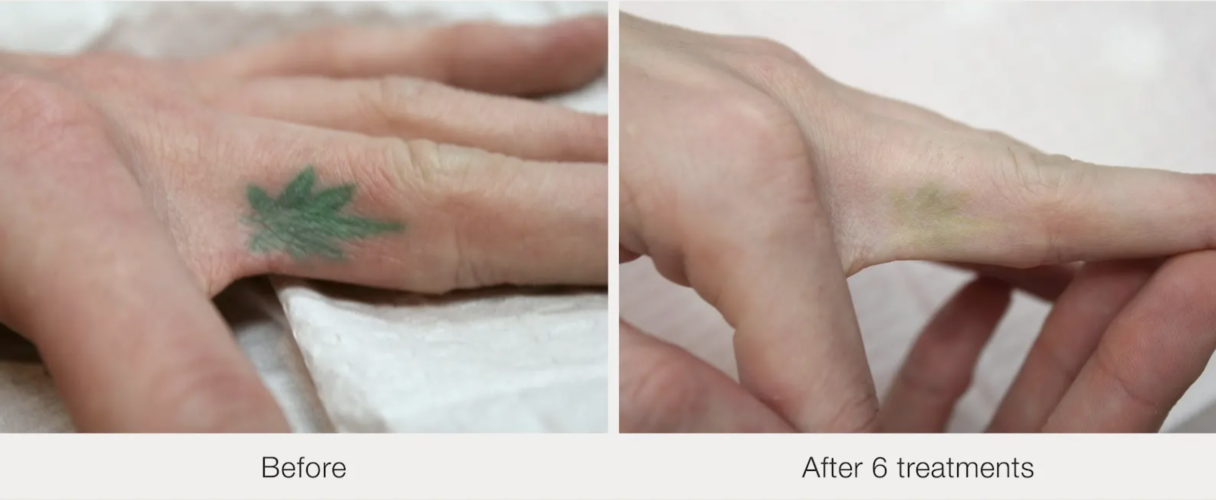
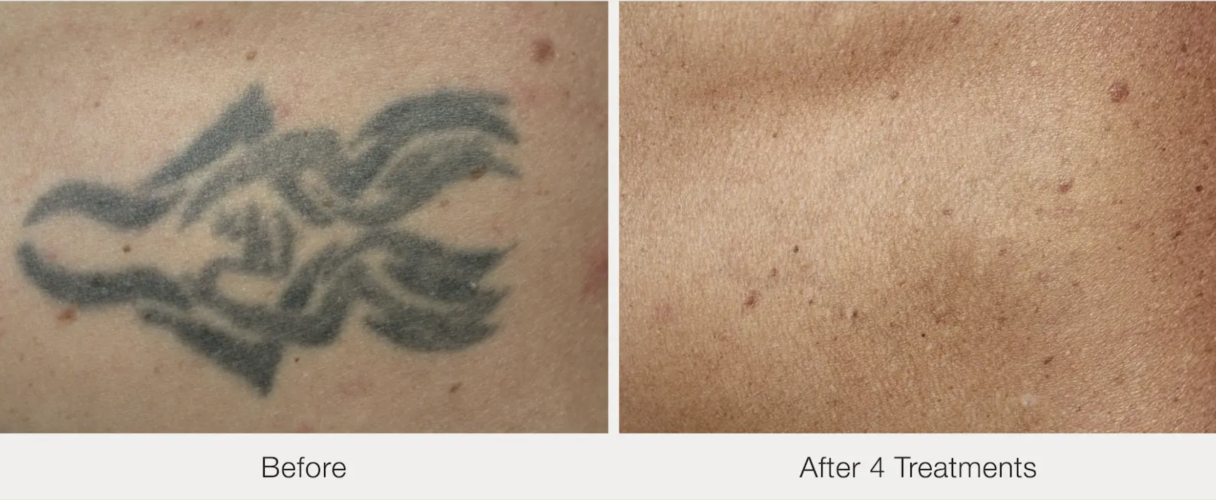
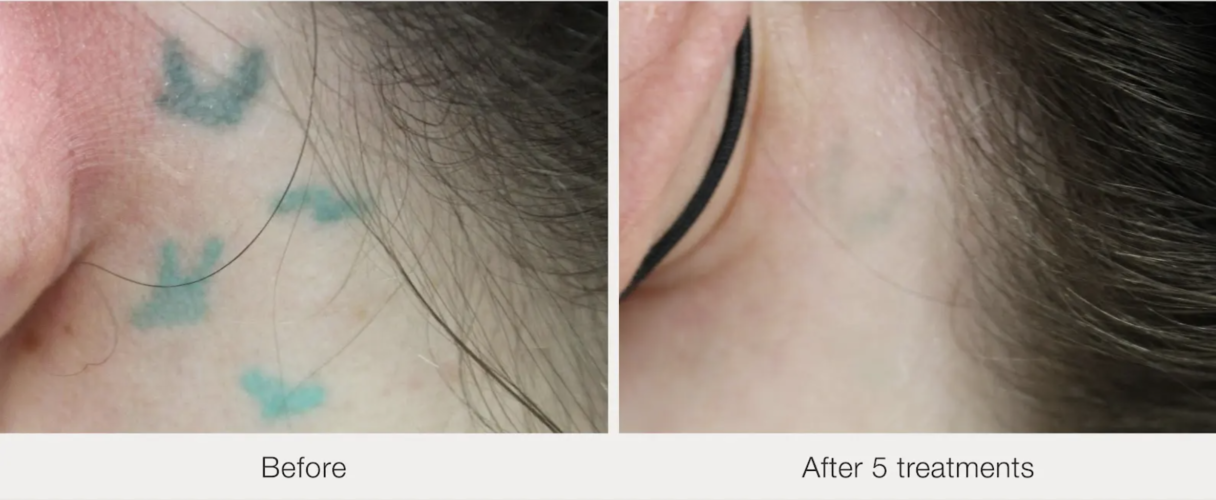
Realistic results for skin of color follow the same trajectory as any tattoo removal, gradual fading over a course of sessions, with the plan tuned to protect pigment along the way. Black and dark inks generally clear most reliably, and progress is measured over months rather than a single visit. Because deeper skin is often treated more conservatively, patience between sessions is part of a good outcome, not a sign that something is wrong.
At a free consultation, we assess your Fitzpatrick type, examine the tattoo's ink colors, density, age, and placement, and set honest expectations for your specific case. You can view representative before-and-after results in our gallery, and we are candid that individual outcomes vary. Our goal is complete, safe fading wherever your skin and ink allow it, achieved without trading your tattoo for a pigment problem.
Transparent Pricing and Your Free Consultation
Laser Eraser prices removal through flat-rate Complete Removal Packages that cover every session your tattoo needs, tailored to your tattoo through financing with our Buy-Now-Pay-Later partner, flexible financing, with no hidden fees. Because deeper skin can take a session or two more, this structure is especially reassuring: one fixed price covers the full course regardless of how many visits it ultimately takes, saving clients roughly 38% versus paying per session. Tattoo removal is cosmetic and is not billed to insurance, which is why we lead with transparent pricing and flexible monthly plans.
The best next step is a complimentary, no-obligation consultation at our Clark or Paramus, NJ office. We assess your skin type and tattoo in person, answer every question about safety and results for your specific skin tone, and quote your exact package. Booking is available online or by phone, and same-day appointments are often available.
Frequently asked questions
Yes. With a picosecond laser like PicoWay and physician-supervised settings, tattoo removal is safe for Fitzpatrick IV-VI skin. The laser's ultra-short pulses shatter ink with minimal heat, sparing the surrounding melanin. The older warnings came from outdated lasers and untrained operators, not from the procedure itself when done correctly.
PicoWay delivers energy in picoseconds, about a thousand times faster than older Q-switched lasers. It breaks ink apart with a rapid shockwave rather than sustained heat, so far less heat spreads to the melanin-rich skin around a tattoo. Its 1064nm wavelength is also absorbed less by surface pigment, adding a margin of safety for deeper tones.
The risks are hyperpigmentation (darkening) and hypopigmentation (lightening). Hyperpigmentation is more common in deeper skin but usually temporary and fades over weeks to months. Hypopigmentation is less common with modern technique and is what careful settings work to prevent. Picosecond technology, conservative energy, healing time, and sun protection all keep these risks low.
Most tattoos take about 8 to 12 sessions to clear, and deeper skin often sits toward the higher end because gentler settings and slightly longer intervals are used to protect pigment. Ink color still matters as much as skin tone, with black clearing most predictably. We give a personalized estimate at your free consultation.
No. Pricing at Laser Eraser is based on the tattoo's size, not your skin tone. Flat-rate Complete Removal Packages are priced individually and cover every session your tattoo needs, even if deeper skin requires a session or two more. One fixed price removes the uncertainty, and financing is available.
For deeper skin tones, physician oversight matters. A physician can assess your Fitzpatrick type, individualize the laser wavelength and energy, recognize and manage a reaction early, and adjust the plan session by session. Laser Eraser is physician-led by Dr. Alvaro Alban, rather than a technician-run, machine-preset model.