Atrophic scar treatment in NJ uses a physician-calibrated PicoWay laser to stimulate collagen remodeling beneath depressed scars. Rapid picosecond pulses create controlled micro-injury that prompts the skin to rebuild volume, gradually softening pitted, boxcar, and rolling scars. Most patients see meaningful smoothing over roughly 3 to 6 sessions.
What Are Atrophic Scars?
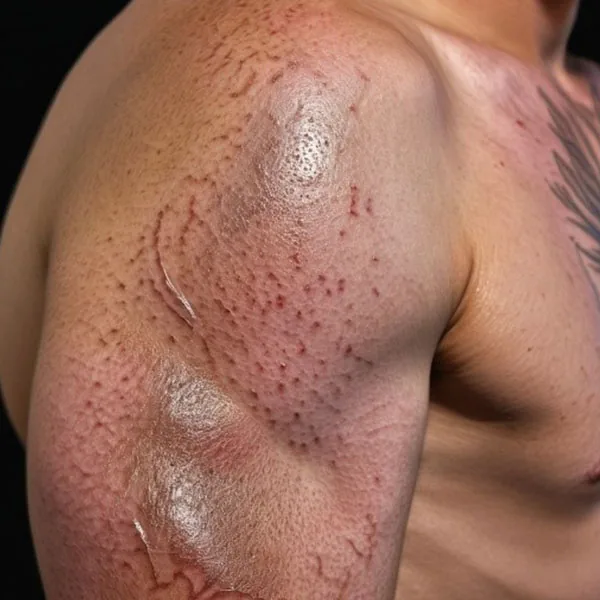
Atrophic scars are depressions in the skin left behind when the body doesn't produce enough collagen while a wound heals. Instead of the raised tissue seen with keloids, the surface sinks below the surrounding skin, creating shadows and an uneven texture that makeup and topical creams rarely resolve. They are among the most common lasting marks after cystic acne, chickenpox, or minor injury.
Dermatologists generally group atrophic scars into three patterns. Ice-pick scars are narrow and deep, like a small puncture. Boxcar scars are wider with defined, angular edges. Rolling scars produce a gentle, wavelike undulation across the skin. Many people have a mix of all three, which is exactly why a one-size protocol tends to disappoint and why physician assessment matters before any laser is fired.
- Ice-pick — narrow, deep, sharply defined depressions
- Boxcar — broad depressions with steep, angular walls
- Rolling — shallow, wavy dips from tethered tissue below
How Laser Treatment Softens Atrophic Scars
The PicoWay picosecond laser delivers energy in ultra-short bursts measured in trillionths of a second. Rather than relying primarily on heat, these rapid pulses create a photomechanical effect in the deeper layers of skin, forming tiny controlled zones of injury without broadly damaging the surface. Your body responds the way it responds to any injury it can heal well: it produces fresh collagen and elastin.
That new collagen is the point. As it builds up beneath a depressed scar over the weeks following each session, it gently lifts the floor of the scar toward the level of the surrounding skin. The edges soften, shadows shrink, and texture becomes more even. Because the picosecond approach can also break up unwanted pigment, it can address the brown or red discoloration that often accompanies older acne scars at the same time.
This is a gradual, biological process, not an instant erase. Improvement accumulates between visits as your skin remodels, which is why spacing sessions several weeks apart gives the best long-term result.
Why a Licensed Medical Provider Calibrates Every Session
Atrophic scars sit at different depths, and the surrounding skin has its own tolerance. Treated too aggressively, laser energy can cause unnecessary inflammation or, in some skin, unwanted pigment changes; treated too gently, results stall. The difference between those outcomes is calibration, and at Laser Eraser a doctor makes that call.
Every treatment at our Clark and Paramus offices is performed by a licensed medical provider, not delegated to a technician. Founder Dr. Alvaro Alban is an emergency-medicine physician who pursued dedicated laser training at the Institute for Laser Medicine in Skippack, Pennsylvania. That medical background shapes how settings are chosen for your scar pattern, your skin, and your history, and it means honest guidance if laser is not the right tool for a particular scar.
- A licensed medical provider performs and adjusts every treatment
- Settings matched to scar depth, type, and your skin
- PicoWay as the single, purpose-built platform
- Complimentary consultation before anything is scheduled
What to Expect: Sessions and Recovery
Atrophic scars respond to repetition, because you are asking the skin to rebuild structure it never fully formed the first time. Most patients need roughly three to six sessions, spaced several weeks apart to let collagen mature between visits. Deeper ice-pick scars, extensive acne scarring, or naturally slower healing can call for more; your physician will give you a realistic range at your consultation rather than a blanket promise.
Sessions themselves are brief. Afterward, expect some redness and mild swelling that typically settles within a day or two, similar to a light sunburn. Most people return to normal activity quickly. Diligent sun protection between visits is important, both to protect healing skin and to keep results looking their best. We will walk you through simple aftercare so your skin gets the most out of each treatment.
Safe for a Range of Skin Tones
One of the strengths of the picosecond approach is its suitability across a wide range of skin tones. Because PicoWay relies on very short pulses and less bulk heat than older lasers, it lowers the risk of the pigment changes that deeper or darker skin can be prone to after treatment. That said, no laser is automatically safe for everyone at every setting, which is precisely why physician calibration is central to how we work.
During your consultation we assess your Fitzpatrick skin type and scar characteristics, then choose a conservative starting point and adjust from there. If we believe another approach would serve you better, we will tell you. Honest expectations and your safety come before any single treatment.
Frequently asked questions
Yes, laser treatment can meaningfully improve atrophic scars, though it softens rather than perfectly erases them. The PicoWay laser triggers collagen production beneath the scar, which gradually lifts the depressed floor and smooths texture over several sessions. Results depend on scar depth and type, so a physician gives you a realistic estimate at consultation.
Most patients need roughly three to six sessions, spaced several weeks apart so collagen can mature between visits. Deep ice-pick scars or extensive acne scarring may require more. Because each scar and skin type is different, your physician provides an honest range at your free consultation rather than a fixed promise.
The PicoWay picosecond laser is well suited to a wide range of skin tones because its ultra-short pulses use less bulk heat, lowering the risk of pigment changes. No laser is automatically safe at every setting, so a physician assesses your Fitzpatrick skin type and calibrates conservatively before treating.
Both stimulate collagen, but through different means. Microneedling creates physical micro-channels with fine needles, while the PicoWay laser uses rapid light pulses to prompt remodeling and can also target discoloration. A physician can advise which approach, or combination, best fits your specific scar pattern and skin at your consultation.
Cost depends on the scar type, treatment area, and number of sessions, so we provide an accurate quote after a free consultation rather than a flat online price. Cosmetic scar treatment is not covered by insurance, and flexible monthly payment plans are available to make care more manageable.