For Belleville, NJ the nearest Laser Eraser location is Paramus, at 193 NJ-17, Suite C in Bergen County — typically around twenty to thirty minutes up the Garden State Parkway under normal traffic. Treatment uses the PicoWay® picosecond laser, a licensed medical provider performs each session, and the whole removal is quoted as one flat package at a free consultation.
Getting Up to Paramus From Belleville
Belleville's advantage here is direction. Almost everything that clogs this corner of Essex County runs south toward Newark in the morning and back north in the evening, and a trip up to Paramus goes against that flow for most of the day. The Garden State Parkway northbound to Route 17 is the usual route, and the drive runs typically around twenty to thirty minutes under normal traffic.
From Washington Avenue and the streets that feed it, the Parkway is a short hop; from the eastern side of town near the Passaic River, Route 21 north also connects toward Route 3 and then across to Route 17 if the Parkway is misbehaving. The Paramus office fronts Route 17 with its own free parking lot, which is a relief for anyone who has tried to park along Washington Avenue on a busy afternoon.
If you would rather not drive at all, the Newark Light Rail's Silver Lake station sits in Belleville and connects into Newark's rail hub — though for a short appointment, driving is almost always the simpler choice.
- Paramus office: 193 NJ-17, Suite C, Paramus, NJ 07652 — (201) 743-3737
- Parkway north to Route 17, against the heaviest commuter flow
- Route 21 north to Route 3 as an alternate when the Parkway backs up
- Free on-site parking, plus Tuesday evening and Saturday hours
Removal for Hospital and Clinical Staff
Belleville is a hospital town. Clara Maass Medical Center anchors a whole working population of nurses, technicians, aides, therapists, and administrative staff, and a steady share of the patients we see from this part of Essex County are pursuing removal because of a workplace appearance policy rather than a change of heart about the art itself. Hands, wrists, forearms and necks are the areas that come up again and again.
Shift work makes the scheduling harder than the treatment. Sessions have to be spaced several weeks apart regardless, so a rotating schedule is workable as long as we plan around it — and Tuesday evenings and Saturdays give most clinical staff at least one reliable option. If a specific date is driving the timeline, such as a new position or a credentialing review, say so at the consultation and the sequence can be built to prioritise the most visible portion of a piece first.
- Visible hand, wrist and neck work prioritised when a policy applies
- Appointment sequences planned around rotating and night shifts
- Fading-only plans when a cover-up rather than removal is the goal
- Realistic session estimates given before you commit
Careful Settings for Deeper Skin Tones
Laser energy that is entirely safe on pale skin can leave a lasting light or dark patch on skin with more melanin in it. That is not a reason to avoid treatment; it is a reason to be treated by someone who adjusts for it. Skin rich in melanin carries a higher risk of post-inflammatory hyperpigmentation, so the sensible approach is lower fluence, longer intervals between visits, and a willingness to accept slower progress rather than force it.
Those are clinical decisions rather than machine presets, which is the practical argument for a clinician-administered practice. A doctor assesses your skin type before any energy is delivered, explains the trade-off between speed and safety in plain terms, and gives you specific guidance on sun exposure between appointments — which genuinely affects how the skin behaves.
What to Expect Session by Session
Everything starts with a free consultation. A physician examines the tattoo's colours, density, age and placement, checks your skin type, and gives you an honest estimate of how long the course will run. Complete removal usually takes eight to twelve sessions spaced several weeks apart, though ink and placement move that number in both directions.
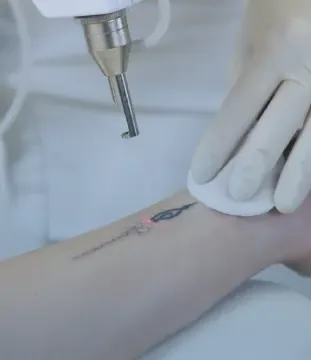
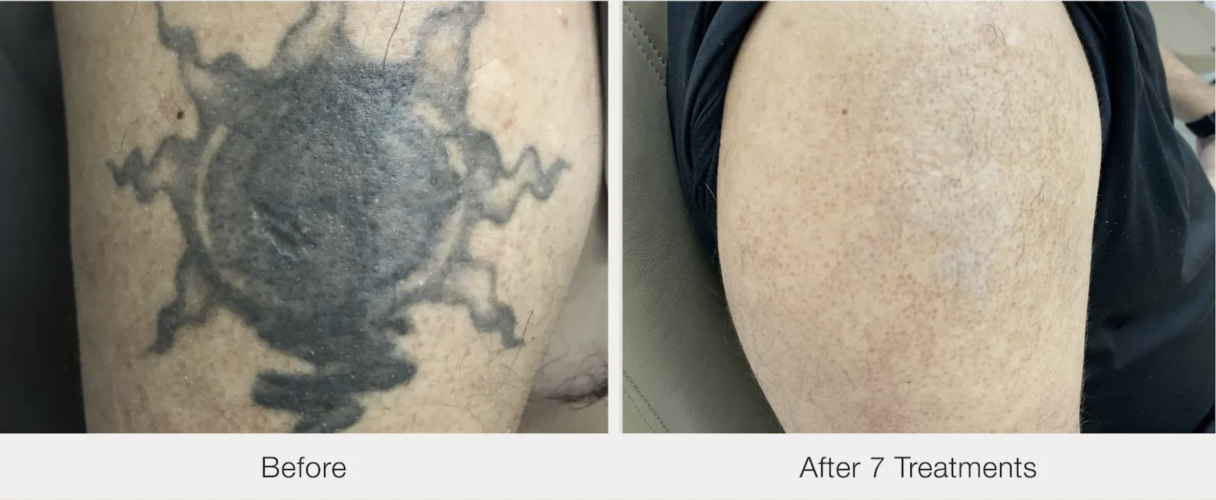
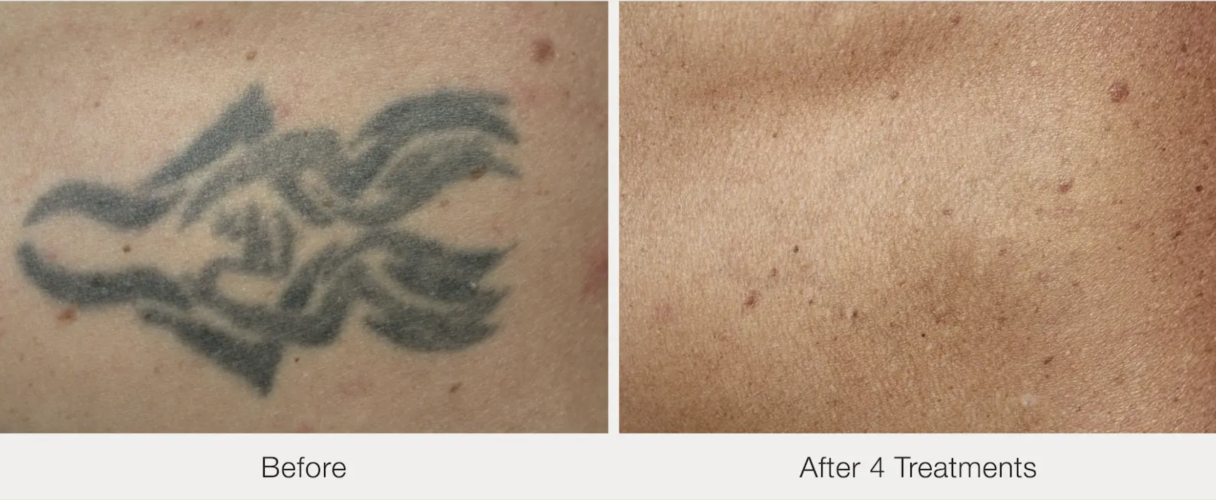
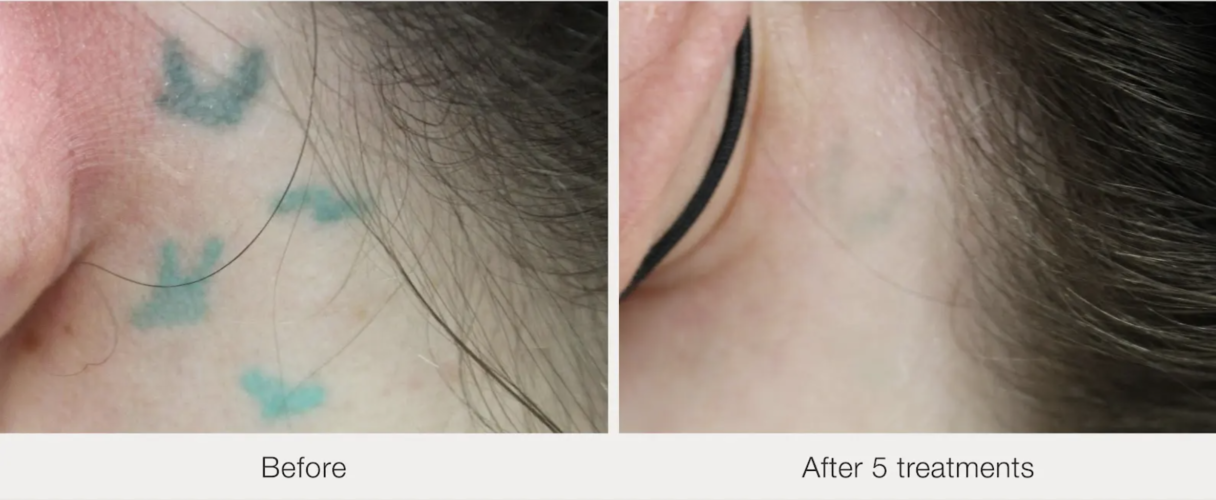
The PicoWay picosecond laser delivers each pulse in a fraction of a fraction of a second, breaking pigment into particles small enough for the body to clear naturally instead of relying on heat. The gaps between visits give that clearing time to happen. Change is cumulative rather than dramatic, and most people notice real fading before they are halfway through.
- Free physician consultation before anything is booked
- PicoWay® picosecond laser rather than older heat-based systems
- Eight to twelve sessions is typical for a complete removal
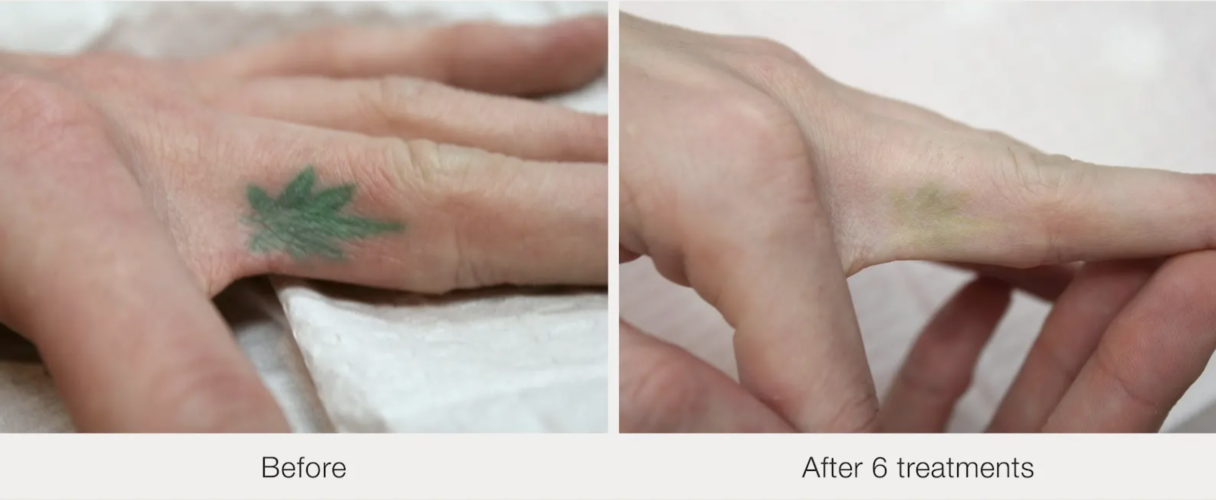
- Every ink colour treatable, including greens and blues
Flat-Rate Packages Instead of Per-Visit Bills
Complete removal is priced as a single flat package covering every session the tattoo needs, assessed individually by size. You are told the exact figure at the free consultation, so the total is known before you begin rather than accumulating quietly over a year of appointments.
Financing is available if paying over time suits you better, with nothing added afterwards. Fading for a cover-up is a separate and shorter plan that costs less than a full removal, and we will tell you honestly which of the two your goal actually calls for.
Complete Removal Packages by Size
8–12 sessions · every session includedOne flat price covers all the sessions your tattoo needs — no per-visit billing. Every tattoo is priced individually, so we give you an exact quote free at your consultation.
Every tattoo is priced individually. Book a free consultation for your exact quote — no obligation.
Get Your Free QuoteFrequently asked questions
Our Paramus office at 193 NJ-17, Suite C, Paramus, NJ 07652, in Bergen County. From Belleville the drive is typically around twenty to thirty minutes up the Garden State Parkway under normal traffic, and it runs against the heaviest commuter direction for most of the day. Call (201) 743-3737.
Yes, and it is a common request from Belleville. Sessions have to sit several weeks apart anyway, so a rotating schedule is manageable. The Paramus office runs evening hours on Tuesdays and is open Saturdays, which usually gives clinical staff at least one workable slot each cycle.
It can if the settings are too aggressive, which is why melanin-rich skin is treated with lower energy and longer gaps between visits. A physician assesses your skin type before any treatment and discusses the risk of post-inflammatory hyperpigmentation openly rather than glossing over it.
Yes. Partial fading to give a tattoo artist a clean canvas for a cover-up takes considerably fewer sessions than full removal and is priced accordingly. Bring the proposed new design to your consultation and we will plan how light the area needs to get.
Complete removal is quoted as one flat package covering every session, priced individually by the size of the tattoo. You receive that exact figure at a free consultation rather than a range online, and financing is available if you prefer to spread the cost.