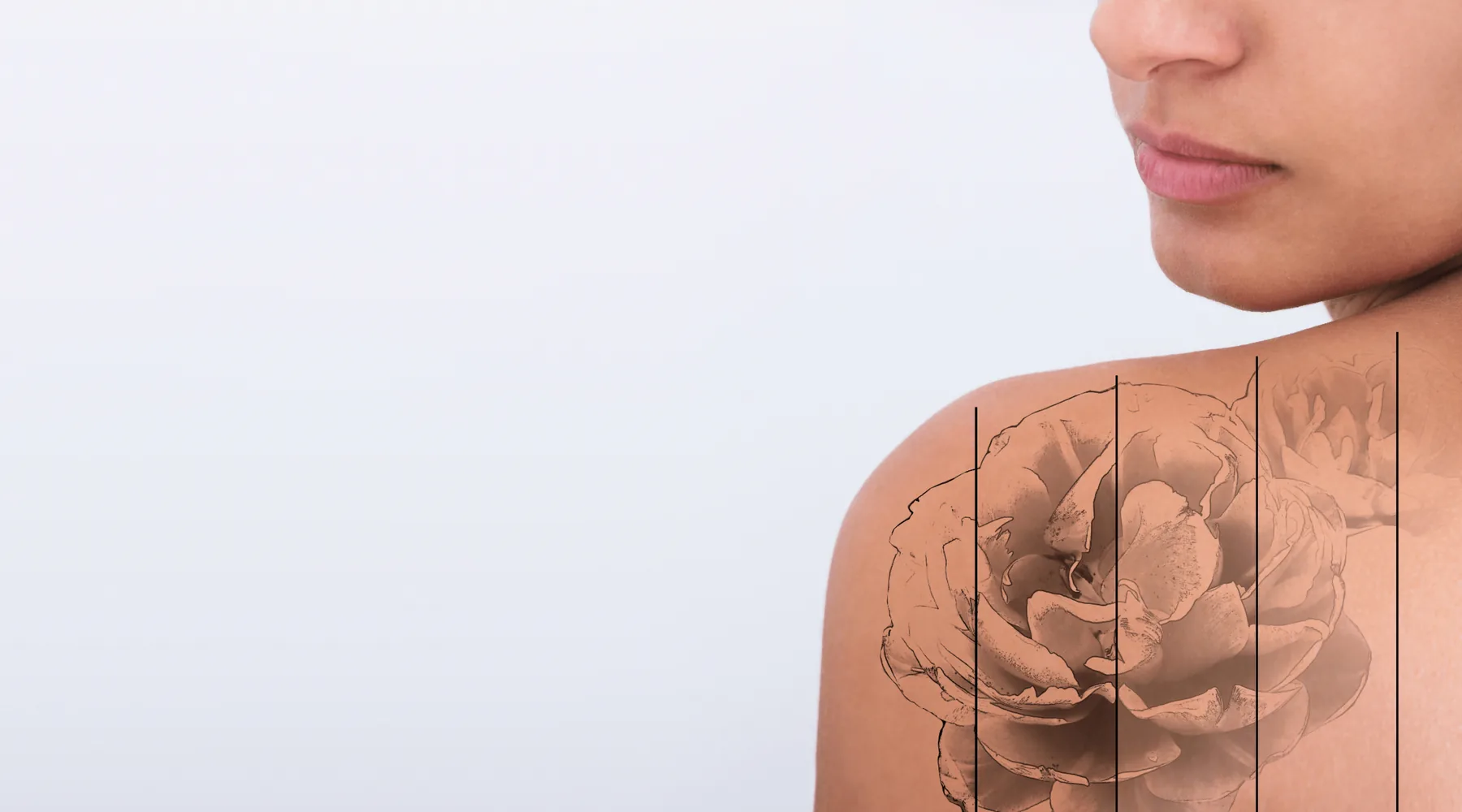
Tattoo cover-up prep is partial laser fading that lightens an existing tattoo so a new design can cover it cleanly. At Laser Eraser in NJ, a physician uses the PicoWay laser to break down enough old ink that your artist has a lighter, less crowded canvas. Because you only fade rather than fully erase, it usually takes fewer sessions than complete removal.
What cover-up prep fading is
Cover-up prep is laser fading with a specific goal: lighten an existing tattoo just enough that a new design can be placed over it and still look crisp. It is different from complete removal, where the aim is to clear all of the ink. Here you and your artist decide how faint the old work needs to become, and we fade toward that target rather than all the way to bare skin.
A skilled artist can only hide so much. Dense black, dark outlines, and heavily saturated areas will bleed through a new tattoo unless they are lightened first, which is why so many cover-ups end up looking muddy, oversized, or limited to dark colors. Fading the underlying ink first gives the artist room to work with brighter palettes, cleaner linework, and a design that is not dictated entirely by what has to be concealed.
How PicoWay fades your old tattoo
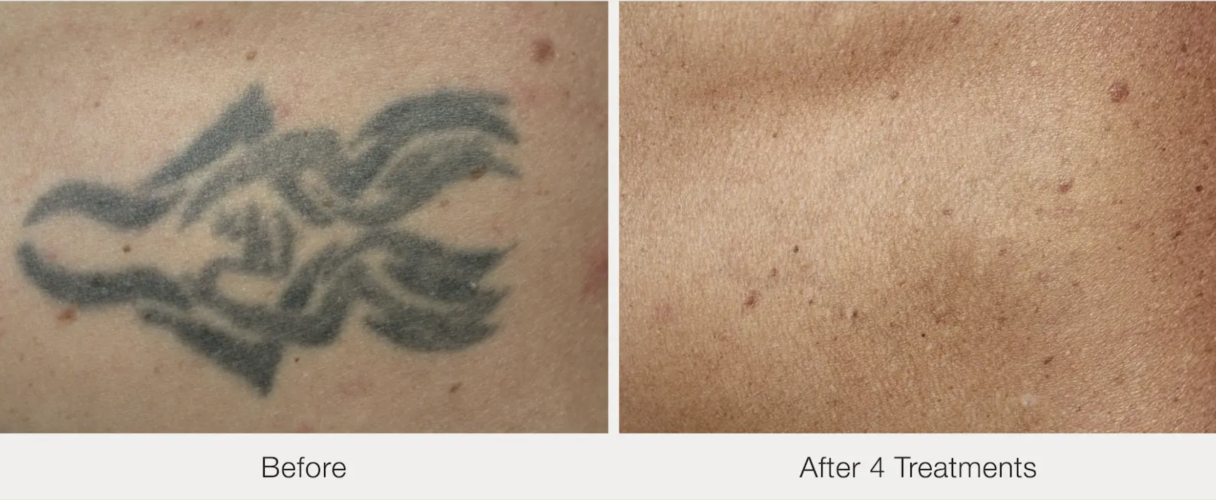
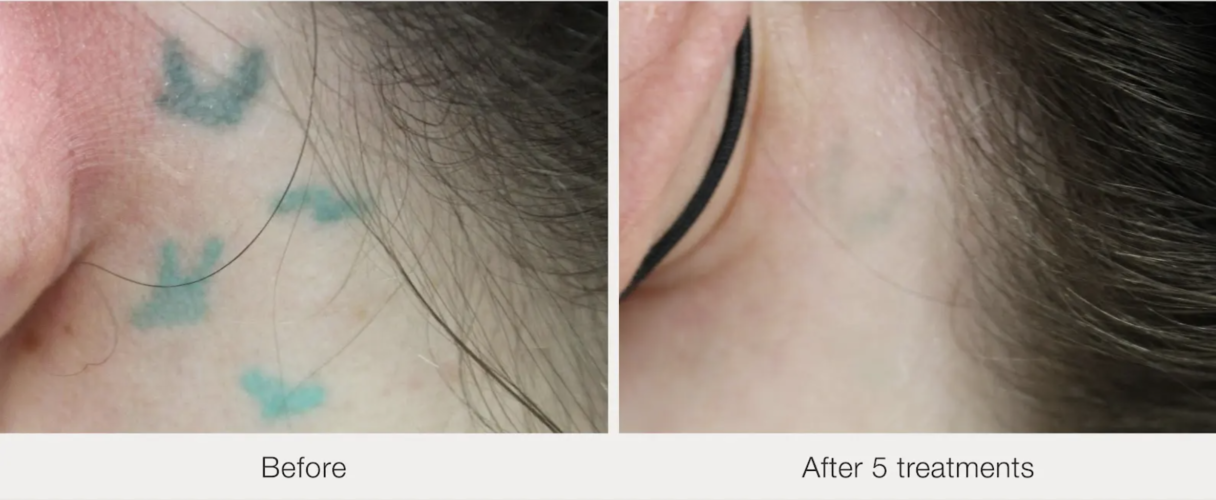
Laser Eraser fades every cover-up prep with the PicoWay picosecond laser, the same technology we use for full removal. PicoWay fires pulses lasting trillionths of a second, hitting the trapped ink with a rapid photoacoustic shockwave that shatters the pigment into microscopic particles. Your immune system then clears those fragments over the following weeks, and the treated area steadily lightens.
For a cover-up, the physician tailors how aggressively and how broadly to fade. Sometimes the whole tattoo needs to come down a few shades; other times only the darkest sections or a heavy outline need targeting so the new artwork can sit over them. The wavelength and settings are customized to your skin type and the specific colors in your tattoo, because blues, greens, and dense black each respond differently. That precision lets us lighten strategically rather than treat every tattoo the same way.
- Fades toward your artist's target, not necessarily to bare skin
- Picosecond pulses shatter ink so your body can clear it
- Physician can spot-fade dark outlines or heavy blocks selectively
- Settings tuned to your ink colors and skin type
How many sessions cover-up prep takes
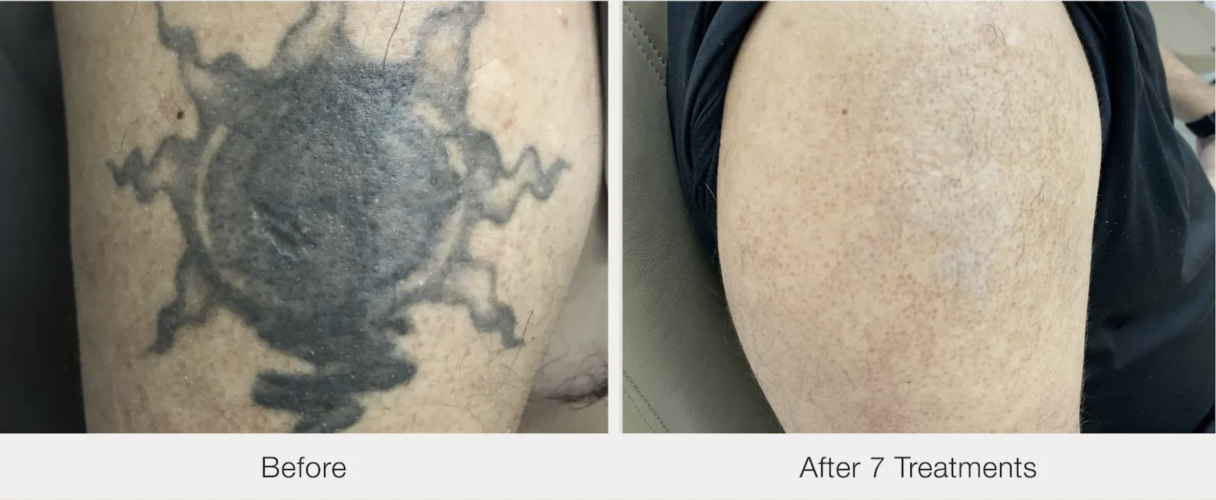
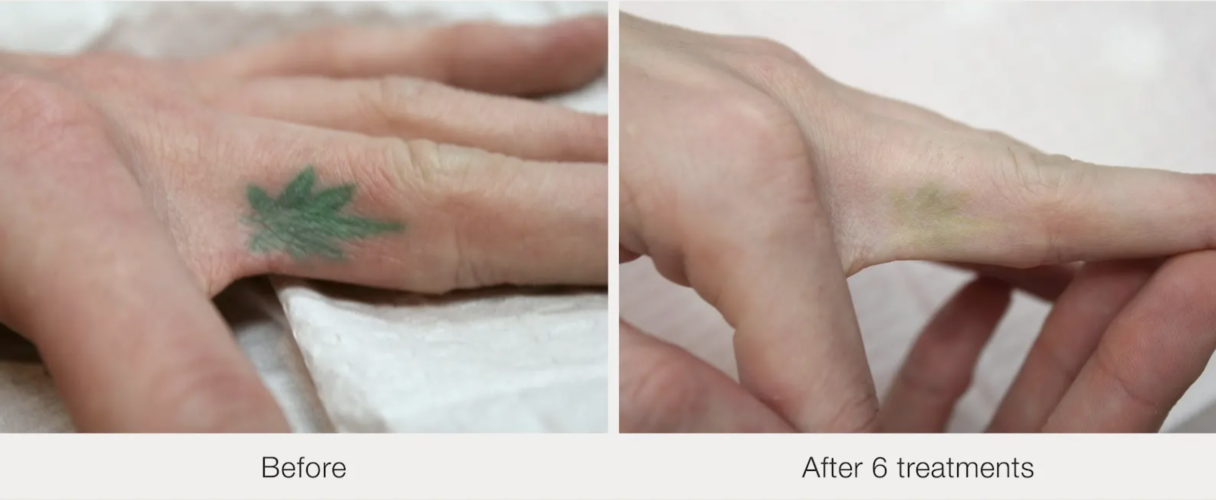
Cover-up fading usually needs fewer sessions than complete removal because you are only lightening the ink, not erasing it. Complete removal typically runs 8 to 12 sessions, and a cover-up prep often reaches its target in a portion of that range. The exact number still depends on the ink colors and density, how dark the tattoo is, where it sits on your body, and your skin type, so we give you a realistic estimate at your free consultation.
The honest expectation is steady, cumulative fading rather than an overnight change, and many patients see visible lightening within the first few sessions. Because your skin needs time to clear each layer of shattered pigment, sessions are spaced several weeks apart. It helps enormously if your cover-up artist is part of the conversation early, so we all agree on how light the old tattoo has to get before the new design goes on.
Why a physician should guide your fade
At Laser Eraser, a licensed medical provider performs every treatment rather than a technician, which matters a great deal for cover-up work. Fading is a judgment call: go too gently and the old ink still bleeds through, push too hard in the wrong spot and you risk the skin changes that make a cover-up harder to tattoo over. Reading how your skin responds and dialing the laser accordingly is exactly the kind of decision a medical professional is trained to make.
Founder Dr. Alvaro Alban is an emergency-medicine physician in New Jersey who pursued specialized training at the Institute for Laser Medicine in Skippack, Pennsylvania, with a focus on laser tattoo removal including large and multi-color pieces, full back pieces, and arm and leg sleeves. That experience with big, complex work translates directly to cover-up prep, where the goal is a healthy, evenly lightened canvas your artist can actually build on. It is the same PicoWay platform many spas and franchises use, delivered with a physician's oversight.
Planning your cover-up timeline
Start early. Because fading happens over spaced-out sessions and your skin needs recovery time between them, a good cover-up prep is a project measured in months, not weeks. If you have a deadline in mind, a wedding, a season, or an artist's booking, bring it to your consultation so we can map the sessions backward from your target date and set expectations you can trust.
We also want your treated skin fully healed before the new tattoo is applied, so we build a buffer after your final fade before you sit for the cover-up. Coordinating between your physician and your tattoo artist is the difference between a cover-up that looks intentional and one that looks like it is hiding something. At your free consultation we will look at the tattoo, talk through the design you want on top, and give you an honest, no-pressure plan.
Complete Removal Packages by Size
8–12 sessions · every session includedOne flat price covers all the sessions your tattoo needs — no per-visit billing. Every tattoo is priced individually, so we give you an exact quote free at your consultation.
Every tattoo is priced individually. Book a free consultation for your exact quote — no obligation.
Get Your Free QuoteFrequently asked questions
No. Cover-up prep only fades the tattoo enough that a new design can be placed cleanly over it, so you rarely need complete removal. Your artist tells us how light the old ink has to get, and we fade toward that target. This usually means fewer sessions than erasing the tattoo entirely.
Cover-up fading usually takes fewer sessions than the 8 to 12 typical for complete removal, because you are only lightening the ink. The exact number depends on your tattoo's colors, density, placement, and your skin type. Your physician gives you a realistic estimate at your free consultation, ideally with your cover-up artist's input.
In most cases, yes. Dense black, dark outlines, and saturated areas tend to bleed through a new tattoo, forcing muddy, oversized, or dark-only designs. Fading the old ink first gives your artist a lighter canvas and room for brighter colors and cleaner linework, so the finished cover-up looks intentional rather than like it is hiding something.
Plan for months rather than weeks. Fading happens over sessions spaced several weeks apart, and your skin needs to heal fully before the new tattoo goes on. Bring any deadline to your consultation so we can map the sessions backward from your target date and build a realistic timeline you can count on.
The sensation is the same PicoWay treatment, often compared to a rubber band snapping against the skin, and most patients find it more tolerable than they feared. Because cover-up prep may target smaller or fewer areas and needs fewer sessions overall, many people find the process shorter and easier than committing to complete removal.