Contracture scars form when skin is lost or badly damaged, most often by a burn, and the healing tissue tightens and pulls. Laser treatment can soften texture, improve pliability, and calm discoloration in that tissue. At Laser Eraser, a physician first assesses whether laser is appropriate for your scar, and will refer you for surgical evaluation when a contracture is limiting how you move.
What a Contracture Scar Is
A contracture scar forms when a significant area of skin is lost or damaged and the body closes the gap with tissue that is tighter and less elastic than the skin it replaced. Burns are the most common cause, though major wounds, grafts, and some surgeries can produce them as well. As the scar matures it shortens, drawing the surrounding skin inward, which is where the pulling sensation comes from.
Because the replacement tissue does not stretch the way healthy skin does, a contracture across a joint can restrict how far that joint moves. The hand, elbow, knee, neck, and armpit are frequent sites, and contractures on the face can tug at features. Deeper contractures may involve tissue well below the surface. That functional dimension is what sets contractures apart from most other scars, and it changes how treatment should be approached.
When Laser Is the Right Tool — and When It Isn't
We want to be direct about this, because it matters more here than on any other scar page. Laser treatment works on the surface and the quality of scar tissue: its texture, its flexibility, its color. It does not release a tight band of tissue that is physically restricting a joint. A contracture that meaningfully limits your range of motion is a reconstructive surgery question, and often a physical or occupational therapy question, before it is a laser question.
That is precisely why the first appointment is an assessment, not a treatment. A physician examines the scar, asks how it affects your movement and daily activities, and gives you a straight answer about what laser can realistically contribute to your case. Sometimes laser is a genuinely useful part of the plan — softening pliability and evening tone in tissue that is otherwise stable. Sometimes the honest recommendation is that you see a reconstructive or burn specialist first, and we will tell you that rather than sell you a course of sessions.
- Laser can improve texture, pliability, and discoloration in scar tissue
- Laser does not release a band restricting joint movement
- Function-limiting contractures warrant surgical or specialist evaluation
- The consultation is an honest assessment, with no obligation to treat
How Laser Treatment Helps Scar Tissue
Where laser treatment does contribute, it works through your own healing response. Controlled energy prompts the skin to remodel its collagen, retiring the stiff, disorganized fibers laid down during healing and encouraging fresher, better-organized tissue to form underneath. That is the mechanism behind a scar that gradually feels more supple and looks less ridged. At the same time, the laser targets concentrated pigment and dilated vessels, helping fade the red, purple, or brown discoloration that burn-related scars often carry.
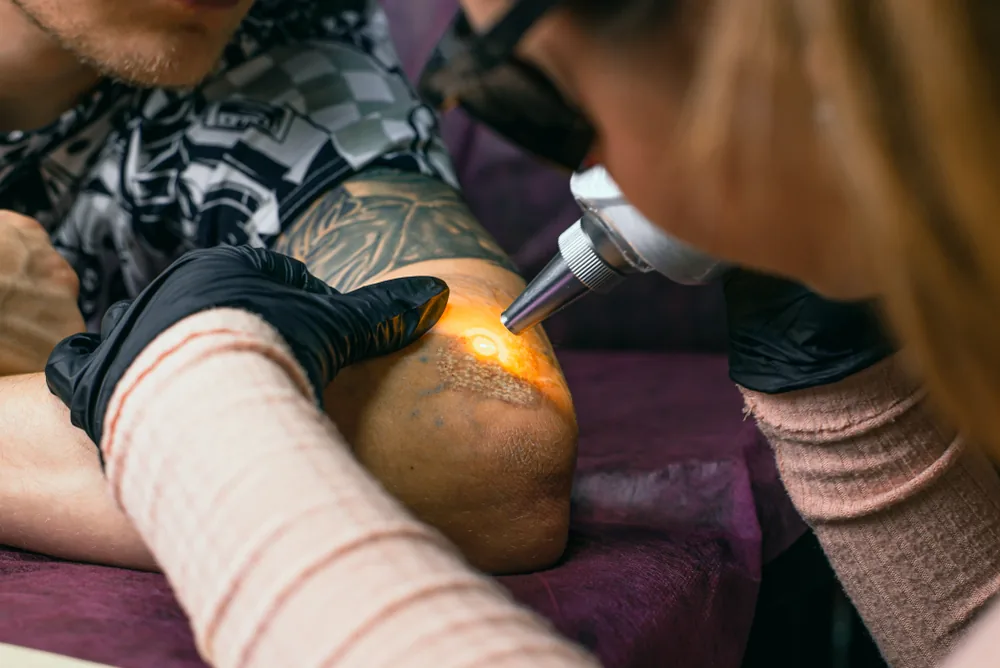
Laser Eraser uses the PicoWay picosecond laser, calibrated for scar tissue rather than ink. Its ultra-short pulses deliver energy precisely and limit heat spread into surrounding skin, which matters when the tissue being treated is already compromised. Improvement builds progressively across a course of sessions rather than appearing after any single visit.
Physician-Led Assessment and Calibration
Every treatment at Laser Eraser is performed by a physician, not a technician. Our founder, Dr. Alvaro Alban, is a New Jersey emergency-medicine physician who pursued specialized laser training at the Institute for Laser Medicine in Skippack, Pennsylvania. For contracture scars that clinical background shapes the first conversation as much as the treatment itself.
Your doctor evaluates the depth, age, and firmness of the scar, how it moves, your skin type, and how you have healed from previous injuries. Scar tissue from a serious burn is fragile in ways healthy skin is not, so settings are chosen conservatively and adjusted session to session based on how your skin actually responds. If you are still under the care of a burn or reconstructive team, we would rather coordinate with them than work around them.
Honest Expectations
Where laser treatment is appropriate, contracture scars typically call for a series of sessions — often around three to six, though your physician gives you a realistic range for your scar at consultation. Visits are spaced several weeks apart so the tissue can remodel and heal in between, and results accumulate gradually across that timeline.
No reputable practice can guarantee that a contracture scar will disappear, and we will not imply otherwise. What laser treatment can offer many patients is meaningfully softer texture, better pliability, and more even color. What it cannot do is restore skin that was lost or undo a restriction in movement. Because this treatment is cosmetic, it is generally not covered by insurance, so we offer a complimentary consultation and flexible monthly payment plans with no hidden fees — and if the assessment concludes laser is not right for you, the consultation still costs nothing.
Safety Across Skin Tones
Skin tone is a central factor in planning laser treatment for any scar, and especially for burn-related tissue. Deeper and richer complexions carry more melanin, which can make some lasers more likely to cause unwanted lightening or darkening when the device or settings are poorly matched. The PicoWay platform's picosecond pulses place energy precisely and limit excess heat, supporting a more measured approach across a wider range of skin types.
Even so, the technology is only as safe as the judgment behind it. Your physician assesses your skin type first, begins conservatively, and monitors your response before advancing. Tell us about any history of keloids, grafts, or pigment changes after injury at your consultation so it can be factored into the plan — or so we can be honest with you if laser treatment is not the right fit.
Frequently asked questions
No. Laser treatment improves the texture, flexibility, and color of scar tissue, but it does not release a tight band that is physically restricting a joint. A contracture that meaningfully limits your range of motion warrants reconstructive surgical evaluation, and often therapy. Our physician will tell you that directly at your consultation rather than recommend sessions that will not help.
Where the tissue is stable and the issue is quality rather than restriction, laser treatment can soften stiff texture, improve pliability, and fade the red, purple, or brown discoloration burns often leave behind. Improvement comes through collagen remodeling and builds gradually across a course of sessions rather than appearing after one visit.
Where laser treatment is appropriate, most contracture scars need a series of sessions, often around three to six, spaced several weeks apart so tissue can remodel between visits. The exact number depends on the scar's depth, age, and how your skin responds, so your physician gives you a realistic range after examining it.
Scar tissue from a serious burn is more fragile than healthy skin, which is why settings are chosen conservatively and adjusted session to session. A physician assesses the scar's depth, age, and firmness alongside your skin type before treating. If you are still under the care of a burn or reconstructive team, we prefer to coordinate with them.
We tell you, and we point you toward the care that fits better — typically a reconstructive or burn specialist. The consultation is free either way, with no obligation to book treatment. We would rather give you an honest assessment than sell a course of sessions that will not address the actual problem.