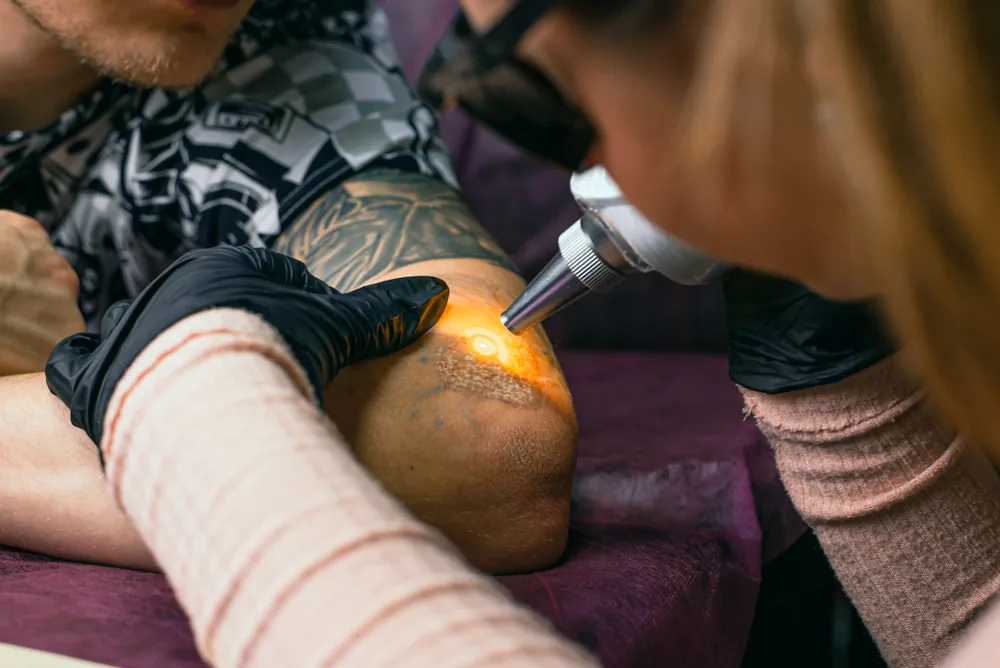
Burn scar removal in NJ uses a physician-calibrated PicoWay laser to break up thickened tissue and stimulate new collagen while targeting the red or dark pigment burns leave behind. At Laser Eraser, a licensed medical provider performs every session, gradually softening texture and evening skin tone over a series of visits.
Why burn scars are different
Burns heal differently than a clean surgical cut. As the skin repairs itself, it lays down collagen in dense, disorganized bundles, which is why older burn scars often feel raised, tight, or ridged and can look shiny, red, or noticeably lighter or darker than the surrounding skin. Deeper burns may also restrict how the skin stretches over a joint or across the face, so the goal of treatment is both cosmetic and functional: a softer, more flexible, more evenly colored surface.
There is no single kind of burn scar. A healed scald from hot liquid behaves differently than a friction or contact burn, and a fresh pink mark responds differently than a scar you have lived with for years. Because of that variability, honest assessment matters more than any promise. During a free consultation, a physician looks at the depth, age, color, and firmness of your scar and tells you plainly what laser treatment can realistically improve — and what it cannot.
How laser treatment helps
The PicoWay laser Laser Eraser uses delivers energy in ultra-short picosecond pulses. That speed lets the laser work on burn scars in two ways at once. First, controlled energy encourages the skin to remodel its collagen — retiring the stiff, tangled fibers of the original scar and prompting fresh, better-organized tissue to form underneath, which is what gradually softens and flattens a raised scar. Second, the same picosecond pulses fragment concentrated pigment, helping fade the lingering redness or brown discoloration a burn can leave in its wake.
Because these changes happen through your body's own healing response, improvement is progressive rather than instant. You are essentially guiding the skin to rebuild the scar more smoothly over time. Most people notice texture and color shifting gradually across a course of sessions rather than after any single appointment.
- Collagen remodeling to soften and flatten raised or ridged tissue
- Pigment targeting to calm redness and even out discoloration
- Picosecond pulses for precise energy delivery with less surrounding heat
- A gradual, natural-looking transition as the skin rebuilds
Physician-led calibration
At Laser Eraser, a licensed medical provider performs your treatment — it is not handed off to a technician. Founder Dr. Alvaro Alban is a New Jersey emergency-medicine physician who pursued specialized laser training at the Institute for Laser Medicine in Skippack, Pennsylvania, and the practice is built around clinician-administered care from the first consultation onward.
That matters most with burn scars, where settings have to be dialed in carefully. Treat too aggressively and you risk irritating fragile scar tissue; treat too conservatively and you see little change. A physician evaluates the depth, age, and firmness of your scar alongside your skin type, then calibrates the laser's energy for your specific case — and adjusts it session to session as your skin responds. This individualized, medically supervised approach is the core difference between Laser Eraser and a franchise or spa setting.
Honest session expectations
Burn scars typically call for a series of treatments — often around three to six sessions, though your physician will give you a realistic range for your scar at consultation. Visits are spaced several weeks apart so the skin has time to remodel and heal between appointments, and results build gradually across that timeline rather than appearing all at once.
We will always be straightforward with you about outcomes. Laser treatment can meaningfully soften texture and improve the color of many burn scars, but no reputable practice can guarantee a scar will disappear completely — results depend on the burn's depth, its age, and how your individual skin heals. The aim is genuine, visible improvement, not an unrealistic promise. Because burn scar treatment is cosmetic, it is generally not covered by insurance, so we offer a free consultation and flexible monthly payment plans with no hidden fees.
Safety across skin tones
Skin tone is a central part of planning any laser treatment, especially for scars. Deeper and richer skin tones carry more melanin, which can make some lasers more likely to cause unwanted lightening or darkening if the device or settings are not chosen carefully. The PicoWay platform's picosecond pulses were designed to place energy precisely and limit excess heat to surrounding tissue, which supports a more measured approach across a wider range of complexions.
Still, the technology is only as safe as the person operating it. Your physician assesses your skin type before treatment, starts conservatively, and monitors how your skin responds before advancing. If you have a history of keloids or pigment changes after injury, tell us at your consultation so we can factor that into your plan — or advise you honestly if laser treatment is not the right fit for your scar.
Frequently asked questions
Most burn scars need a series of treatments, often around three to six, though your physician gives you a realistic range at consultation. The exact number depends on the burn's depth, its age, and how your skin heals. Sessions are spaced several weeks apart so the skin can remodel and improvement can build gradually between visits.
Laser treatment can meaningfully soften texture and improve the color of many burn scars, but no honest practice can guarantee complete removal. Results depend on how deep the original burn was, how old the scar is, and how your individual skin responds. Our goal is genuine, visible improvement — a physician will tell you plainly what to expect for your scar.
Yes, when performed carefully. The PicoWay laser's picosecond pulses deliver energy precisely and limit excess heat, which supports treating a wider range of complexions. Your physician assesses your skin type first, starts conservatively, and monitors your response before adjusting. Tell us about any history of keloids or pigment changes so we can plan accordingly.
Burn scar laser treatment is cosmetic, so it is generally not covered by insurance. Rather than bill through insurance, Laser Eraser offers a free consultation to assess your scar and flexible monthly payment plans with no hidden fees, so you know the cost clearly before starting any treatment.
Most patients tolerate laser scar treatment well and describe brief, manageable sensations during each pulse. Because a licensed medical provider calibrates the laser to your scar and skin, comfort is part of the plan, and sessions are typically short. Your doctor will discuss comfort measures at your consultation and adjust the approach based on how you respond.