If you have ever mentioned wanting to remove a tattoo at a dinner party or in a group chat, you have probably been bombarded with horror stories. “It hurts way more than getting the tattoo!” “It leaves a massive scar!” “It costs a fortune and doesn’t even work!”
Tattoo removal is a topic shrouded in misinformation. For years, the industry was defined by outdated methods, scary anecdotes, and a lack of scientific understanding among the general public. While the technology has advanced light-years in the last decade, the myths persist, frightening people away from a procedure that could genuinely change their lives.
At Laser Eraser Now, our goal is to replace fear with facts. As Clark NJ tattoo removal experts, we hear these misconceptions every single day during consultations. We see the anxiety on our patients’ faces—anxiety caused not by the laser itself, but by the rumors they have heard about it.
In this comprehensive guide, we are going to dismantle the most common tattoo removal myths one by one. We will look at the science, the safety protocols, and the real-world results to give you a clear, honest picture of what laser tattoo removal really involves.
Myth #1: “Laser Tattoo Removal Is Excruciatingly Painful”
Let’s address the elephant in the room first. Pain is the number one fear for almost everyone considering removal. The common comparison is that it feels like “hot grease snapping against your skin.” While that sounds terrifying, the reality is far more manageable.
The Truth About the Sensation
Yes, laser tattoo removal involves some discomfort. We are using high-energy light to shatter ink particles under your skin. However, the idea that it is unbearable or significantly worse than getting the tattoo is often an exaggeration based on older technology.
Most patients describe the sensation as being similar to the snap of a rubber band against the skin. Is it pleasant? No. Is it bearable? Absolutely. Furthermore, the duration of the pain is drastically different from getting a tattoo.
Speed is the Key
Getting a tattoo can take hours. You are sitting in the chair, feeling the needle drag through your skin for 60, 90, or 120 minutes.
Laser tattoo removal is incredibly fast. A small tattoo can be treated in seconds. Even a large tattoo might only take 5 to 10 minutes of actual laser time. Most patients are surprised when we say “All done!” because they were bracing themselves for an hour-long ordeal. The discomfort is momentary.
Pain Management Technology
Modern clinics do not leave you to suffer. At Laser Eraser Now, we utilize advanced cooling systems (like the Zimmer Cryo) that blow freezing cold air (-30°C) onto the skin before, during, and after the treatment. This numbs the area significantly, confusing the nerve endings and taking the edge off the heat sensation.
For patients with lower pain tolerance, topical numbing creams are also an option. When you combine modern lasers, cooling tech, and speed, the “excruciating pain” myth simply doesn’t hold up.
Myth #2: “Tattoo Removal Leaves horrific Scars”
This myth likely stems from the days before lasers, when tattoo removal involved dermabrasion (sanding the skin), salabrasion (scrubbing with salt), or even surgical excision. Those methods absolutely left scars because they destroyed the skin to get the ink out.
How Lasers Are Different
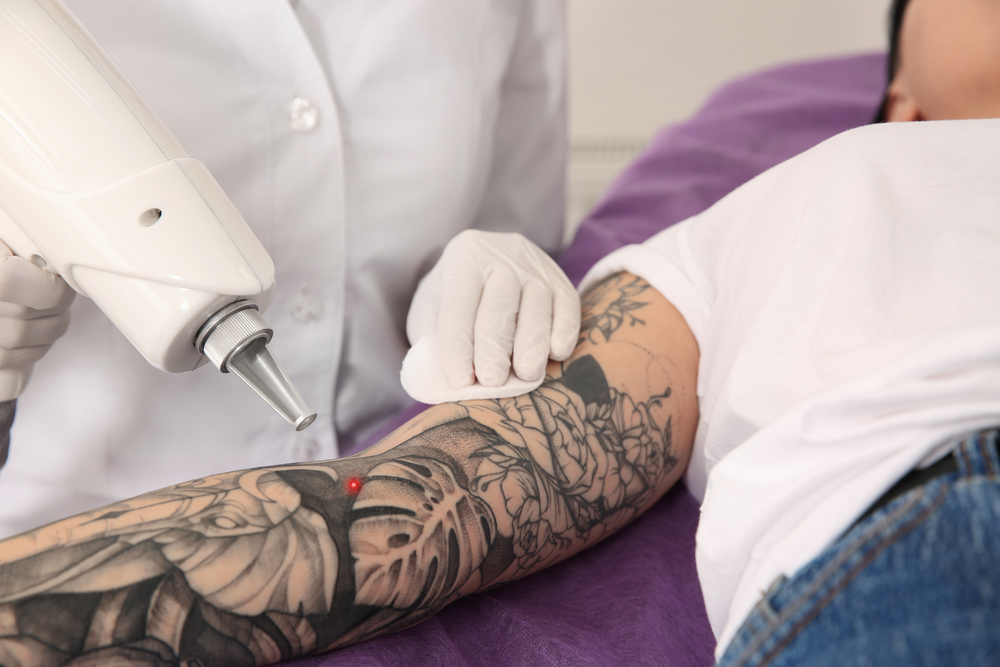
Laser tattoo removal is non-invasive. The laser light passes through the top layer of skin (the epidermis) without damaging it. It targets the ink pigment sitting in the dermis below. When the ink shatters, your body’s immune system flushes it away. The skin surface remains intact.
The Risk of Scarring is Low
When performed by a board-certified specialist using the correct settings, the risk of scarring is extremely low—typically less than 5%.
Scarring usually happens for two reasons:
- Improper Aftercare: If a patient picks at scabs, pops blisters, or exposes the healing area to infection, scarring can occur. This is why following our aftercare instructions is vital.
- Inexperienced Technicians: If a laser operator uses energy settings that are too high for the patient’s skin type, they can cause thermal damage.
This is why choosing the right provider matters. At our clinic, we prioritize skin integrity over speed. We would rather do an extra session to ensure your skin remains smooth than rush the process and risk a scar. You can see the smooth, scar-free results our patients achieve in our Before & After gallery.
Myth #3: “It’s Impossible to Completely Remove a Tattoo”
Many people believe that laser removal only fades a tattoo but leaves a “ghost” image forever. While some ink is indeed stubborn, complete removal is absolutely possible for the vast majority of tattoos.
Understanding “Stubborn” vs. “Impossible”
There are factors that make complete removal harder:
- Ink Color: As we have discussed in other posts, yellow and fluorescent colors are harder to remove than black.
- Ink Depth: Professional tattoos with deep, dense ink take longer.
- Scar Tissue: If the original tattoo artist scarred you while putting the ink in, that scar tissue can encapsulate the ink, making it harder for the laser to reach.
However, “harder” does not mean impossible. With patience and multiple sessions, most tattoos can be cleared to the point where they are invisible to the naked eye.
The Role of Technology
The myth of the “ghost tattoo” often comes from patients who were treated with older lasers (like Q-switched lasers with limited wavelengths). Modern technology, including picosecond lasers and multi-wavelength systems, can shatter even stubborn ink into dust-like particles that the body can easily remove.
When you look at laser tattoo removal facts, the technology has evolved specifically to solve the problem of incomplete removal.
Myth #4: “Creams Can Remove Tattoos Just as Well as Lasers”
If you scroll through social media, you will see ads for “miracle” tattoo removal creams. They promise to erase your ink for $50 without any pain or doctors.
The Harsh Reality of Creams
These creams are, at best, a waste of money. At worst, they are dangerous.
To remove a tattoo, you have to reach the ink. The ink sits in the dermis, the second layer of skin. Creams are applied to the epidermis, the top layer. By design, skin creams are not meant to penetrate deep enough to reach the dermis; if they did, they would be regulated drugs, not cosmetics.
Most removal creams use bleaching agents or mild acids to irritate the skin, hoping to cause peeling that will lift some pigment out. This rarely works on deep tattoo ink and often causes chemical burns, permanent discoloration, or scarring.
There is currently no topical cream FDA-approved to remove tattoo ink effectively. Laser energy remains the only method capable of penetrating the skin to shatter ink without destroying the tissue.
Myth #5: “Laser Removal Is Only for Light Skin Tones”
There is a persistent misconception that people with darker skin tones (Fitzpatrick skin types IV-VI) cannot get laser tattoo removal safely. The fear is that the laser will target the melanin in their skin instead of the tattoo, causing burns or permanent hypopigmentation (white spots).
Safety for All Skin Types
While it is true that darker skin requires more caution, it is a myth that it cannot be treated.
The key lies in the wavelength. The 1064 nm wavelength (specifically the Nd:YAG laser) is the gold standard for treating darker skin tones. It is long enough to bypass the melanin in the epidermis and target the dark tattoo ink in the dermis deep below.
Expertise is Non-Negotiable
The risk on darker skin comes from inexperienced technicians using the wrong wavelengths (like 532 nm or 755 nm) or overly aggressive energy settings. As Clark NJ tattoo removal experts, our team is trained to treat multicultural skin safely. We adjust our protocols—often using lower settings and longer intervals between sessions—to ensure the natural pigment is protected while the ink is destroyed.
If you have a darker complexion, do not rule out removal. Just be diligent about choosing a clinic with specific experience and the right technology for your skin type.
Myth #6: “New Tattoos Are Easier to Remove”
It seems logical: the ink is fresh, so it hasn’t “settled” yet, right? Wrong.
Why Older is Better
Actually, older tattoos are generally easier to remove. Over time, your body treats tattoo ink as a foreign invader. For years, your immune system has been slowly trying to break down the pigment, and gravity has caused the ink to migrate slightly. This means the ink is already partially compromised.
A brand-new tattoo is fresh, dense, and packed with pigment that your body hasn’t had time to attack yet. The ink is sitting high in the dermis and is very vibrant.
The Healing Waiting Period
Furthermore, you cannot laser a tattoo immediately after getting it. You must wait for the skin to fully heal from the tattoo application process—typically at least 6 to 8 weeks. Treating a tattoo that is still scabbing or healing from the needle trauma would cause severe damage to the skin.
So, while we can remove new tattoos, expect them to take slightly more sessions than that faded tribal piece from the 90s.
Myth #7: “Tattoo Removal Causes Cancer”
This is a scary one, but thankfully, there is no scientific evidence to support it.
The Science of Safety
Lasers used for tattoo removal are non-ionizing radiation. This is different from ionizing radiation (like X-rays or gamma rays) which can damage DNA and lead to cancer. Laser light is essentially concentrated heat and light energy. It interacts with the ink, not your cells’ DNA.
Additionally, the ink particles are broken down and filtered through the lymphatic system, then excreted as waste. This is a natural bodily process. There is currently no study linking laser tattoo removal to an increased risk of skin cancer or systemic cancer.
Myth #8: “It Costs a Fortune”
Cost is a valid concern. Laser tattoo removal is an investment, and it is usually more expensive than getting the tattoo was. However, the myth that it is exclusively for the wealthy is outdated.
Changing Economics
As technology has become more widespread, the cost of treatment has stabilized. Furthermore, most clinics offer financing plans, packages, or pay-per-session models that make it accessible.
The Cost of Living with It
When weighing the cost, you also have to weigh the cost of keeping the tattoo.
- Does it limit your career options?
- Does it require you to buy special clothes to cover it?
- Does it lower your self-esteem?
Many patients find that the monthly cost of a session is comparable to other beauty treatments like hair coloring or facials. At Laser Eraser Now, we offer free consultations to give you an exact price quote upfront, so there are no surprises. You can check our specific offerings on our Tattoo Removal page.
Myth #9: “If You Don’t See Results Immediately, It Isn’t Working”
We live in an instant-gratification world. We want to zap the tattoo and see it vanish before our eyes. When patients come in for their first session and the tattoo looks almost the same the next day, they often think the laser failed.
The Fading Curve
This is a fundamental misunderstanding of the biological process. The laser doesn’t remove the ink; it shatters it. Your body removes it.
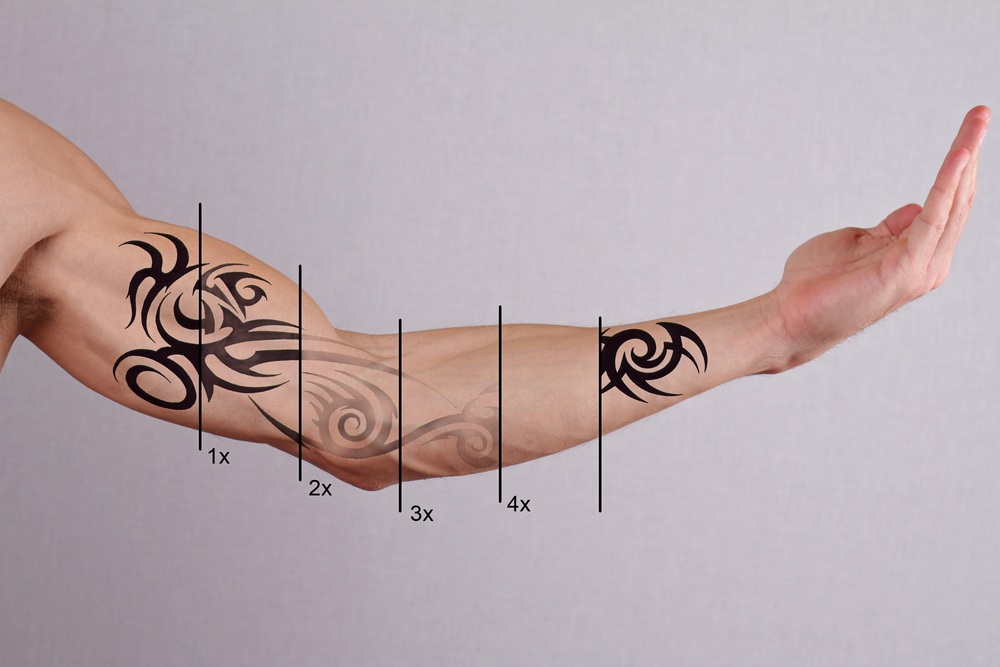
This flushing process takes weeks. You won’t see the full result of Session 1 until about 6 to 8 weeks later. Furthermore, the fading is cumulative. You might not see a huge difference after the first session, but after the third or fourth, the difference becomes dramatic.
Patience is the most critical tool in your removal kit. Trust the process, and trust your body.
Myth #10: “Black Ink is the Hardest to Remove”
Visually, black looks the boldest and strongest, so people assume it is the toughest to beat.
The Physics of Light
In reality, black ink is the easiest color to remove. Why? Because black absorbs all wavelengths of light. It doesn’t reflect anything. This makes it an easy target for the laser.
It is the light colors—yellow, sky blue, pale green—that are difficult because they reflect laser light rather than absorbing it. If you have a black tattoo, consider yourself lucky; you are the ideal candidate for fast, effective removal.
Myth #11: “Amateur Tattoos Are Harder to Remove”
People assume that “stick and poke” or prison tattoos are difficult because the ink might be of poor quality or placed unevenly.
The Density Factor
Actually, amateur tattoos are usually much easier to remove than professional ones.
- Less Ink: Amateurs simply cannot pack as much pigment into the skin as a professional machine can. There is physically less ink to break down.
- Shallower Depth: Amateurs often don’t get the ink as deep into the dermis as a pro artist.
- Ink Composition: Professional inks are engineered to be permanent and vibrant. Amateur inks (like India ink or pen ink) are often carbon-based and break down very easily under laser light.
We often clear amateur tattoos in half the number of sessions required for a professional piece.
Myth #12: “You Can Just Burn It Off”
Some people think laser removal works by burning the skin off to get to the ink. This terrifying image keeps many away.
Photo-Acoustic, Not Just Thermal
Modern lasers use the photo-acoustic effect. The pulses of energy are so short (picoseconds or nanoseconds) that they create a shockwave that shatters the ink mechanically, rather than just melting it thermally.
We are not burning your skin off. We are vibrating the ink apart using sound and light physics. This preserves the surrounding tissue and is why the healing time is relatively quick compared to a burn.
Conclusion: Don’t Let Myths Dictate Your Skin
The decision to remove a tattoo is personal, but it should be based on laser tattoo removal facts, not fear mongering. The technology is safe, the pain is manageable, and the results are real.
At Laser Eraser Now, we have helped countless people in Clark, NJ, move past the myths and reclaim their skin. We believe that an informed patient is a happy patient.
If you are still holding onto doubts or have a specific question we didn’t cover, the best way to get clarity is to talk to an expert directly. Don’t rely on forums or outdated articles. Let us look at your tattoo and tell you the truth about what is possible.
Ready to separate fact from fiction?
Schedule your free consultation with our specialists today.
Stop letting myths hold you back. The clear skin you want is closer—and easier to achieve—than you think.
Laser Tattoo Removal in Clark, NJ
Erase the Past with the PicoWay® Laser—Advanced Tattoo Removal Performed by Board-Certified, Physician-Owned & Operated Physicians.
Contact Us