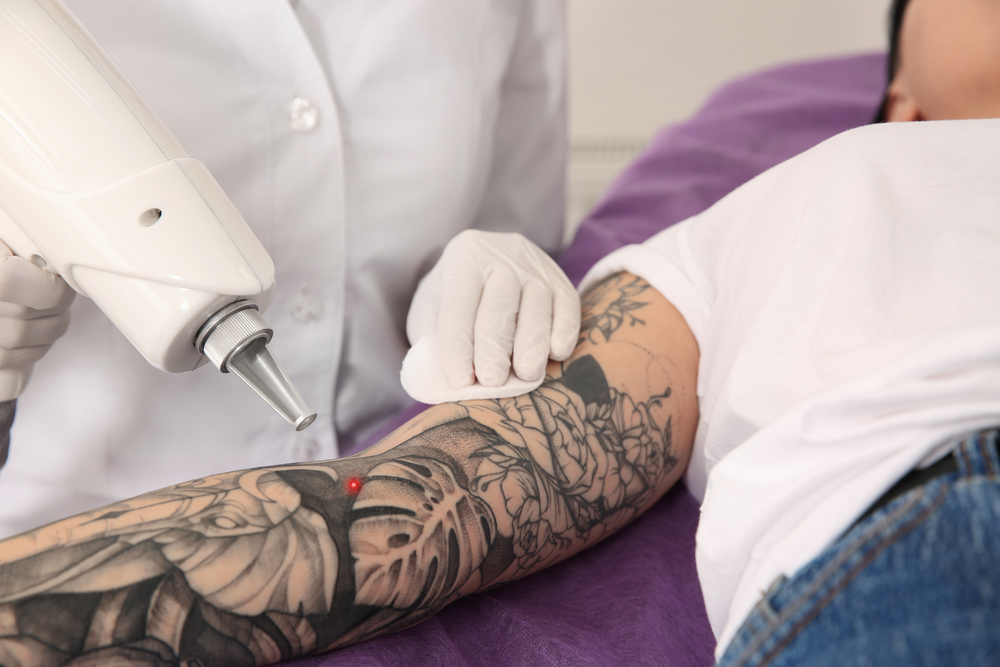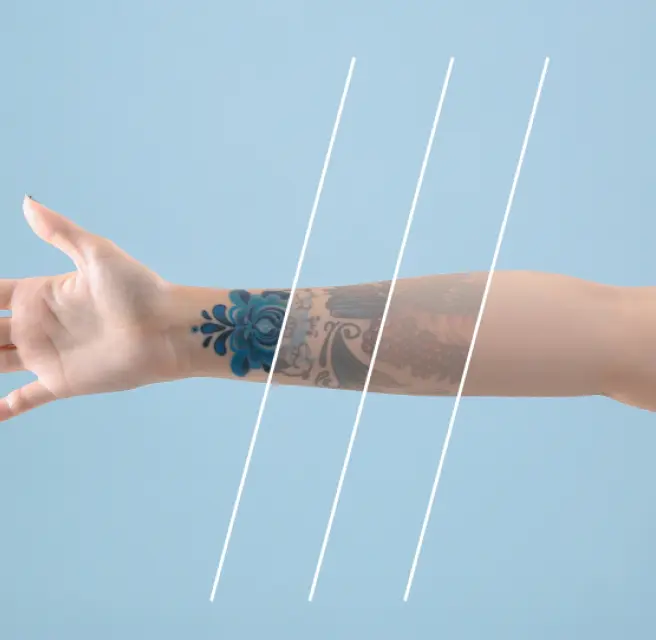

Congratulations! You have just finished your laser tattoo removal session. Whether it was your very first treatment or your fifth, walking out of the clinic feels like a victory. You are one step closer to reclaiming your skin and erasing the past.
However, the laser treatment itself is only half the battle. What happens after you leave the clinic is just as important as the technology we use during your appointment. The success of your removal—how fast the ink fades, how healthy your skin remains, and how quickly you recover—depends heavily on how you care for the treated area in the days and weeks following your visit.
At Laser Eraser Now, our goal isn’t just to blast ink; it is to ensure you get the best possible results with zero scarring. As a leading Clark NJ tattoo removal clinic, we have guided hundreds of patients through the healing process. We know that proper aftercare is the secret ingredient to a successful removal journey.
In this comprehensive guide, we will walk you through exactly what to do after your session. We will cover the immediate sensations to expect, the “do’s and don’ts” of healing, and expert tattoo removal healing tips to help your body flush out that ink efficiently.
Understanding the Process: Why Aftercare Matters
To understand why aftercare is so critical, you have to understand what just happened to your skin. During your session, our advanced laser delivered short, high-intensity pulses of light energy into the dermis. This energy was absorbed by the tattoo ink, causing the pigment particles to heat up instantly and shatter into microscopic fragments.
While the laser breaks the ink, it is your body’s immune system that actually removes it. Your white blood cells (specifically macrophages) swoop in, engulf the shattered particles, and carry them away through your lymphatic system.
This process creates a temporary inflammatory response. Your body thinks it has been injured (even though the skin surface is usually intact), so it rushes blood and immune cells to the area. This is good! It means healing is happening. But it also means you need to manage that inflammation carefully to prevent infection, blistering, or scarring.
Proper laser tattoo removal aftercare ensures that:
- Infection is prevented: Keeping bacteria out is priority number one.
- Healing is accelerated: Helping your skin repair itself faster.
- Ink removal is maximized: Giving your immune system the best environment to work.
- Skin texture is preserved: Avoiding scars or pigmentation changes.
The First 24 Hours: Managing the Immediate Aftermath
The first 24 hours are the most critical. Immediately after your treatment, the area will likely look white or “frosted.” This is a reaction to the rapid heating of the ink and releases tiny gas bubbles within the skin. This frosting usually fades within 10 to 20 minutes, leaving behind redness and swelling.
Here is what you might feel and how to handle it:
1. The Sensation of Heat
It is completely normal for the treated area to feel like a bad sunburn. It may feel hot, tender, and sensitive to the touch. This sensation can last for several hours after the treatment.
What to do:
- Apply Cold Compresses: Ice is your best friend right now. Apply an ice pack (wrapped in a clean cloth—never put ice directly on the skin) to the treated area. Do this for 10-15 minutes at a time, every hour or two. This helps pull the heat out of the skin and significantly reduces inflammation.
- Cool Air: If the area is uncovered, letting cool air hit it can provide relief.
2. Bandaging and Protection
When you leave our clinic, we will typically apply a soothing ointment and cover the area with a sterile bandage.
What to do:
- Keep it Covered: Leave the initial bandage on for at least 24 hours. This creates a barrier against bacteria while the skin is most vulnerable.
- Keep it Dry: Do not get the bandage wet. If you need to shower, try to keep the area out of the water or use a waterproof covering.
3. Elevation
If your tattoo is on an extremity—like your ankle, foot, hand, or wrist—gravity works against you. Blood and fluids will naturally pool in these lower areas, leading to increased swelling and throbbing.
What to do:
- Elevate: Prop the treated area up on pillows so it is higher than your heart. This is crucial for leg and foot tattoos. Doing this for the first 24 hours can make a massive difference in your comfort level the next day.
Days 2-3: The Critical Healing Phase
After the first day, the initial “sunburn” heat will subside, but you may notice other changes. This is when blisters or scabs might begin to form. Do not panic; this is a biological bandage your body creates to protect the healing tissue underneath.
Handling Blisters
Blisters are a very common side effect of laser tattoo removal, especially with dense ink or color tattoos. They might look alarming—sometimes filling with clear fluid or even looking slightly bloody—but they are a normal part of the healing process for many people.
The Golden Rule: DO NOT POP THE BLISTERS.
We cannot stress this enough. A blister is a sterile bubble. The skin underneath is raw and healing. If you pop the blister, you break that sterile seal and open a direct doorway for bacteria to enter, leading to infection and potential scarring.
What to do if you blister:
- Leave them alone: Let them reabsorb naturally. This usually takes 3-5 days.
- Protect them: If a blister is large and in an area where clothing rubs (like a waistband or bra strap), cover it loosely with a non-stick sterile pad to prevent friction from popping it accidentally.
- If it pops on its own: If a blister bursts accidentally, do not peel the skin away. Gently clean the area with mild soap and water, apply an antibiotic ointment (like Bacitracin or Polysporin), and cover it with a clean bandage.
Hygiene and Cleaning
Once you remove the initial bandage (after 24 hours), you need to keep the area clean.
Cleaning Routine:
- Gently Wash: Use cool or lukewarm water and a mild, fragrance-free soap (like Dove or Cetaphil). Use your fingertips to gently cleanse the area. Do not use a washcloth, loofah, or sponge, as these are too abrasive.
- Pat Dry: Do not rub. Gently pat the area dry with a clean paper towel. Cloth towels can harbor bacteria even after washing.
- Apply Ointment: Apply a thin layer of healing ointment. We often recommend Aquaphor, Vitamin E oil, or a specific post-laser gel. Avoid heavy creams with fragrances.
- Re-bandage (Optional): If the area is oozing or in a high-friction spot, apply a fresh non-stick bandage. If it is dry and not rubbing against clothes, letting it “breathe” is often beneficial.
The Long Game: Weeks 1-2 and Beyond
By the end of the first week, any blistering should have subsided, and the area may start to peel, flake, or scab. It will likely feel dry and itchy.
Dealing with “The Itch”
As the skin heals, it itches. This is a universal truth of wound healing. It can be maddening, but you must resist the urge to scratch.
Why scratching is dangerous:
- Scratching can remove scabs prematurely.
- Removing a scab before it is ready can pull out pigment that hasn’t shattered yet or remove new skin cells, leading to pitted scars.
- It introduces bacteria from your fingernails into the healing skin.
How to soothe the itch:
- Moisturize: Keep the area hydrated with Aquaphor or a fragrance-free lotion. Dry skin itches more.
- Tap, Don’t Scratch: If the urge is unbearable, gently tap the area with clean fingers or apply a cool compress.
- Antihistamines: An over-the-counter oral antihistamine (like Benadryl) can sometimes help reduce the itching sensation.
Scabbing and Peeling
If a scab forms, let it fall off on its own. This might take 10 to 14 days. When the scab falls off, the skin underneath might look pink, shiny, or slightly lighter than the surrounding skin. This is fresh, new skin. Over time, it will blend back in with your natural tone.
You can see examples of how skin looks at various stages of healing in our Before & After gallery. Seeing the progression can help reassure you that what you are experiencing is normal.
7 Essential “Do’s” for Faster Fading
At our Clark NJ tattoo removal clinic, we often tell patients that we do the breaking, but they do the taking. Your lymphatic system is responsible for flushing the ink away. The healthier you are, the faster your tattoo will fade.
Here are 7 proactive tips to speed up your results:
1. Drink tons of water
Water is the fuel for your lymphatic system. If you are dehydrated, your lymph fluid becomes sluggish and cannot transport the ink particles efficiently. Aim for at least 2-3 liters of water a day in the week following your treatment.
2. Boost your immune system
Your body is treating the ink debris like a foreign invader. Give your immune system the ammo it needs to fight. Eat foods rich in antioxidants, Vitamin C, and Zinc. Think leafy greens, citrus fruits, berries, and nuts.
3. Get moving (carefully)
Once the initial tenderness subsides (usually after 24-48 hours), light exercise is fantastic for removal. Physical activity increases blood circulation, which helps scavenge the ink particles. Just avoid contact sports or anything that might traumatize the treated skin.
4. Massage the area (after healing)
Once the skin is completely healed—meaning no scabs, blisters, or tenderness (usually 2-3 weeks post-treatment)—you can gently massage the area for 5-10 minutes a day. This stimulates blood flow to the specific site and can help break up any stagnation in the lymphatic vessels.
5. Prioritize sleep
Healing happens when you sleep. If you are exhausted, your body prioritizes keeping you awake over flushing out tattoo ink. Aim for 7-9 hours of quality rest.
6. Keep it cool
Heat induces inflammation. For the first few days, avoid anything that raises your body temperature excessively, such as saunas, hot tubs, or extremely intense cardio workouts.
7. Follow the schedule
It is tempting to want to rush back for your next session, but waiting is part of the “Do’s.” We typically space treatments 6 to 8 weeks apart. This isn’t just to let the skin heal; it is to give your body enough time to flush the ink. Treating too soon doesn’t make the ink go away faster; it just damages the skin unnecessarily. Learn more about our scheduling philosophy on our Tattoo Removal page.
The Big “Don’ts”: Things to Avoid
To ensure safety and prevent complications, there are strict boundaries you need to set for yourself during the healing process.
1. NO Sun Exposure
This is the cardinal sin of laser tattoo removal aftercare.
- Why: Laser treatment makes your skin photosensitive. If you expose healing skin to UV rays, you risk hyperpigmentation (dark spots) or hypopigmentation (permanent white spots). Additionally, if you come in for your next session with a tan, we cannot treat you because the laser will target your melanin instead of the ink, causing burns.
- The Rule: Keep the area covered with clothing or a bandage for the first week. After that, use a broad-spectrum sunscreen with SPF 50+ containing zinc or titanium dioxide every time you go outside.
2. NO Soaking in Water
Shower? Yes. Bath? No.
- Why: Soaking in standing water—whether it is a bathtub, swimming pool, hot tub, lake, or ocean—introduces a massive risk of infection. The water softens the scab or healing tissue, making it permeable to bacteria.
- The Rule: Avoid soaking until the skin is completely healed and all scabs have fallen off naturally.
3. NO Picking or Shaving
- Picking: As mentioned, picking scabs leads to scars.
- Shaving: Do not shave the treated area until it is fully healed. Dragging a razor over a blister or scab is a recipe for disaster.
4. NO Tight Clothing
If you had a tattoo removed on your ribs, avoid tight bras. If it was on your ankle, avoid tight boots or socks. Friction can rub off scabs prematurely and cause irritation. Wear loose, breathable cotton fabrics whenever possible.
Troubleshooting: When to Call the Doctor
While side effects like redness, swelling, blistering, and itching are normal, complications can happen. It is important to know the difference between a normal immune response and an infection.
Signs of Infection (Call us immediately if you see these):
- Increasing redness: The redness spreads outward from the tattoo area after 48 hours.
- Worsening pain: The area becomes more painful over time, rather than less.
- Pus: Discharge that is yellow, green, or foul-smelling (clear fluid is normal; pus is not).
- Fever: You develop a fever or chills.
- Heat: The skin feels excessively hot to the touch days after the procedure.
If you experience any of these symptoms, contact Laser Eraser Now immediately. Our team includes board-certified doctors who can assess the situation and prescribe antibiotics if necessary. Safety is our top priority.
Lifestyle Factors: What Slows Down Removal?
Sometimes, patients ask us why their friend’s tattoo faded in 5 sessions while theirs is taking 10. While ink density and color play a huge role, lifestyle choices are often the hidden variable.
Smoking
Smoking is the biggest enemy of tattoo removal. Nicotine constricts blood vessels, significantly reducing circulation near the surface of the skin. This means the immune cells have a harder time reaching the ink and carrying it away. Studies have shown that smokers have a 70% lower rate of successful removal after 10 sessions compared to non-smokers. If you are looking for a reason to quit, this is a great one.
Alcohol Consumption
Alcohol dehydrates the body and puts strain on the liver and kidneys—the very organs responsible for filtering waste (like ink debris) out of your system. Heavy drinking can slow down the fading process.
Stress
High stress levels release cortisol, which suppresses the immune system. If your body is in “fight or flight” mode, it isn’t prioritizing scavenging ink particles.
Why Choose Laser Eraser Now for Your Journey?
Searching for tattoo removal healing tips is great, but having a dedicated team behind you is better. At Laser Eraser Now, we pride ourselves on being more than just a laser clinic. We are partners in your journey to clear skin.
Our location in Clark, NJ, is equipped with the latest laser technology designed to shatter ink effectively while minimizing trauma to the skin. But our technology is only as good as the experts wielding it.
- Customized Care Plans: We don’t just hand you a sheet of paper and say goodbye. We explain your specific aftercare needs based on your tattoo’s location and your skin type.
- Accessible Support: If you are worried about a blister on a Saturday morning, we want you to feel supported. Our team is here to answer questions and provide reassurance.
- Medical Oversight: Because we have doctors on staff, we can handle the entire spectrum of the process, from the laser physics to the biological healing.
Conclusion: Patience Pays Off
Laser tattoo removal is a marathon, not a sprint. It requires patience, commitment, and diligent care. The laser does the heavy lifting for a few minutes, but you do the healing for weeks.
By following these laser tattoo removal aftercare guidelines, you are giving yourself the best chance at a flawless result. Treat your healing skin with kindness, keep it clean, keep it out of the sun, and let your body do its amazing work.
Remember, every day of healing is a day closer to the clean slate you’ve been waiting for.
Have questions about your healing process or ready to start your removal journey?
The team at Laser Eraser Now in Clark, NJ is ready to help.
Let’s erase the past together, safely and effectively.
Laser Tattoo Removal in Clark, NJ
Erase the Past with the PicoWay® Laser—Advanced Tattoo Removal Performed by Board-Certified, Physician-Owned & Operated Physicians.
Contact Us