
It is the question that lingers in the doorway before a client ever steps inside. It is the hesitation behind the phone call that never gets made. It is the number one barrier standing between you and the clear skin you desire.
“Is it going to hurt?”
At Laser Eraser in Clark, NJ, we hear this question every single day. We understand why you are asking. The memory of getting the tattoo is likely still fresh in your mind—the buzzing of the needle, the raw skin, the healing process. It is natural to assume that reversing the process must be equally, if not more, painful.
We believe in honesty. We aren’t going to tell you it feels like a gentle massage. But we are going to tell you the truth: the fear of the pain is almost always worse than the reality.
In this comprehensive guide, we are going to demystify the sensation of laser tattoo removal. We will break down exactly what it feels like, why it feels that way, and most importantly, the advanced protocols we use at Laser Eraser to make your experience as comfortable as possible.
The Reality of the Sensation: What Does It Actually Feel Like?
If you ask ten different people what laser tattoo removal feels like, you might get ten different metaphors. Pain is subjective, and everyone’s tolerance is different. However, there are common descriptions that come up time and time again.
The “Rubber Band” Comparison
The most universal description—one used by dermatologists and clients alike—is that it feels like a rubber band being snapped against your skin.
Imagine pulling a rubber band back a few inches and letting it go on your arm. It’s a sharp, quick sting. It surprises you more than it injures you. Now, imagine that happening repeatedly in quick succession. That is the closest approximation to the sensation of the laser pulse.
The “Hot Grease” Comparison
Some clients describe the feeling as similar to tiny specks of hot bacon grease splattering on the skin while cooking. It is a sensation of heat combined with a prickly feeling. This makes sense scientifically, as the laser is delivering thermal energy into the ink particles to shatter them.
The “Scratch” Comparison
Others liken it to a cat scratch or even the feeling of getting the tattoo in the first place, but much faster. If you could handle sitting for hours while a needle dragged through your skin to create the art, you possess the resilience to handle the laser removal.
Why Does It Hurt? The Science of the Snap
To understand the pain, you have to understand what is happening beneath the surface of your skin.
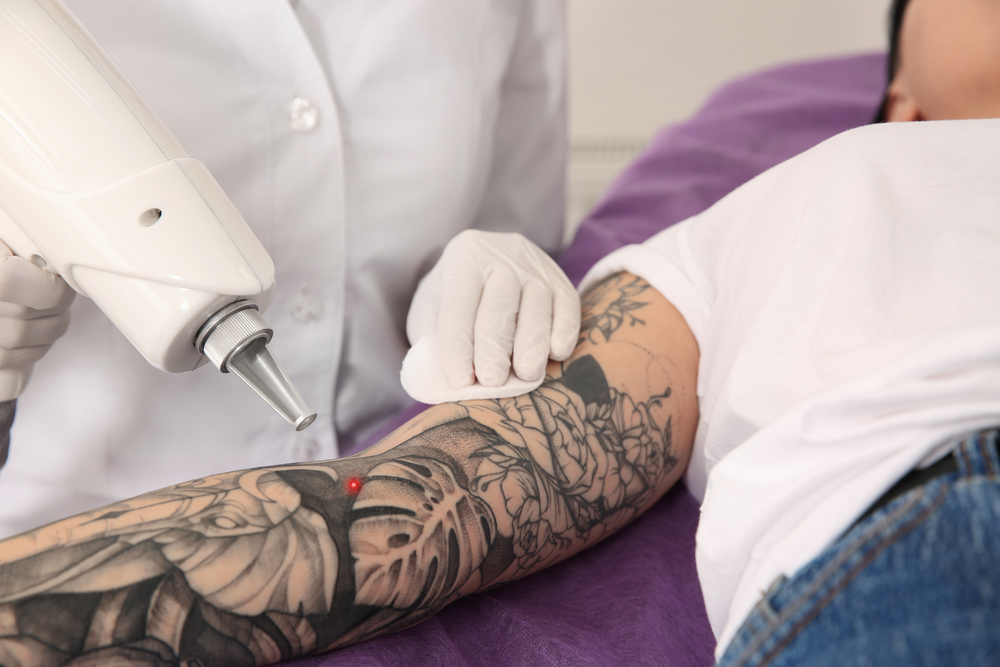
A laser tattoo removal device, like the advanced systems we use at Laser Eraser, emits ultra-short pulses of light energy. These pulses travel through the top layer of your skin (the epidermis) without damaging it and hit the tattoo ink residing in the deeper layer (the dermis).
When the light hits the ink, the ink absorbs the energy instantly. This rapid absorption causes the ink particle to heat up and shatter into microscopic fragments. This reaction is called the photo-acoustic effect. It creates a tiny shockwave under the skin.
That “snap” you feel? That is the physical sensation of the ink shattering. The nerve endings in your dermis register this shockwave as a sharp pinch or sting.
Factors That Influence Pain Levels
Just like getting a tattoo, the pain of removing one isn’t the same for everyone. Several variables dictate how intense the sensation will be for you.
1. Location on the Body
This is the biggest factor. Areas with more fat or muscle cushion tend to be less painful. Areas where the skin is thin or directly over a bone tend to be more sensitive.
- Least Painful Areas: Shoulders, upper arms, thighs, buttocks, and back.
- Most Sensitive Areas: Ribs, ankles, feet, fingers, and the sternum.
If you have a tattoo on your ribs, you probably remember how much it hurt to get it. Removing it will likely be sensitive as well, but the good news is that the removal sessions are significantly shorter than the application sessions.
2. Ink Density
The more ink you have, the more “targets” the laser has to hit. A dense, black tribal tattoo absorbs more energy than a shaded, grey-wash rose. This means the sensation might be more intense during the first few sessions when there is a lot of ink to break down.
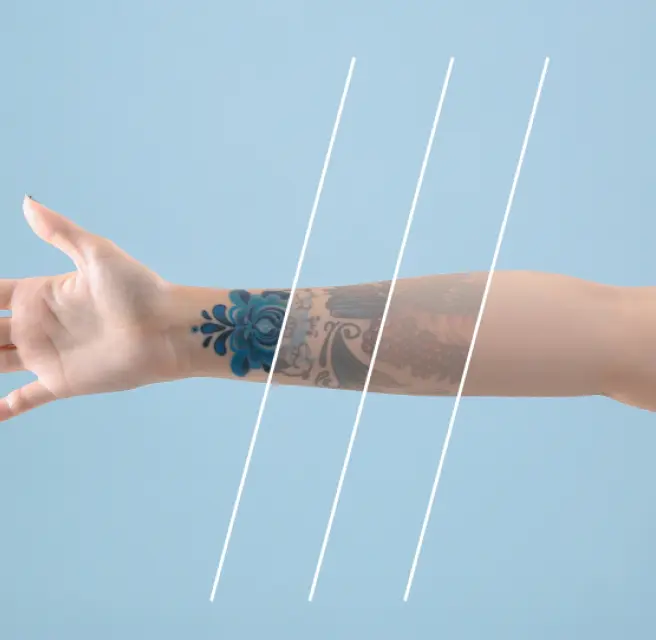
- The Good News: As your treatments progress and the tattoo fades, there is less ink to react to the laser. Therefore, the process typically gets less painful with each subsequent session.
3. Personal Pain Threshold
Everyone is wired differently. Some people can sleep through a tattoo session, while others need breaks. Stress, fatigue, and anxiety can all lower your pain threshold. If you come in nervous and tense, your body releases stress hormones that can heighten your sensitivity. This is why we focus so heavily on creating a relaxed, calm environment at our Clark clinic.
Laser Eraser’s Pain Management Protocols
We know that “it’s manageable” isn’t always enough reassurance. That is why at Laser Eraser, we employ active pain management techniques to ensure your comfort. We don’t just zap you and send you on your way; we take care of you.
1. The Zimmer Cooling System: Our Secret Weapon
The most effective tool in our arsenal is cold air. We utilize a Zimmer Cryo cooling system, which is the gold standard in the laser industry.
This device blows a stream of sub-zero air (around -30°C) onto your skin before, during, and after the laser treatment.
- Before: It numbs the skin naturally within seconds, dulling the nerve endings.
- During: It counteracts the heat of the laser, making the “snap” feel much less intense.
- After: It immediately soothes the area, reducing redness and swelling.
Most of our clients find that with the Zimmer cooler, the pain is reduced to a very tolerable level, often describing it as “annoying” rather than “painful.”
2. Topical Numbing Creams
For clients who are particularly nervous or have tattoos in very sensitive areas (like the ribs or face), we can recommend or apply topical numbing creams. These creams contain lidocaine and prilocaine, which temporarily block nerve signals in the skin.
Note: Numbing cream needs time to work—usually 30 to 45 minutes before the session. If you are interested in this option, please let us know when booking so we can advise you on the best products and timing.
3. The Power of Speed
Perhaps the greatest pain management tool is efficiency.
Think back to when you got your tattoo. You sat in that chair for one, two, maybe four hours. The pain was a marathon.
Laser tattoo removal is a sprint.
- A small symbol on your wrist takes about 15 to 30 seconds to treat.
- A name on your bicep might take 2 minutes.
- Even a large tattoo takes only a fraction of the time it took to apply.
Most clients are shocked by how fast it is. By the time you brace yourself for the pain, the session is often already over.
What Our Clients Say: Real Experiences
You don’t have to take our word for it. The best gauge of the experience is hearing from people who have sat in the chair right here in Clark, NJ.
“I was terrified. I put this off for three years because I thought it would be excruciating. But honestly? It was fine. The cold air machine makes a huge difference. It felt like a rubber band snap, just like they said. And it was so fast! I was in and out in ten minutes.”
— Jessica M., Clark, NJ
“I’m removing a chest piece, which I knew would be a sensitive spot. The staff at Laser Eraser were amazing. They took breaks whenever I needed them, but I didn’t really need many. It hurts less than getting the tattoo did, mostly because it’s over so quickly.”
— David R., Westfield, NJ
“I have a low pain tolerance, so I used the numbing cream. I barely felt a thing. Just a little pressure and some heat. If you’re scared, just use the cream. It’s worth it.”
— Sarah L., Cranford, NJ
The “After” Pain: What About Recovery?
The laser session is short, but what happens when you go home? Does it hurt afterward?
The post-treatment sensation is widely compared to a bad sunburn.
For the first few hours after your appointment, the treated area will feel tender, warm, and perhaps a bit throbbing. It might be red and swollen. This is a normal inflammatory response—it means your body has recognized the “injury” to the ink and is rushing white blood cells to the area to start the healing process.
Managing Post-Treatment Discomfort
- Ice Packs: Applying a cold compress (wrapped in a cloth, never directly on skin) for 10 minutes at a time helps significantly with the heat and swelling.
- Elevation: If the tattoo is on an arm or leg, keep it elevated to reduce throbbing.
- Loose Clothing: Don’t wear tight jeans over a freshly treated leg tattoo. Friction is the enemy.
- Over-the-Counter Relief: Tylenol (acetaminophen) is generally safe to take for discomfort. Avoid Aspirin or Ibuprofen immediately after treatment as they can thin the blood and increase the risk of bruising, unless directed otherwise by your doctor.
This “sunburn” feeling typically subsides within 24 to 48 hours. After that, the area may itch as it heals (a good sign!), but it should not be painful.
Comparing Laser Removal to Other Methods
Sometimes, we fear the devil we know and forget the devils we don’t. When considering if laser removal is “too painful,” it is helpful to compare it to the alternatives.
- Surgical Excision: This involves cutting the skin out with a scalpel and stitching it back together. The recovery involves wound care, stitches, and significant soreness for weeks.
- Dermabrasion: This essentially sands off the top layers of skin. It is raw, painful, prone to infection, and has a long, uncomfortable recovery time.
- Acid/Chemical Peels: These burn the skin chemically to reach the ink. They carry a high risk of chemical burns and scarring, which can be permanently painful or sensitive.
Compared to these invasive, risky methods, laser tattoo removal is by far the least painful and most non-invasive option available today. It keeps the skin intact, minimizes trauma, and has the shortest recovery time.
How to Prepare for Less Pain
Believe it or not, there are things you can do before your appointment to make it hurt less.
- Hydrate: Drink plenty of water in the 24 hours leading up to your session. Hydrated skin is healthier and responds better to thermal energy.
- Eat a Meal: Never come in on an empty stomach. Having stable blood sugar helps your body manage adrenaline and prevents lightheadedness.
- Avoid Caffeine: That double-shot espresso might make you jittery and lower your pain threshold. Try to stick to water or herbal tea before your visit.
- Relax: This sounds easier said than done, but deep breathing helps. Tensing your muscles makes the sensation feel sharper. Our staff creates a calm, supportive vibe to help you settle in.
A Note on “No Pain, No Gain”
We live in a world that promises instant, painless fixes. But biology doesn’t always work that way. Tattoo removal is a medical procedure that stimulates an immune response. A little discomfort is the price of admission for clearing your skin.
However, consider the “pain” of keeping the tattoo.
- The pain of wearing long sleeves in July.
- The pain of feeling embarrassed when someone asks about it.
- The pain of looking in the mirror and seeing something that doesn’t reflect who you are.
Most of our clients tell us that the fleeting physical discomfort of the laser is nothing compared to the long-term relief of finally getting rid of the ink.
Your Comfort is Our Priority
At Laser Eraser, we don’t treat you like a number. We treat you like a neighbor. We serve the Clark, NJ community with a commitment to compassionate care.
During your free consultation, we will be upfront about what you can expect based on your specific tattoo location and density. We will let you test the “snap” on a tiny area if you are nervous, so you know exactly what it feels like before we commit to a full session.
We are in this together. We will talk you through every pulse, take every break you need, and ensure you leave feeling proud of yourself for taking the step.
Don’t Let Fear Hold You Back
The anticipation is the worst part. Once you get that first session done, you will realize: I can do this.
You are stronger than you think, and the technology is better than you imagine. Don’t let the fear of a few minutes of discomfort stop you from reclaiming your skin forever.
Ready to face the fear and erase the past?
Contact us today to schedule your free consultation. Come meet our team, see our technology, and let us put your mind at ease.
Visit our Contact Us page or call our Clark, NJ office.
For more information on the science behind the process, visit our Tattoo Removal page.
Laser Tattoo Removal in Clark, NJ
Erase the Past with the PicoWay® Laser—Advanced Tattoo Removal Performed by Board-Certified, Physician-Owned & Operated Physicians.
Contact Us