
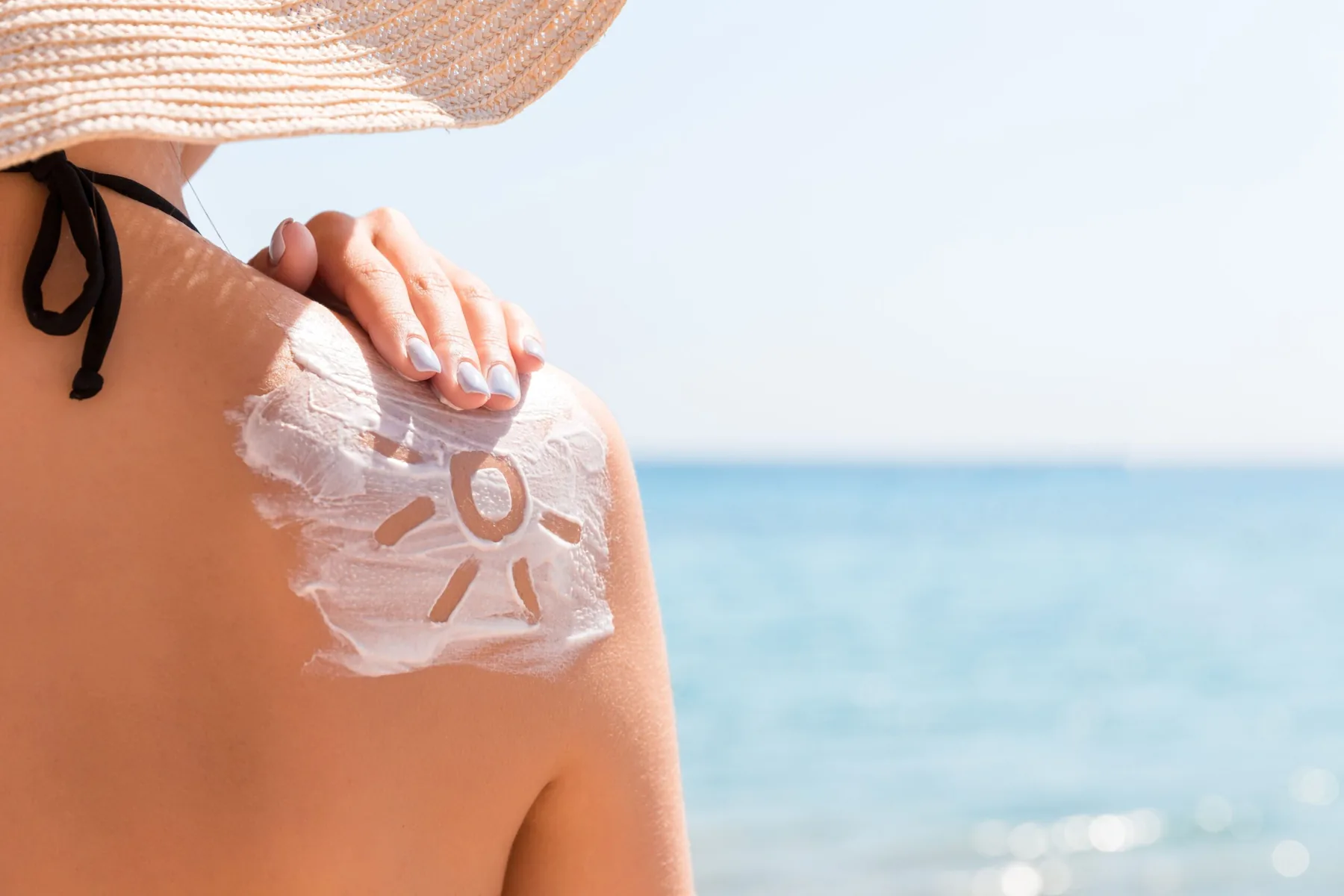
The best time to start laser tattoo removal is fall or winter. Faded, sun-free skin lets us treat more aggressively and safely, and long sleeves protect healing skin automatically. Start now and your tattoo can be significantly cleared by beach season.
Why cooler months are called “laser season”
Laser tattoo removal works by aiming a precise wavelength of light at the ink so it shatters into tiny particles your body can carry away. The catch is melanin, the pigment that gives skin a tan. A tan sits between the laser and the ink and competes for that same energy.
When skin is tanned, two problems appear at once. First, energy meant for your tattoo gets absorbed by the tan, so less ink shatters and the session underdelivers. Second, targeting your natural pigment raises the risk of blistering and lasting color changes, either lighter or darker patches. In fall and winter your tan fades and skin returns to baseline, giving us the high contrast between skin and ink that lets us treat confidently and effectively.
The “sweater weather” advantage
After a session your treated skin is essentially a healing wound that must be shielded from the sun. In summer that means constant high-SPF sunscreen, sleeves, or bandages every time you step outside, and one forgetful afternoon can set you back.
In winter the problem solves itself. Long sleeves, hoodies, and jeans act as an automatic UV barrier. They also hide the honest “in-between” phase, when the area may look red, swollen, or scabbed for a week or two, so you heal in privacy instead of explaining yourself in a tank top. Softer winter clothing and less sweat also keep the site cleaner and calmer while it recovers.
- Automatic sun protection from layered clothing
- The temporary red, scabbing phase stays hidden
- Less sweat and friction means fewer irritation and infection risks
The calendar math: why you can’t wait until spring
Tattoo removal is a patience game, not a speed run. The laser breaks the ink apart, but your immune and lymphatic system does the slow work of flushing it out. That is why sessions are spaced roughly 6 to 8 weeks apart, and why complete removal usually takes 8 to 12 sessions depending on ink, color, placement, and skin type. Crowding treatments closer together does not clear ink faster; it just stresses skin that has not finished healing.
Run the numbers and starting early is clearly the winner. Begin in April for a June vacation and you will spend all summer hiding a fresh, bandaged tattoo that is barely faded. Begin in November and you can complete several major sessions before warm weather returns, so the tattoo is dramatically lighter, or gone, exactly when you want to show skin.
| Start in November | Start the following June |
|---|---|
| 4+ sessions done by beach season | Session 1 just underway in June |
| Tattoo significantly faded or clear | Tattoo still fully visible |
| Healed during indoor months | Bandages and hiding all summer |
Winter lifestyle simply fits recovery better
Aftercare rules line up naturally with the season. You cannot soak a treated area, no pools, ocean, hot tubs, or lakes, until scabs have fully fallen off, usually about a week. In January that restriction costs you nothing because you were not planning to swim anyway.
Winter is also lower-impact. Summer brings sun exposure, sand and dirt, and bumps and scrapes from hiking, festivals, and travel. Cooler months mean more couch, more rest, and an easier environment for skin to close up cleanly.
One winter caveat: keep skin hydrated
The single downside of winter treatment is dryness. Cold air and indoor heating pull moisture from your skin, and laser healing can add to that. Dry, cracked skin heals slower and tends to itch more, so hydration matters more than people expect.
Drink water so your lymphatic system has what it needs to clear the ink, apply the fragrance-free aftercare ointment we recommend while the area is healing, and switch to a gentle moisturizer between sessions. Skip scalding-hot showers, which strip natural oils and worsen the winter itch.
Can you still remove a tattoo in summer?
Yes. We treat year-round at both our Clark and Paramus, NJ locations. Summer removal simply demands more discipline: diligent taping and sunscreen, a rash guard at the beach, and passing on the spontaneous pool jump. It is entirely doable, just harder on you. If you have the choice, cooler weather is the path of least resistance.
Frequently asked questions
Yes. Untanned winter skin lets us use safer, more effective settings, and everyday layers protect healing skin from the sun automatically. Summer removal is possible but requires far stricter sun avoidance and aftercare.
Most tattoos need 8 to 12 sessions spaced roughly 6 to 8 weeks apart. Ink color, density, placement, and skin type all affect the total, which is why we assess your specific tattoo at a free consultation.
The laser shatters ink, but your immune system clears it, and that takes weeks. Treating too soon does not remove ink faster; it only risks damaging skin that has not fully healed. Proper spacing protects your results.
We offer flat-rate complete-removal packages covering every session you need, tailored to your tattoo, a savings of about 38% versus paying per session. Your exact package is quoted at your free consultation.