
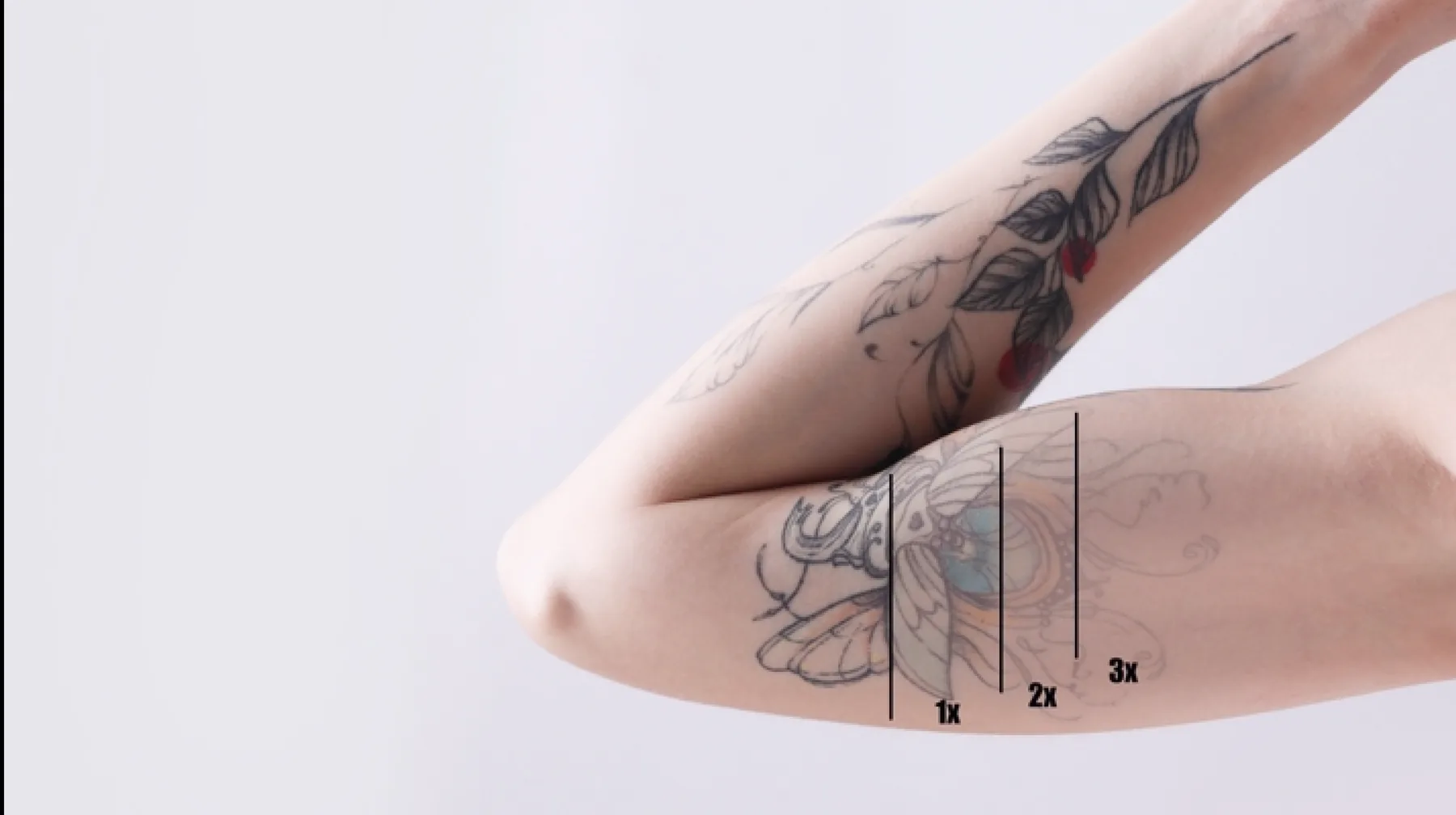
Arm tattoos usually fade well and predictably, while hand and finger tattoos take longer and often need a few extra sessions. The reason is circulation: your body flushes shattered ink through the lymphatic system, and areas closer to the heart with stronger blood flow clear faster than the hands.
Why does location affect how a tattoo fades?
Laser removal does not vaporize ink. When our PicoWay® picosecond laser passes over a tattoo, it shatters the pigment into microscopic fragments. Your immune and lymphatic systems then carry those fragments away over the weeks between sessions. That cleanup depends heavily on blood flow.
The general rule is that the closer a tattoo sits to your heart, the faster it typically clears. Well-circulated areas deliver immune cells to the fragmented ink quickly and drain it efficiently. Areas farther out, like the hands, get slower delivery, so patience matters more the farther the ink is from your torso.
How well do arm tattoos respond to removal?
Arms are one of the most common areas we treat, and they generally respond very well. But even within a single arm, the upper arm, forearm, and wrist each behave a little differently.
The upper arm and shoulder are a prime location. Blood supply from the large biceps, triceps, and deltoid muscles is excellent, so ink here often fades faster than lower down the arm. The muscle also cushions the laser pulse, keeping discomfort moderate and healing quick with minimal swelling.
Forearms sit slightly farther from the heart, so circulation is a touch slower but still efficient. Because forearm ink is highly visible and used daily, protecting the healing skin from the sun is important. UV exposure on treated skin can trigger hyperpigmentation, so we recommend long sleeves or high-SPF sunscreen throughout your treatment series.
Are wrist tattoos harder to remove?
Wrist tattoos are usually small, such as names, dates, or symbols, but the location adds two challenges. The skin is thin and the area is bony, with little muscle or fat to cushion the pulse, so treatment here can feel more sensitive than on the upper arm.
We also flex and rotate our wrists constantly. After a session we suggest easing up on strenuous, repetitive wrist motion for a day or two so any minor swelling can settle comfortably. Our physician adjusts the laser's energy and pulse to respect the thinner skin while still targeting the ink effectively.
Why are hand and finger tattoos so stubborn?
Hand and finger tattoos have surged in popularity, and they are among the most difficult to remove. Fingers are the farthest point from your heart, so circulation is significantly slower than in your arm or chest. Even when the laser shatters the ink perfectly, your body simply takes longer to carry the debris away.
The skin on the fingers is also very thin, and ink, especially from amateur or stick-and-poke work, can sit unevenly deep. That combination calls for careful, physician-directed settings that break the pigment without overtaxing delicate skin. It is common to see slight swelling after a session, and because the skin is thin, there is a marginally higher chance of minor blistering than on fleshier areas. Good aftercare usually manages this well.
The honest takeaway: complete removal on hands and fingers is absolutely achievable. It just tends to require more patience and often a few more sessions than a shoulder or upper-arm piece.
How many sessions and how much does it cost?
Most tattoos take roughly 8 to 12 sessions for complete removal, spaced weeks apart to let your body clear the ink between visits. Hand and finger tattoos often land toward the higher end of that range because of slower circulation, while upper-arm pieces may need fewer.
Rather than charging per session, Laser Eraser uses flat-rate packages that cover every session your removal needs, which saves about 38% versus paying visit by visit. Packages are priced individually. Your exact plan depends on size, ink, and placement, and we quote it during a free consultation.
| Area | Circulation | Typical pain | Notes |
|---|---|---|---|
| Upper arm / shoulder | Excellent | Moderate | Often fades fastest of the arm |
| Forearm | Good | Moderate | Keep out of the sun while healing |
| Wrist | Moderate | Higher (bony, thin skin) | Ease up on repetitive motion after |
| Hands / fingers | Slower | Higher (thin skin) | Usually needs a few extra sessions |
How should I care for treated hands and arms?
Aftercare shifts slightly by location. Hands touch everything, from phones to door handles, so keeping them clean matters most. Wash treated hands frequently with a gentle soap to lower infection risk, and follow the specific instructions we give you at your visit.
- Keep the area clean and dry, and follow your bandaging instructions.
- Protect forearms and the backs of hands from the sun with clothing or high-SPF sunscreen.
- Expect some swelling on fingers and wrists; a minor blister on thin skin is not unusual.
- Avoid strenuous, repetitive wrist and hand motion for a day or two after a session.
- Contact us with any questions about healing rather than guessing.
Why choose a physician-led practice?
Adjusting laser settings for the thin skin of a finger versus the thicker skin of a shoulder is a clinical judgment, not a fixed preset. Laser Eraser is physician-led. Dr. Alvaro Alban, a New Jersey emergency-medicine physician with specialized training from the Institute for Laser Medicine in Skippack, Pennsylvania, oversees treatment personally, from single finger tattoos to full arm sleeves.
We use cooling technology to blow chilled air over the skin before, during, and after each pulse, which numbs the area and protects the surface layer. Sessions are usually quick, and we set realistic expectations up front based on where your ink sits and how dense it is.
Frequently asked questions
Yes. Complete removal on hands and fingers is achievable with the PicoWay® laser. Because these areas are farthest from the heart and have thin skin, they simply clear more slowly and often need a few more sessions than an arm tattoo.
Most tattoos take about 8 to 12 sessions for complete removal. Upper-arm pieces with strong circulation may need fewer, while wrist and hand tattoos may need more. We give you a realistic estimate at your free consultation.
Bony, thin-skinned areas like the wrist and fingers can feel sharper than the cushioned upper arm. We use a cooling system that chills the skin before, during, and after each pulse to keep sessions comfortable.
Laser Eraser uses flat-rate packages covering all the sessions your removal needs, saving about 38% versus per-session pricing. Plans are priced individually, quoted for free based on size, ink, and placement.