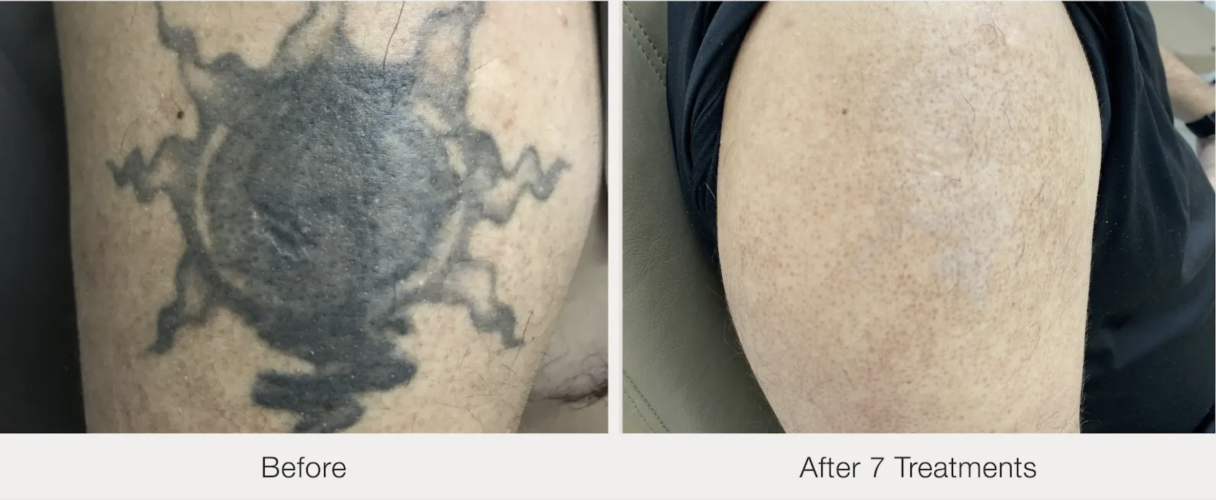
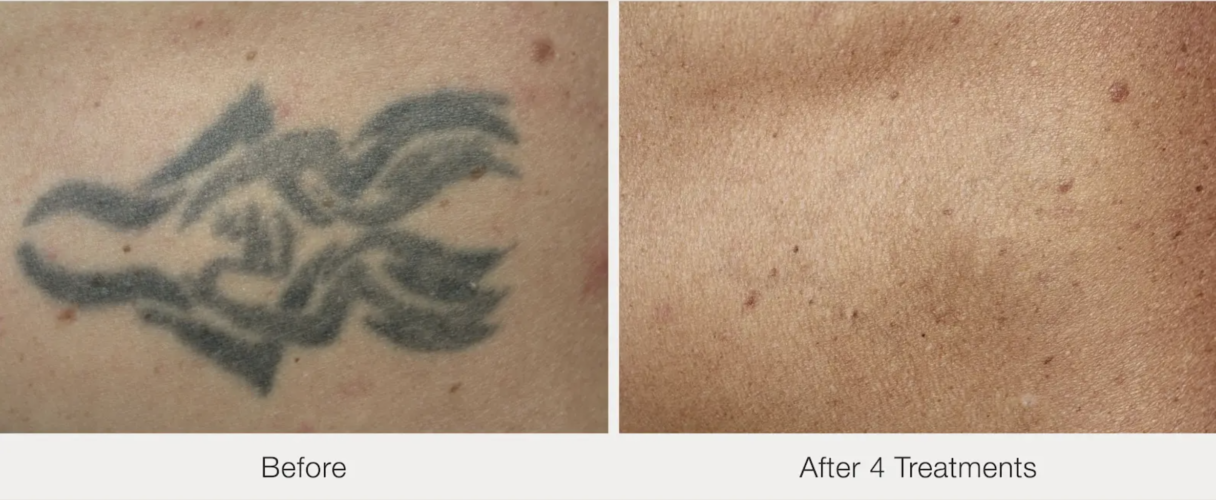
Laser tattoo removal works in two stages: a picosecond laser fires ultra-fast pulses of light that the ink absorbs and shatters into microscopic particles, then your own immune system gradually carries those fragments away over the following weeks. Repeated sessions clear the tattoo layer by layer.
Why a tattoo is permanent in the first place
A tattoo needle deposits ink into the dermis, the deeper layer of skin beneath the surface you can touch. Your immune system immediately recognizes those pigment particles as foreign and sends white blood cells called macrophages to remove them.
The problem is scale. Tattoo ink particles are enormous compared to the cells trying to clear them, so the macrophages cannot carry them away. Instead they wall the ink off, and it stays trapped in the dermis. That standoff is what makes a tattoo permanent: it is ink your body wants to remove but physically cannot move.
Step one: the laser shatters the ink
A tattoo removal laser solves that size problem. If the ink particles are too big to clear, our goal is to break them into fragments small enough for your body to handle. We do that with a process called selective photothermolysis, which simply means using light and heat to target one thing selectively.
The PicoWay laser sends its energy in picosecond pulses, trillionths of a second long. The pulse passes harmlessly through your outer skin and is absorbed by the ink, which heats so fast that a shockwave shatters it into microscopic dust. Think of tapping a pane of glass with a sudden, intense shock rather than warming it slowly. The rapid snap you hear during treatment is that photoacoustic effect at work.
Step two: your immune system clears the debris
The laser does not make the ink vanish. You do. During treatment the tattoo turns temporarily white, a harmless reaction called frosting that fades within minutes. The real removal happens over the following weeks.
Now that the ink is shattered into tiny fragments, those same macrophages can finally do their job. They engulf the particles and carry them into the lymphatic system, where they are filtered, processed by the liver and kidneys, and eliminated as waste. Because this biological cleanup is gradual, we space sessions several weeks apart, giving your body time to clear one round before the next.
Why color matters
Ink only shatters if it absorbs the laser's wavelength, the same way a black shirt absorbs sunlight while a white one reflects it. That is why different colors respond differently, and why a single-wavelength device struggles with certain pieces.
- Black ink is the easiest, because it absorbs a broad range of light.
- Red ink needs a green wavelength to be absorbed effectively.
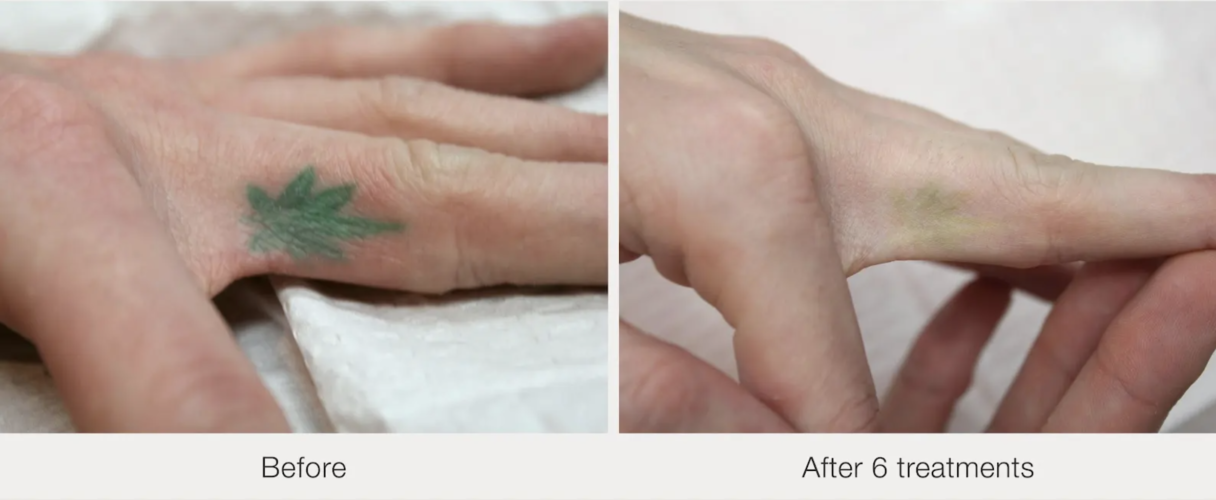
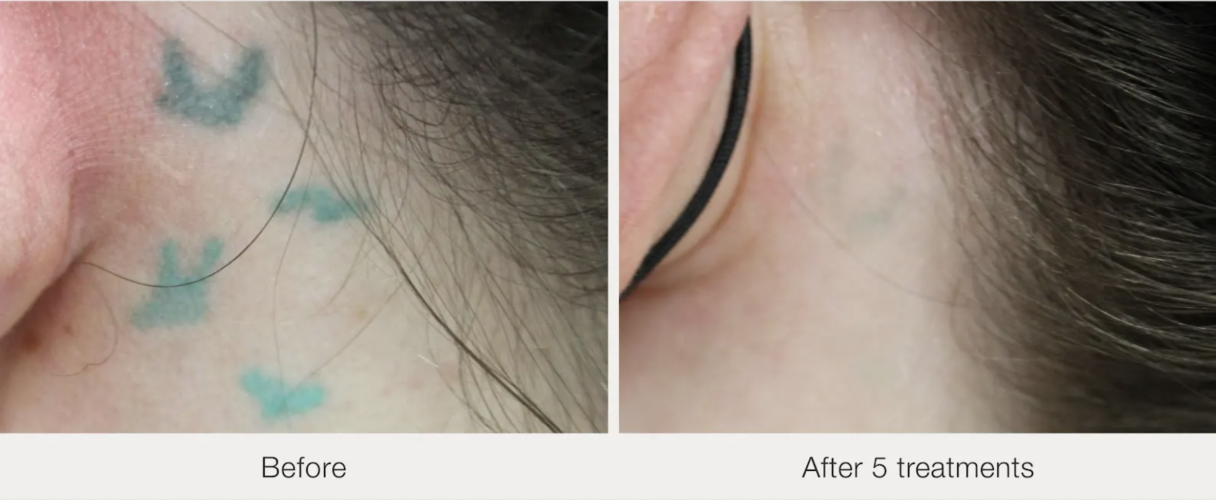
- Green and blue inks are historically the most stubborn and require specific wavelengths.
- Yellow and orange tend to reflect energy, making them slower to fade.
- The PicoWay is customized to your skin type and the ink colors in your design, so we can match the beam to the full spectrum of your tattoo.
Why the laser doesn't burn your skin
The most common fear is scarring, but the physics protects your skin. Tiny ink particles heat and cool almost instantly, while your larger, water-rich skin cells take longer to warm up. By keeping each pulse extremely short, the laser shatters the ink before heat can transfer to the surrounding tissue.
It is like passing a finger quickly through a candle flame: move slowly and you get burned, move fast enough and you feel nothing. Delivering the energy that quickly is what lets us destroy the pigment while leaving healthy skin intact.
What affects how fast your tattoo fades
Because removal depends on your body's transport system, results vary from person to person. A few factors make the biggest difference:
- Location: tattoos on the head, neck, and trunk fade faster thanks to strong blood supply, while hands, feet, and ankles are slower.
- Ink density and depth: professional, heavily packed tattoos need more sessions than light amateur work.
- Circulation and lifestyle: healthy blood flow speeds clearance, while smoking constricts vessels and typically slows results.
- Skin type: your Fitzpatrick skin type guides the settings we use to stay both effective and safe.
What a session actually feels like
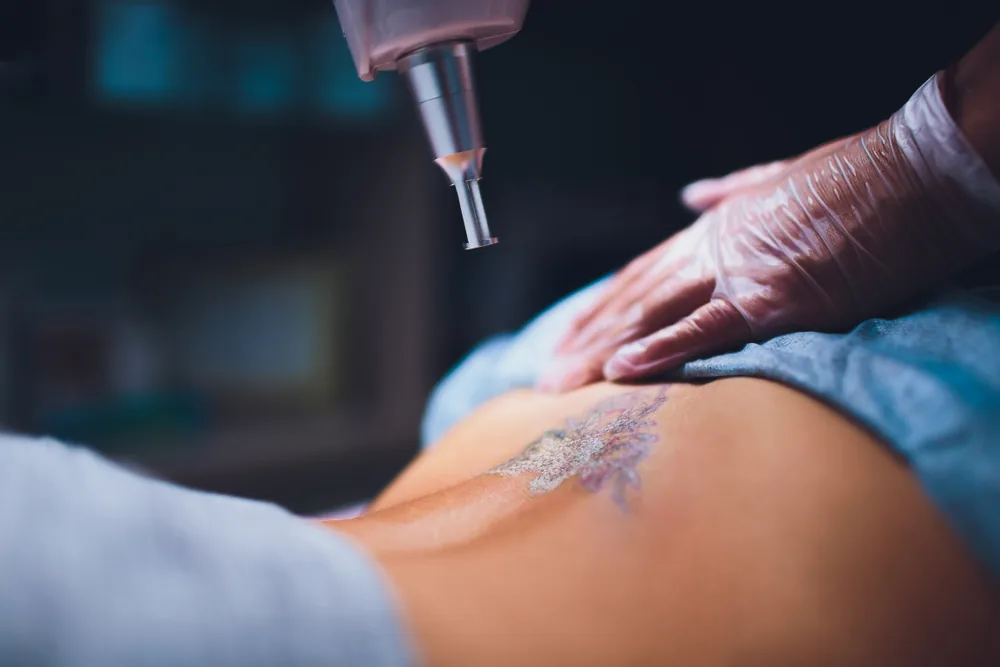
In our office, we first cool the skin with chilled air to numb the nerve endings and add a layer of protection. The physician then passes the handpiece over the tattoo, which produces the rapid snapping sound and the temporary white frosting.
Afterward the area feels like a mild sunburn for a few days, red and tender. That inflammation is expected and even helpful, because it recruits the immune cells that start the cleanup. We cover the area and give you simple aftercare instructions while your biology does the rest. Most complete removals take roughly 8 to 12 sessions, though your consultation will give you a realistic range for your specific tattoo.
Why a licensed medical provider holds the laser
Understanding the science is exactly why the person operating the laser matters. Settings that are too low waste your money because the ink never shatters; settings too high risk burns or pigment changes. The right approach means constantly reading how your skin responds and adjusting for ink depth and skin type.
Laser Eraser is physician-led. Dr. Alvaro Alban, an emergency-medicine physician who pursued specialized training at the Institute for Laser Medicine in Skippack, Pennsylvania, performs and oversees treatment personally, from small pieces to full sleeves and back pieces. That medical judgment is the difference between erasing a tattoo and damaging skin.
Frequently asked questions
The shattered fragments do travel through your lymphatic system and bloodstream on their way to the liver and kidneys, but the amount cleared after a single session is very small. Your body routinely processes foreign particles, and the volume from a laser session is minimal by comparison. We review your health history at your free consultation.
Certain pigments, especially cosmetic inks containing titanium dioxide or iron oxide found in white, pink, and flesh tones, can briefly oxidize and darken when hit by the laser. This is why we test-spot cosmetic tattoos first, so we can adjust our approach before treating the whole area.
Yes. The laser beam is narrow and precise, so we can target a specific name, word, or detail while leaving the surrounding design intact. Selective photothermolysis lets us be selective about exactly which ink we treat.
Most tattoos take roughly 8 to 12 sessions for complete removal, but the exact number depends on ink color and density, placement, and your skin type. Our flat-rate complete-removal packages cover all the sessions you need, with financing available tailored to your tattoo.