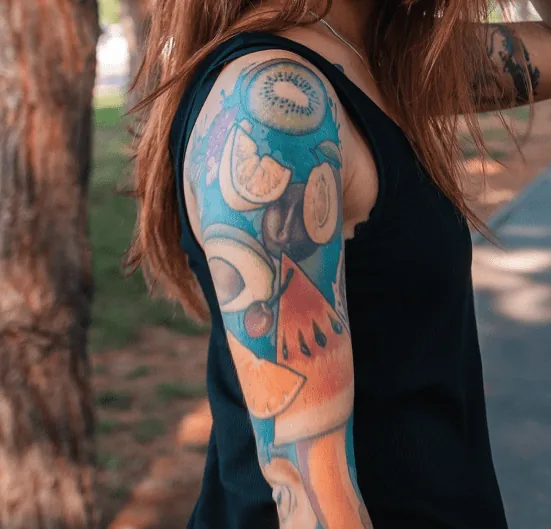
Yes. Tattoo color directly affects how quickly ink clears. Black, dark blue, and grey absorb laser light most efficiently and fade fastest. Red, orange, green, teal, and light blues need specific wavelengths and usually more sessions. Color guides your plan, but almost every color can be removed.
How lasers actually target color
Laser tattoo removal is not an eraser dragged across a chalkboard. It is a physics problem. Our PicoWay picosecond laser delivers ultra-short pulses of light into the dermis, where your ink sits. When an ink particle absorbs that light, it heats instantly and shatters into fragments small enough for your immune system, mainly cells called macrophages, to carry away over the following weeks.
Here is the catch: an ink particle only shatters if it absorbs the exact wavelength the laser emits. If the light passes straight through the pigment without being absorbed, no heat builds and the ink stays put. That is why color matters so much. Think of a black shirt versus a white shirt in the sun: dark colors absorb light, light colors reflect it. Your tattoo behaves the same way.
Why wavelength is everything
Different colors respond to different wavelengths of light, which is why a single-setting laser cannot clear a multicolor piece. PicoWay switches between wavelengths so we can match the light to your ink rather than forcing one setting on every color.
| Wavelength | Best for |
|---|---|
| 1064 nm | Black, dark blue, dark brown; safest on deeper skin tones |
| 532 nm | Warm colors: red, orange, yellow |
| 785 nm | Stubborn greens, teals, and bright blues |
The colors that fade fastest
If your tattoo is built on dark, bold lines, you are in a strong position. Darker pigments absorb laser energy efficiently and break down early in treatment.
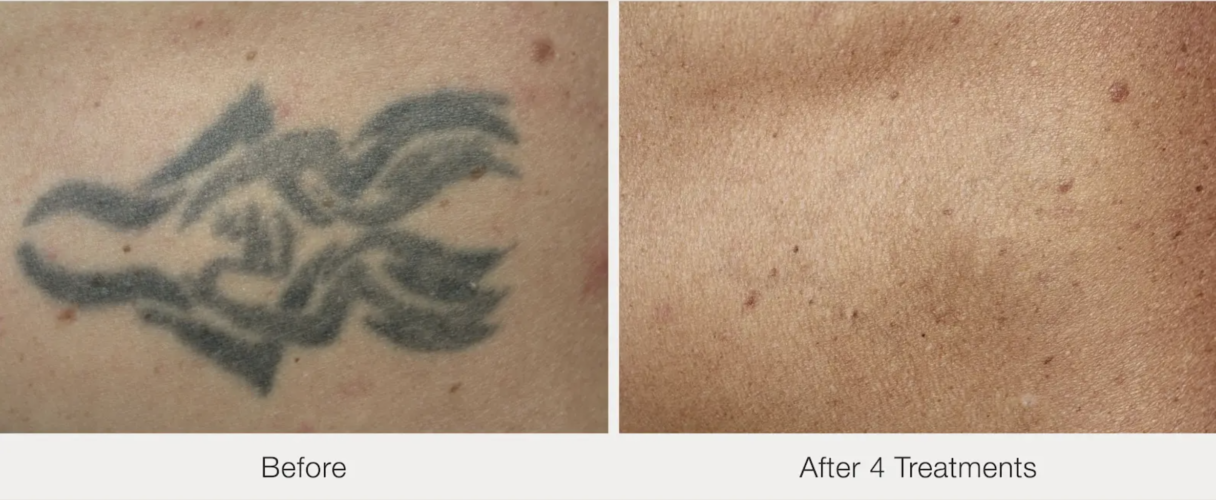
- Black: the gold standard. It absorbs all wavelengths and shatters most efficiently, so it typically clears faster and more completely than any other color.
- Dark blue and brown: close cousins of black. They soak up standard wavelengths well and usually show meaningful fading early.
- Grey and shading: essentially diluted black. With less pigment packed in, grey wash often fades quickly, sometimes disappearing well before the darker outlines around it.
Warm colors: reds, oranges, and yellows
As we move away from dark pigment, treatment gets more specific. Warm colors reflect the standard 1064 nm wavelength, so we switch to 532 nm green light, which red and orange absorb readily.
Red surprises people. When the correct wavelength is used, red often fades almost as reliably as black. Orange behaves similarly. Yellow is the tricky one: it is the lightest color in the spectrum, holds little pigment density, and reflects a lot of light, so it usually needs the most patience of the warm colors.
The stubborn spectrum: greens, teals, and light blues
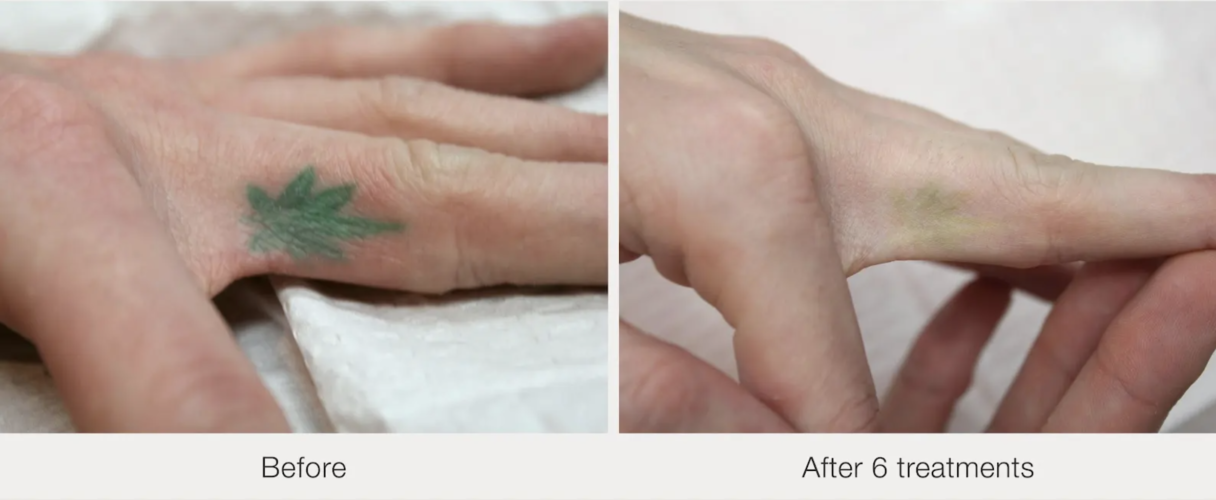
Green and turquoise were once the villains of tattoo removal because older lasers could not produce the wavelengths needed to shatter them. Green sits in an awkward middle ground, reflecting both the red-light and green-light lasers used for other colors.
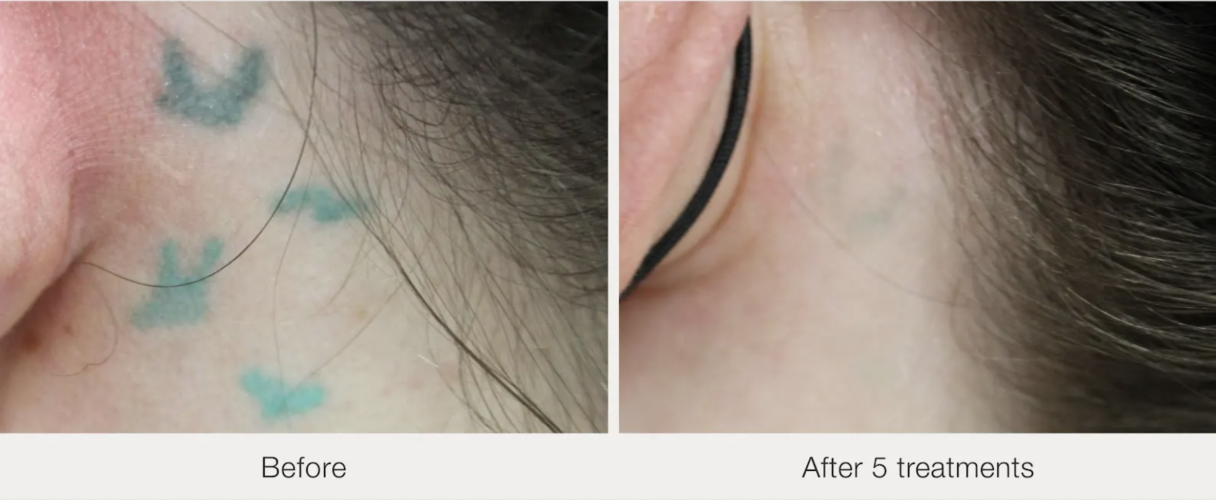
Modern picosecond technology has largely solved this. The 785 nm wavelength is built to target greens, teals, and vivid blues. If you have a forest-green or turquoise piece, this is exactly why the laser your provider uses matters, without the right wavelength, those sections can linger while the black outlines fade away.
White, flesh tones, and the oxidation paradox
White, beige, cosmetic flesh tones, and some light pinks are the most complicated category. Many white inks contain titanium dioxide or zinc oxide, which can oxidize and darken on contact with laser energy, turning grey or black instead of fading.
That darkened pigment can usually be treated afterward like standard black, but it lengthens the process. Because of this risk, we always perform a small test spot on tattoos with white or flesh-tone ink before treating the whole area, so there are no surprises.
Factors beyond color
Color is a major variable, but it is not the only one. A black tattoo can occasionally take longer than a red one for reasons that have nothing to do with pigment.
- Ink depth and density: professional tattoos place more ink, deeper. A solid black armband simply has more pigment to break down than light shading.
- Age: older tattoos are often easier, because your immune system has already been chipping away at the ink for years, giving the laser a head start.
- Location: circulation carries shattered ink away. Chest, neck, and back fade faster; fingers, ankles, and feet move slower.
- Skin tone: on deeper skin tones we favor the 1064 nm wavelength and more cautious settings to protect your natural pigment and avoid lightening the skin. This can add time, but it keeps you safe.
What about cover-ups?
Cover-ups are their own challenge. They usually pack dense, dark ink over an existing tattoo, so you are effectively removing two tattoos in one spot, breaking through the newer top layer before reaching the original underneath. They also blend colors to neutralize the old design, which means multiple wavelengths. It takes patience, but cover-ups can absolutely be faded or fully removed to open space for new artwork.
How to help your results between sessions
The laser breaks the ink, but your body does the actual clearing. A few simple habits genuinely help every color fade faster.
- Hydrate well to support your lymphatic system as it flushes ink fragments.
- Avoid smoking, which constricts blood vessels and slows clearance.
- Move your body; better circulation carries ink debris away more efficiently.
- Protect the area from sun. Tanned or burned skin is harder to treat safely and can cost you a scheduled session.
The Laser Eraser approach
As a physician-led practice, we do not zap and hope. During your free consultation we map your tattoo's color palette, density, and location, then build a plan around the wavelengths your specific ink needs. We treat large, multicolor pieces, full sleeves, and back pieces routinely.
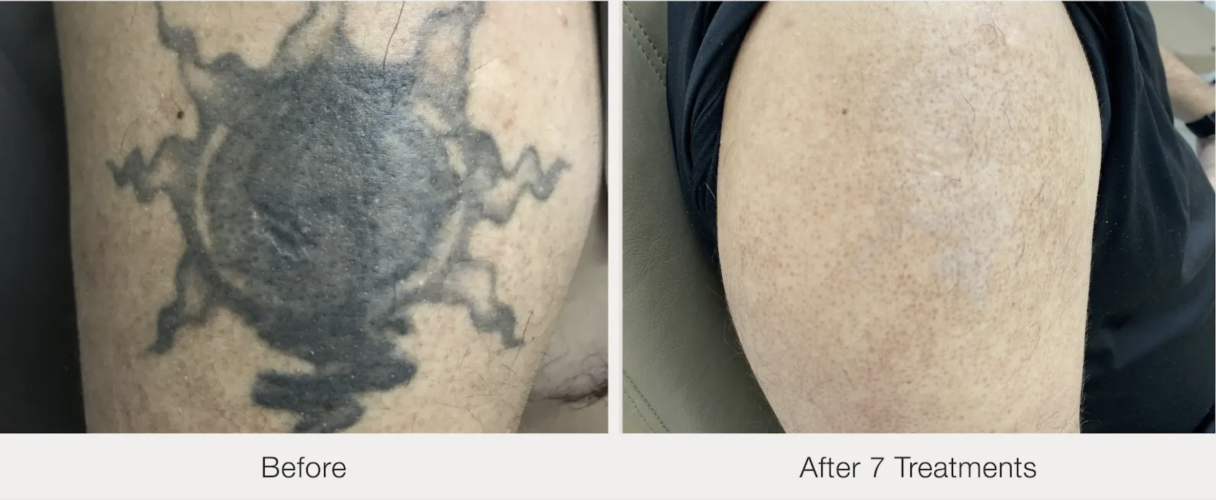
We also believe in honest expectations. Most tattoos take 8 to 12 sessions to fully clear, and a dense green piece will not vanish in two visits, the science says otherwise. What we can promise is a realistic timeline and flat-rate complete-removal packages that cover every session you need, starting tailored to your tattoo and roughly 38% savings versus paying per visit.
Frequently asked questions
Yes, overwhelmingly. Because black absorbs all wavelengths of light, it shatters most efficiently under the laser and usually clears faster and more completely than any other color.
Yellow reflects a lot of light and carries little pigment density, so the laser has a harder time targeting it. It typically needs more sessions than darker or warmer colors, but it can still be cleared.
Neon inks are tricky because they often mix chemicals and plastics that behave unpredictably. With a multi-wavelength picosecond laser, significant fading is usually achievable, and we set expectations at your consultation.
Occasionally a faint shadow remains when ink was placed very deep. It is usually subtle and a dramatic improvement over the original, and often responds to additional sessions.
Most tattoos take 8 to 12 sessions to fully remove, and multicolor pieces can sit toward the higher end. We give you a realistic, tattoo-specific estimate at your free consultation.