Laser tattoo removal is the safest, most effective option for most people. Compared with dermabrasion, salabrasion, creams, and surgical excision, a PicoWay picosecond laser fades ink of all colors with far less scarring risk and downtime, though it does take a planned series of sessions.
What are your tattoo removal options?
There are five methods you will run into: laser removal, dermabrasion, salabrasion, removal creams, and surgical excision. They differ enormously in how they treat your skin and how likely they are to leave a mark. The short version is that laser is the only approach designed to clear ink while leaving the surrounding skin intact.
The table below summarizes the trade-offs. Below it, I walk through why the older abrasive and chemical methods carry so much more risk than most people expect.
| Method | How it works | Scarring risk | Works on all colors? |
|---|---|---|---|
| Laser (PicoWay) | Light shatters ink; body clears it | Low | Yes |
| Dermabrasion | Sands off skin layers | High | Limited |
| Salabrasion | Salt scrubs skin raw | High | No |
| Removal creams | Chemicals bleach/exfoliate | Moderate | No |
| Surgical excision | Skin cut out and stitched | Permanent scar | N/A |
How laser tattoo removal actually works
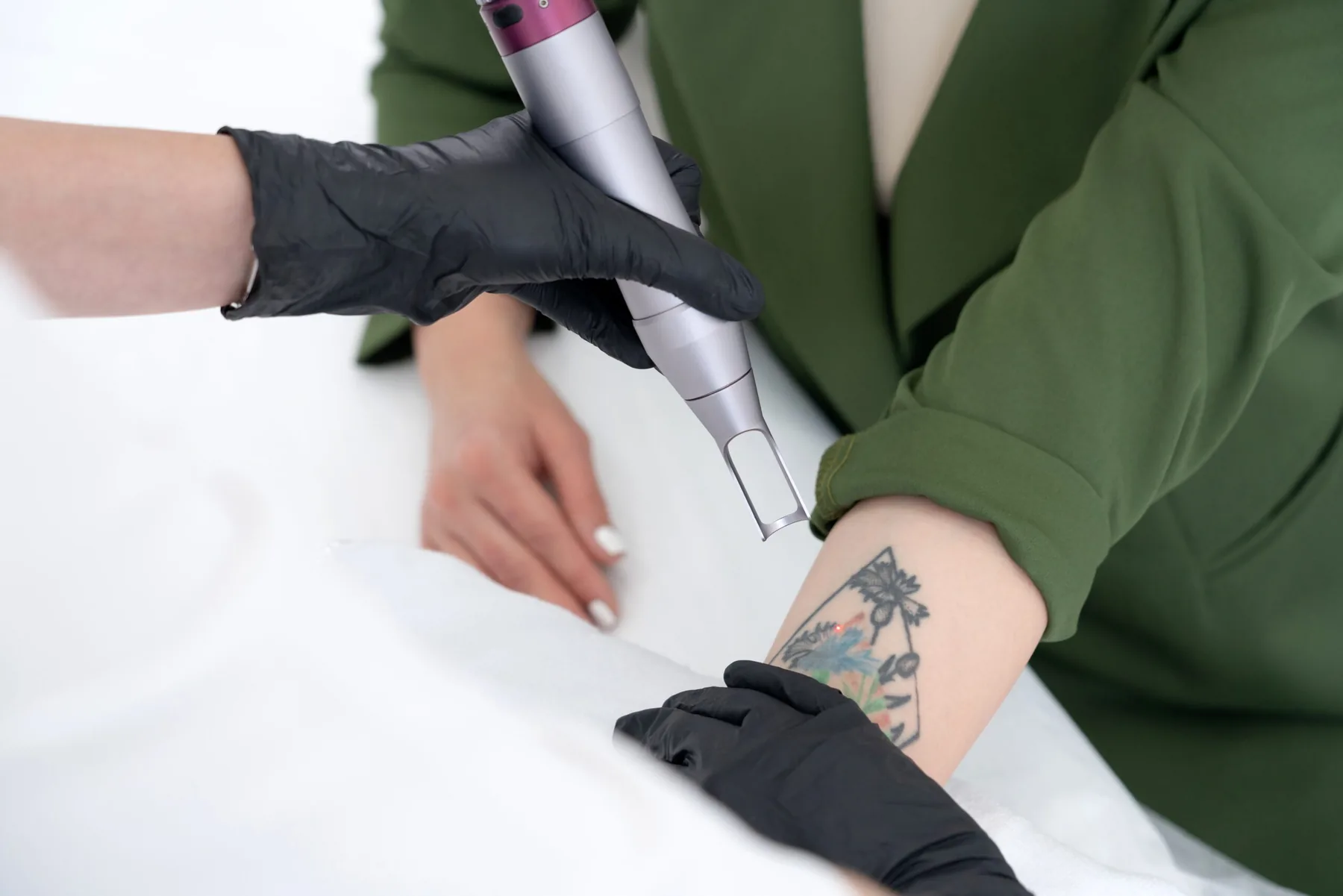
Laser removal is the clinical gold standard. The laser sends rapid pulses of light that are absorbed by tattoo pigment and shatter it into microscopic particles. Your immune system then clears those particles over the following weeks. Nothing is sanded, burned, or cut.
At Laser Eraser we use the PicoWay picosecond laser. Its pulses are measured in trillionths of a second, so they fragment ink through a fast photomechanical effect rather than heat. That matters for two reasons: it handles stubborn colors like blues and greens that older lasers struggled with, and the ultra-short pulse spares the surrounding skin, which keeps scarring risk low. We customize each session to your skin type and the ink colors present.
The honest trade-off is time. Complete removal is not instant. Most tattoos need roughly 8 to 12 sessions spaced several weeks apart, depending on ink density, color, placement, and how your body clears pigment. As for comfort, the sensation is often compared to a rubber band snap; we use numbing to keep it tolerable, and most treatments take only a few minutes.
The older methods, and why we don't recommend them
Dermabrasion uses a rotating tool to physically sand away the tattooed skin under local anesthetic. It can lower the upfront cost per session, but the recovery is long and uncomfortable, the scarring risk is significantly higher than laser, and it struggles with deep or multi-colored ink.
Salabrasion is one of the oldest techniques: salt and an abrasive scrub the skin raw. It is inexpensive and sometimes attempted at home, which is exactly the problem. Rubbing skin open invites infection, results are inconsistent, and scarring is common. It is rarely recommended by professionals today.
Removal creams promise painless fading, but the results usually disappoint. They rely on chemicals to bleach or exfoliate the surface and rarely reach the ink that sits deeper in the skin, especially darker colors. The main effect is often irritation without meaningful fading.
Surgical excision cuts the tattoo out entirely and stitches the area closed. It removes the ink in one procedure, but it is invasive, always leaves a scar, and is only feasible for small tattoos. It is a genuine last resort.
- Dermabrasion: high scarring risk, long recovery, weak on color.
- Salabrasion: infection risk, unpredictable, not professional-grade.
- Creams: minimal real fading, potential skin irritation.
- Excision: guaranteed scar, small tattoos only.
A few myths worth clearing up
"Creams work like lasers." No over-the-counter cream produces results comparable to laser removal. "One session and it's gone." Even the best picosecond laser needs a planned series of treatments. "Laser always scars." Modern picosecond lasers in trained hands minimize scarring; the risk is far higher with abrasive methods than with a properly performed laser series.
How to choose the right method for you
The right approach depends on your tattoo and your goal. Larger, denser, or multi-colored pieces respond best to laser. Skin tone matters too, since abrasive methods carry more hyperpigmentation risk for deeper skin tones, another reason we favor a customized laser protocol. And your goal shapes the plan: complete removal takes the full session series, while fading for a cover-up may take fewer.
On cost, laser can look higher upfront, but its effectiveness and lower complication risk usually make it the more economical choice over time. Laser Eraser offers flat-rate complete-removal packages that cover every session you need, financing tailored to your tattoo, and about 38% savings versus paying per session. There are no hidden fees, and pricing is confirmed at a free consultation.
Why choose a physician-led practice
Because results and safety depend heavily on the operator, who runs the laser matters. Laser Eraser is physician-led. Our co-founder Dr. Alvaro Alban is an experienced New Jersey emergency-medicine physician who pursued specialized laser training at the Institute for Laser Medicine in Skippack, Pennsylvania, and treats everything from single small tattoos to full back pieces and arm and leg sleeves.
That physician oversight is the real difference between a clinic and a franchise or spa. We treat from two New Jersey locations in Clark and Paramus, use PicoWay for every removal, and start everyone with a free, no-pressure consultation so you get an honest assessment before you commit.
Frequently asked questions
For most people, yes. Laser clears ink of all colors with far less scarring risk than abrasive methods and far better results than creams, which rarely fade tattoos meaningfully. Laser targets the pigment while leaving surrounding skin intact.
The sensation is often compared to a rubber band snapping against the skin. It cannot be eliminated entirely, but we use numbing to keep it tolerable, and most sessions take only a few minutes.
Complete removal typically takes about 8 to 12 sessions spaced several weeks apart. The exact number depends on ink density, color, placement, and how your body clears pigment. We give you an honest estimate at your consultation.
Scarring risk with a modern picosecond laser in trained hands is low, especially compared with dermabrasion, salabrasion, or excision. Physician oversight and proper aftercare further reduce that risk.
Laser Eraser uses flat-rate packages that cover all the sessions needed for complete removal, with financing tailored to your tattoo and about 38% savings versus paying per session. Your exact price is confirmed at a free consultation.