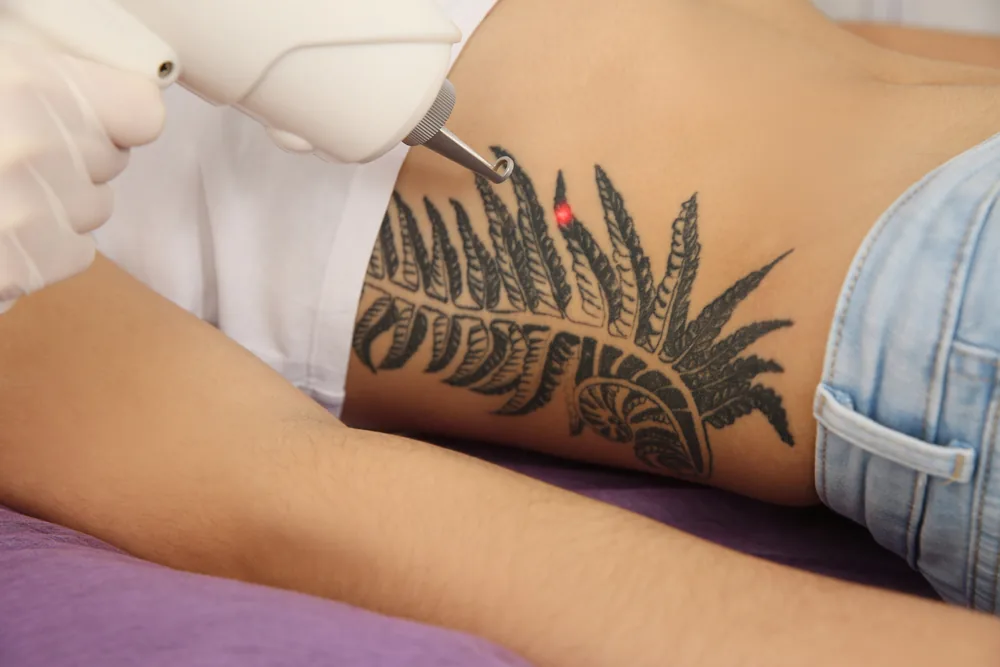
Laser stretch mark removal at Laser Eraser uses the PicoWay picosecond laser to help remodel collagen and even out the color of stretch marks, softening their texture and appearance over time. Every session is performed by a licensed medical provider in our Clark and Paramus, NJ offices, typically across 3 to 6 visits, with honest expectations set at a free consultation.
What Are Stretch Marks?
Stretch marks, known medically as striae, are a form of scarring that develops when the skin is stretched faster than it can adapt. Rapid growth spurts, pregnancy, weight changes, muscle gain, and hormonal shifts can all outpace the skin's supply of collagen and elastin, causing the middle layer of the skin to tear and heal with a different texture. They commonly appear on the abdomen, hips, thighs, breasts, buttocks, and upper arms.
Fresh stretch marks often start out red, pink, or purple (striae rubra) because the underlying blood vessels are still visible. Over months to years they typically mature into paler, silvery-white lines (striae alba) with a slightly indented or crinkled texture. Both stages are harmless, but many people find them cosmetically bothersome, and unlike a superficial mark they do not simply wash or fade fully away on their own.
How Laser Treatment Helps
Laser stretch mark removal works on two fronts. First, the PicoWay picosecond laser targets excess or uneven pigment, which can help red and darker striae blend more evenly into the surrounding skin. Second, and just as important, the laser's ultra-short pulses create a controlled response in the deeper skin that stimulates the body to build fresh collagen and elastin. This collagen remodeling gradually thickens and reorganizes the scarred tissue so the marks look smoother, tighter, and less obvious.
It is important to be realistic. Stretch marks are true scars in the dermis, so the goal of treatment is meaningful improvement in color, texture, and visibility rather than a guarantee of complete erasure. Newer red and pink stretch marks often respond more readily than older white ones, and results build gradually as your skin lays down new collagen between sessions. We will give you a straight assessment of what your particular marks are likely to do.
- PicoWay picosecond energy helps break up and even out uneven pigment
- Controlled laser pulses stimulate new collagen and elastin in the dermis
- Collagen remodeling smooths texture and softens the indented look over time
- Newer red or pink striae generally respond better than older white ones
- Improvement builds gradually between sessions as new collagen forms
Why a Physician-Led Approach Matters
Stretch marks sit in a delicate part of the skin, and laser energy has to be dialed in carefully to remodel collagen without damaging the surface. At Laser Eraser, every treatment is performed by a licensed medical provider. Our co-founder Dr. Alvaro Alban is an emergency-medicine physician in New Jersey who pursued specialized laser training at the Institute for Laser Medicine in Skippack, Pennsylvania, and our practice is genuinely clinician-administered from consultation through treatment.
That physician oversight is what allows us to calibrate the laser to your skin rather than a one-size-fits-all setting. A doctor evaluates the age and color of your striae, your skin tone, and how your skin has scarred before, then chooses parameters and pacing that balance results against safety. When judgment matters as much as technology, having a licensed medical provider at the controls is a genuine advantage over a franchise or spa run by technicians.
Safe for a Range of Skin Tones
One of the biggest concerns with laser treatment on stretch marks is safety for deeper skin tones, where aggressive or poorly calibrated lasers can trigger unwanted lightening or darkening. The PicoWay picosecond laser delivers its energy in extremely short pulses, which helps it target pigment and stimulate collagen while limiting excess heat in the surrounding skin, an important factor when treating richer complexions.
Even so, no laser is automatically safe for every skin without proper technique, which is exactly why physician calibration matters here. Your doctor selects conservative settings for your skin type and, when appropriate, uses a small test area first to confirm how your skin responds before treating a full region. This measured approach lets us work responsibly across a wide range of skin tones rather than turning anyone away or treating everyone the same.
What to Expect From Treatment
Your care begins with a complimentary consultation, where a physician examines your stretch marks, notes whether they are newer and reddish or older and white, and sets honest goals with you. Because striae are true scars, most people need a series of sessions to see the improvement they want, often in the range of 3 to 6 visits, though the exact number depends on the age, size, color, and location of your marks and how your skin responds.
Individual sessions are relatively quick, and treatments are spaced several weeks apart to give your skin time to heal and to let new collagen form between visits. You may notice some temporary redness or mild swelling afterward that settles over the following days, and results appear gradually rather than overnight as the deeper remodeling takes hold. Sun protection between sessions is important, since freshly treated skin is more sensitive to UV and sunburn can undermine your results.
Are You a Candidate?
The best way to find out whether laser stretch mark removal is right for you is a free consultation with one of our physicians. Good candidates generally have stretch marks they would like to soften, realistic expectations about gradual, partial improvement rather than total erasure, and skin that we assess as suitable for picosecond laser treatment. Newer, still-reddish marks often respond especially well, but older white striae can improve too.
Stretch mark treatment is cosmetic, so it is not covered by insurance. Instead, we offer a no-pressure consultation and flexible monthly payment options, with no hidden fees, so cost is clear from the start. If laser is not the right fit for your marks, we will tell you plainly rather than sell you a plan that will not deliver.
Frequently asked questions
Not entirely. Stretch marks are true scars in the deeper layer of the skin, so the realistic goal is meaningful improvement in their color, texture, and visibility rather than complete erasure. The PicoWay laser can soften and fade them noticeably over a series of sessions, and a physician will give you an honest assessment of what your specific marks are likely to achieve.
Most people need a series of treatments to see the improvement they want, often in the range of 3 to 6 sessions. The exact number depends on the age, size, color, and location of your stretch marks and how your skin responds. Sessions are spaced several weeks apart so new collagen can form between visits. Your physician will outline a realistic plan at your free consultation.
Newer stretch marks that are still red, pink, or purple generally respond best, because the skin is more active and the pigment and vessels are easier to target. Older, silvery-white striae can still improve, particularly in texture through collagen remodeling, but they often take more patience. A physician will evaluate the stage of your marks and set expectations accordingly.
It can be, with proper technique. The PicoWay picosecond laser delivers energy in very short pulses, which helps limit excess heat when treating richer complexions. Physician calibration is essential: your doctor chooses conservative settings for your skin type and may use a small test area first to confirm how your skin responds before treating a full region.
No. Stretch mark treatment is considered cosmetic, so it is not covered by insurance. Instead, we offer a complimentary consultation and flexible monthly payment plans with no hidden fees, so you will understand your options and costs clearly before deciding whether to move forward with treatment.
Laser Eraser has two New Jersey locations. Our primary office is at 77 Central Ave, Suite 2, Clark, NJ 07066, (848) 304-3075. Our second office is at 193 NJ-17, Paramus, NJ 07652, (201) 743-3737. You can book your free stretch mark consultation at either location online or by phone.