
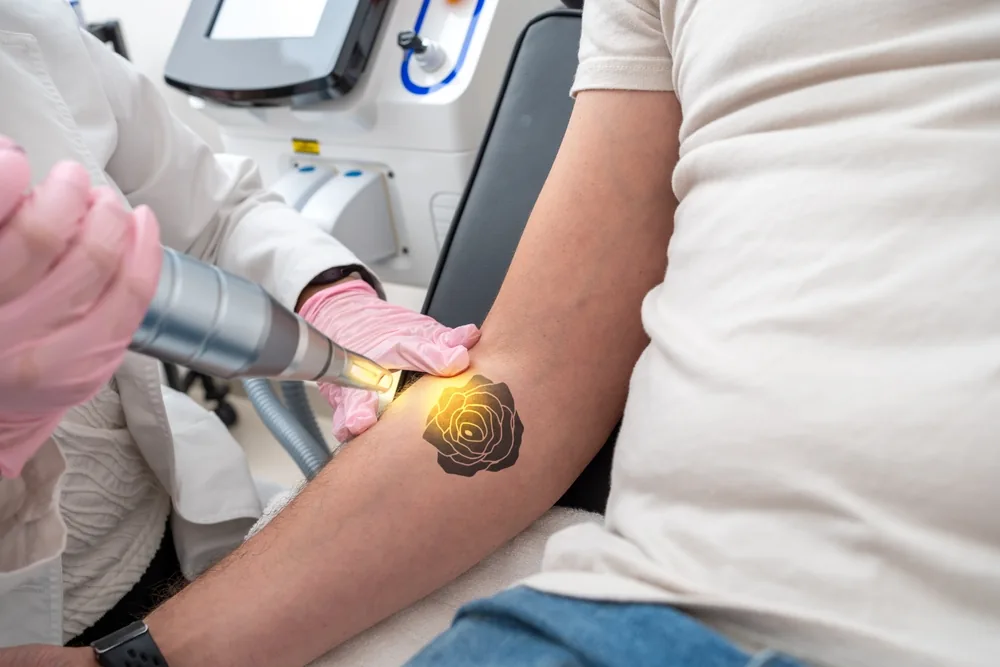
Keep the treated area clean and dry, apply the ointment we recommend, and never pick at blisters or scabs. Protect it from the sun, avoid soaking or friction for 48 hours, and most redness and swelling settle within a few days. Good aftercare speeds fading and lowers your risk of scarring.
Why aftercare changes your results
After a PicoWay® session, our picosecond laser has shattered the tattoo ink into particles small enough for your immune system to carry away. That flushing process happens in the weeks after treatment, not on the table, which is why the way you treat your skin at home matters as much as the session itself.
Because Laser Eraser is physician-led, Dr. Alvaro Alban and our team walk every patient through aftercare in person. The goal is simple: protect the skin so your body can clear the ink efficiently, session after session, without setbacks that add treatments to your plan.
- Lowers the risk of infection and scarring
- Helps ink clear faster, so fading stays on schedule
- Reduces redness, swelling, and tenderness
- Keeps the skin healthy for your next session
The first 48 hours: immediate aftercare
Your skin is most sensitive right after treatment. The first two days are about keeping the area clean, covered, and undisturbed.
- Gently wash with mild soap and lukewarm water, then pat dry with a clean towel; never rub.
- Apply a thin layer of the healing ointment we recommend, and keep a non-stick bandage on for the first 24 hours if the area is exposed or rubs against clothing.
- Skip hot showers, baths, pools, saunas, and hot tubs, all of which can irritate or contaminate healing skin.
- Keep the area out of direct sun and wear loose clothing to avoid friction.
- An ice pack over the bandage can ease swelling and discomfort in short intervals.
Blisters and scabs are normal, so don't pick
Blisters, scabs, mild swelling, and a little redness are expected parts of healing, especially in the first days. They are a sign your body is doing its job.
The single most important rule is to leave them alone. Picking or scratching a scab or popping a blister is the most common cause of scarring and slow healing we see, and it can pull pigment unevenly. Let scabs fall off on their own and keep the area moisturized with your recommended ointment.
Long-term care between sessions
Complete removal typically takes 8 to 12 sessions spaced several weeks apart, so the habits you keep between visits add up. A few things genuinely help your skin recover and clear ink.
- Stay hydrated and eat well; water and a vitamin-rich diet support the immune response that flushes ink and repairs skin.
- Limit alcohol and avoid smoking, which reduces circulation and slows healing.
- Once the skin has fully healed, apply broad-spectrum SPF 30+ sunscreen to the area whenever it will see sun; UV exposure on unhealed skin can cause discoloration and must be avoided entirely.
- Keep your appointments. Sessions are usually spaced 6 to 8 weeks apart, and staying consistent keeps your total number of treatments on track.
When to call us
Most sensations, including itching, tingling, tenderness, and light swelling, fade within a few days. You know your body best, and we would always rather hear from you than have you wait it out.
Reach out to Laser Eraser promptly if you notice severe or worsening pain, spreading redness, pus or other signs of infection, or unusual discoloration. Because our practice is clinician-administered, your questions between sessions go to clinically trained staff, not a call center.
Frequently asked questions
Most redness, swelling, and tenderness settle within a few days, and surface healing is generally well underway within one to two weeks. Blisters and scabs are normal early on; let them resolve on their own before your next visit.
Yes, you can shower, but keep it lukewarm and gentle for the first 48 hours. Avoid hot water, soaking baths, pools, and hot tubs until the skin has healed, and pat the area dry rather than rubbing it.
No. Blisters are a normal part of the healing response and usually resolve on their own. Do not pop or pick them, and keep the area clean and moisturized. If a blister is very large, painful, or looks infected, contact us.
We typically space sessions 6 to 8 weeks apart to give your skin time to heal and your body time to clear the ink. Complete removal usually takes 8 to 12 sessions, depending on ink, placement, and skin type.
Keep the treated area fully out of the sun until it has healed. Once healed, protect it with broad-spectrum SPF 30+ whenever it will be exposed, since UV damage can cause discoloration and interfere with future sessions.