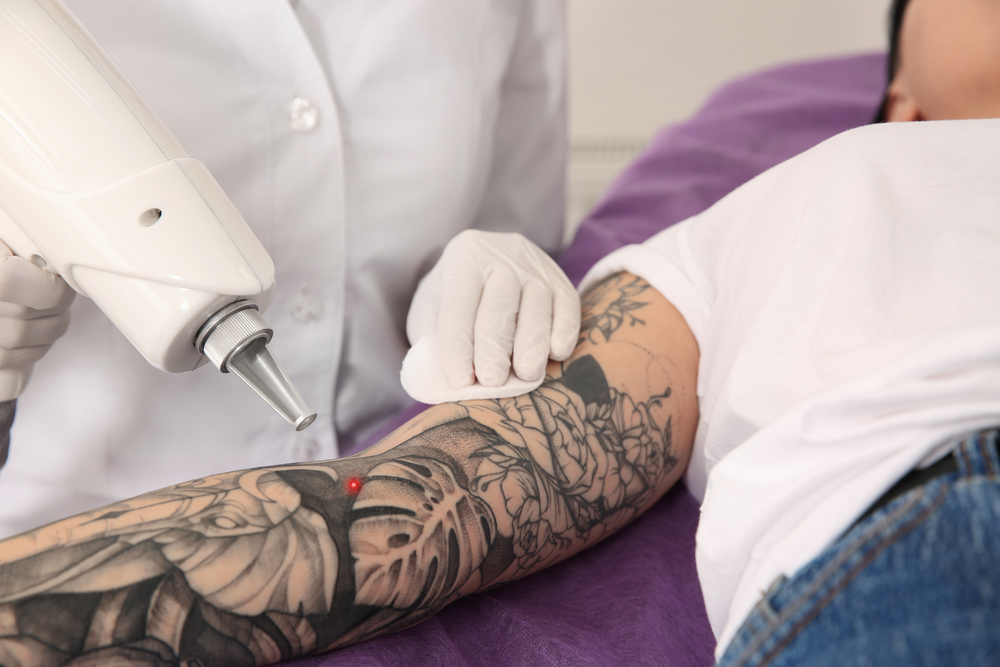

For something as permanent as a tattoo, the idea that it can be erased seems almost like magic. One minute, you have a design etched into your skin forever; the next, after a series of treatments, it’s gone. But at Laser Eraser in Clark, NJ, we know that it isn’t magic—it’s pure science.
Understanding how laser tattoo removal works is the first step in feeling confident about the process. When you know what is happening beneath the surface of your skin, the procedure becomes less intimidating and the timeline makes more sense. It shifts from a mysterious “zapping” of the skin to a logical, biological process that you and your body undertake together.
Many of our clients come to us with misconceptions. Some think we burn the ink out (we don’t). Others think we suck the ink out (impossible). The reality is far more fascinating. It involves advanced physics, precise thermodynamics, and the incredible power of your own immune system.
In this educational guide, our Clark, NJ tattoo removal specialists are pulling back the curtain. We will break down the complex tattoo removal science into simple terms, explaining exactly how we turn “permanent” ink into a memory.
Part 1: The Biology of a Tattoo
To understand how we remove a tattoo, you first have to understand what a tattoo actually is and why it stays in your skin in the first place.
When you sit in a tattoo artist’s chair, the tattoo machine drives a needle into your skin thousands of times per minute. The needle punches through the epidermis (the outer layer of skin that you can touch) and deposits ink into the dermis (the second, deeper layer).
The Immune Response
Your body is smart. As soon as the needle punctures your skin and deposits the ink, your immune system triggers a defense response. It recognizes the ink particles as foreign invaders—just like it would recognize a virus or a bacteria.
White blood cells, specifically macrophages, rush to the site of the “injury.” Their job is to engulf the foreign material and carry it away to be flushed out of the body. This is why a new tattoo swells and gets red; it’s an active immune battleground.
Why Tattoos Are Permanent
So, if your immune system attacks the ink, why doesn’t the tattoo disappear after a few weeks?
The answer lies in size. The ink particles deposited by the tattoo needle are massive compared to your white blood cells. Imagine a single ant trying to move a giant boulder. The macrophage (the ant) tries to eat the ink particle (the boulder), but it’s simply too big.
Since they can’t move the boulder, the macrophages surround it. They essentially wall off the ink to keep it from spreading. Over time, the ink particles get trapped in a network of collagen fibers in the dermis. This is what makes a tattoo permanent. It is ink that your body wants to remove but is physically unable to move.
Part 2: The Physics of the Laser
This is where technology steps in to help biology. Since the problem is that the “boulders” of ink are too big for your immune system to handle, our goal is to break those boulders down into pebbles and sand.
We do this using lasers. But not just any laser—we use specialized Q-switched or Picosecond lasers designed specifically for this task.
Selective Photothermolysis
That is a big scientific word, but the concept is simple.
- Selective: We want to target only the ink, not your skin.
- Photo: We use light.
- Thermolysis: We use heat to break things down.
The laser emits a highly focused beam of light energy. This light passes harmlessly through the top layer of your skin (the epidermis) because it is designed to ignore your skin cells. However, when the light hits the tattoo pigment, the pigment absorbs the energy.
The Photo-Acoustic Effect
Here is the coolest part of tattoo removal science. We aren’t just melting the ink; we are shattering it.
The laser delivers energy in ultra-short pulses—we are talking nanoseconds (billionths of a second) or picoseconds (trillionths of a second). Because the energy is delivered so incredibly fast, the ink particle heats up instantly. One side of the particle gets super-hot while the other side is still cool.
This rapid heating causes a thermal shockwave. The ink particle vibrates so violently that it shatters apart. It explodes into thousands of tiny microscopic fragments.
Think of it like a glass window. If you heat a window slowly, it just gets hot. But if you hit it with a sudden, intense shock of energy, it shatters into tiny shards. That is what the laser does to the ink in your skin.
Part 3: The Wavelength Factor
You might wonder, “Does the laser work on all colors?”
This is where physics gets specific. Different colors of ink absorb different wavelengths of light. If you wear a black shirt on a sunny day, you get hot because black absorbs sunlight. If you wear a white shirt, you stay cooler because it reflects sunlight.
Tattoo ink works the same way. To shatter the ink, the ink must absorb the laser light.
- Black Ink: This is the easiest to remove. Black absorbs all wavelengths of light. This means almost any tattoo removal laser can target black ink effectively.
- Red Ink: Red ink reflects red light, so we can’t use a red laser beam. We have to use a green light (532 nm wavelength) because red ink absorbs green light.
- Green and Blue Ink: These are historically the hardest to remove. They require specific wavelengths (like 694 nm or 755 nm) to absorb the energy properly.
- Yellow and Orange: These are stubborn because they don’t absorb laser energy very efficiently, often reflecting it instead.
At Laser Eraser, our Clark, NJ tattoo removal specialists utilize multi-wavelength systems. This allows us to switch the “color” of the laser beam to match the specific colors in your tattoo, ensuring we can shatter the full spectrum of ink in your design.
Part 4: The Role of the Immune System (The Removal Phase)
Many people assume the laser makes the ink disappear instantly. If you watch a video of a treatment, you might see the tattoo turn white and look like it’s gone. That is called “frosting,” and it’s just a temporary reaction (water vapor released from the skin). The tattoo returns a few minutes later.
The laser does not remove the ink. You do.
The Cleanup Crew
Once the laser has done its job and shattered the “boulders” into “sand,” the second phase begins. This phase happens entirely biologically, inside your body, over the weeks following your appointment.
Remember those white blood cells (macrophages) that were too small to move the ink before? Now, the ink particles are tiny fragments. The macrophages can finally do their job. They engulf the tiny particles of shattered ink and transport them into your lymphatic system.
The Journey Out
From the lymphatic system, the ink particles are carried to your lymph nodes (the filter stations of your body). From there, they enter your bloodstream and are eventually processed by your liver and kidneys, finally leaving your body as waste.
This biological flushing process is slow. It takes weeks for your body to clear the debris from a single session. This is why we space your appointments 6 to 8 weeks apart. We aren’t just waiting for your skin to heal; we are giving your immune system time to take out the trash.
If you rush the sessions, you are just shattering ink that is already shattered, while your immune system is still backed up with work. Patience is key to letting the science work.
Part 5: Variables That Affect the Science
Since how laser tattoo removal works relies heavily on your body’s biological processes, not everyone sees the same results at the same speed. Several scientific variables influence how fast your tattoo will fade.
1. Circulation (Blood Flow)
The removal mechanism is a transport system. The better the transport system (your blood and lymph flow), the faster the ink leaves.
- Head, Neck, and Trunk: These areas have massive blood supply. Tattoos here fade the fastest because there are plenty of vessels to carry the ink away.
- Hands and Feet: These are the “end of the line” for circulation. Blood flow is slower here, and gravity works against the return flow of lymph. Tattoos on ankles or fingers always take longer to remove.
2. Ink Density and Depth
Professional tattoos usually have more ink packed deeper into the dermis compared to amateur stick-and-poke tattoos.
- More Ink: More “boulders” to break down means more laser pulses and more work for the macrophages.
- Depth: The laser light has to penetrate deeper to reach the bottom layers of ink. We often have to peel back the layers like an onion, removing the top ink first before we can reach the deeper pigment in later sessions.
3. Smoking
We cannot stress this enough: smoking fights against the science of removal. Smoking causes vasoconstriction (tightening of the blood vessels). This restricts blood flow near the skin’s surface.
If your blood vessels are clamped shut, your immune cells can’t get to the ink easily, and they can’t carry it away efficiently. Clinical studies show that smokers have a significantly lower success rate and require more sessions than non-smokers. If you want the laser to work, you have to give your circulatory system a fighting chance.
Part 6: Thermal Relaxation Time (Protecting Your Skin)
One of the biggest fears people have is scarring. “If you are heating the ink to shatter it, won’t you burn my skin?”
This is where the concept of Thermal Relaxation Time (TRT) comes in. Every material takes a certain amount of time to cool down after being heated.
- Ink Particles: They are very small. They heat up fast, but they also cool down incredibly fast.
- Skin Cells: They are larger and full of water. They take longer to heat up.
The trick to safe tattoo removal science is pulse width. We set the laser pulse to be extremely short—shorter than the time it takes for the ink to transfer heat to the surrounding skin.
Imagine passing your finger through a candle flame. If you do it slowly, you get burned. If you do it incredibly fast, you feel nothing. The laser pulse is the “fast finger.” We deliver the energy so quickly that the ink shatters before the surrounding skin has time to get burned. This precision allows us to destroy the tattoo while leaving the healthy skin tissue unharmed.
Part 7: What Happens During a Session?
Now that you understand the theory, let’s walk through the practical application at our Clark, NJ office.
Step 1: Cooling
Before we fire the laser, we cool the skin. We use a specialized cooling device that blows freezing cold air (around -30°C) onto the area. This numbs the nerve endings, making the procedure much more comfortable. It also adds a layer of thermal protection for your epidermis.
Step 2: The Laser Treatment
The specialist passes the laser handpiece over the tattoo. You will hear a rapid “snap-snap-snap” sound. This is the photo-acoustic shockwave of the ink shattering.
You will see the “frosting” reaction immediately. This white bubbling is a good sign—it means the laser has successfully hit the ink and water vapor is being released from the reaction. This frosting usually fades within 10 to 20 minutes.
Step 3: The Aftermath
After the session, your body’s emergency response kicks in. The area will feel like a bad sunburn. It may be red, swollen, and tender. This is inflammation, and while it’s uncomfortable, it is actually necessary. Inflammation signals your immune system to send those white blood cells to the area to start the cleanup process.
We will cover the area with a soothing ointment and a bandage. For the next few days, your only job is to protect the skin and keep it clean while your biology takes over.
Part 8: The Evolution of Technology
The science of tattoo removal has evolved drastically.
The Old Days: Dermabrasion and CO2
Decades ago, removing a tattoo meant destroying the skin. Doctors would use dermabrasion (sanding the skin down) or CO2 lasers to essentially burn the skin off. This removed the tattoo but replaced it with a permanent scar. It was a trade-off many weren’t willing to make.
The Middle Era: Nanosecond Lasers
Then came Q-switched lasers, which operate in nanoseconds. These became the gold standard. They could shatter ink without destroying skin. They worked well, but sometimes struggled with stubborn colors or required 15-20 sessions.
The Modern Era: Picosecond Technology
Today, we have access to even faster technology. Picosecond lasers are 100 times faster than nanosecond lasers. They shatter ink into even smaller particles—more like dust than sand.
Because the particles are smaller, the body can clear them faster. This has revolutionized how laser tattoo removal works, reducing the total number of sessions required and effectively treating ink colors that were previously stubborn.
At Laser Eraser, we invest in this top-tier technology because we believe in the science of better results.
Part 9: Why Expertise Matters
Understanding the science highlights why you can’t just go anywhere for removal. The person holding the laser needs to understand physics and biology, not just how to press a button.
Our specialists constantly adjust the laser settings based on:
- How your skin is reacting (monitoring for endpoints).
- The depth of the remaining ink.
- Your skin type (Fitzpatrick scale).
If the settings are too low, the ink won’t shatter, and you waste your money. If the settings are too high, the heat can damage the skin, leading to scars or pigment changes.
Our team includes board-certified doctors who understand the delicate balance between aggressive removal and skin preservation. You can read more about our approach on our Tattoo Removal page.
Part 10: Frequently Asked Questions About the Science
Does the ink go into my bloodstream? Is that safe?
Yes, the ink enters your bloodstream temporarily as it travels to the liver. However, the amount of ink released in one session is minute. Your body handles toxins and foreign particles every day. The volume of ink processed after a laser session is negligible compared to the capacity of your liver and kidneys.
Why does the tattoo sometimes look darker after a session?
This is a weird quirk of chemistry. Some ink pigments, particularly those containing titanium dioxide (often found in white, pink, or flesh-colored inks) or iron oxide (cosmetic inks), can undergo a chemical reaction called oxidation when hit by the laser. This can turn the pigment from light to dark gray or black.
This is why we always do a test spot on cosmetic tattoos. If it darkens, we know we have to treat it as black ink moving forward, which can actually make it easier to remove!
Can you target just one part of a tattoo?
Yes, thanks to the precision of the laser beam. The beam is very narrow. We can easily remove a specific name from a banner while leaving the banner intact, or remove a small detail from a larger sleeve. The science of “Selective Photothermolysis” allows us to be artists with the eraser.
Conclusion: Trust the Science, Trust the Process
Laser tattoo removal is a journey of patience. It is a partnership between the advanced physics of our machines and the biological miracle of your immune system.
There is no magic wand, but there is a proven scientific method that guarantees results if you stick with it. Every session shatters more ink. Every week of healing flushes more away. Slowly but surely, the permanence of the past fades away, leaving you with a clean slate.
If you are ready to let science do the work for you, we are here to help. Whether you want to fade a tattoo for a cover-up or remove it completely, our Clark, NJ tattoo removal specialists have the technology and the knowledge to guide you through it safely.
Check out our Before & After gallery to see the science in action on real clients.
Ready to start? Contact Us today for a free consultation. Let’s evaluate your tattoo and explain exactly how our science can work for your skin.
Laser Tattoo Removal in Clark, NJ
Erase the Past with the PicoWay® Laser—Advanced Tattoo Removal Performed by Board-Certified, Physician-Owned & Operated Physicians.
Contact Us