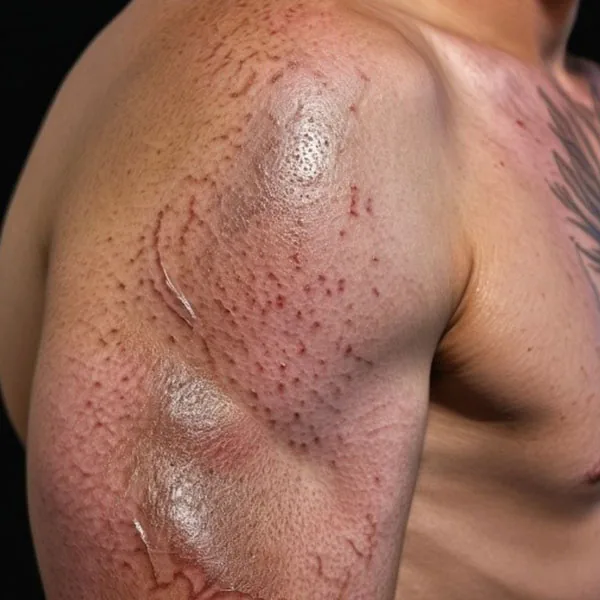
In most cases, no. Laser tattoo removal targets ink beneath the skin without cutting or sanding the surface, so it rarely scars when performed correctly. Older methods like excision or dermabrasion almost always leave a mark. Technique, skin type, and aftercare matter most.
The short answer, and why the method matters
Whether tattoo removal leaves a scar depends almost entirely on how the tattoo is removed. Laser removal works below the skin's surface, so it does not create the kind of open wound that leads to scarring on its own. Older, more aggressive methods are a different story.
The four approaches you'll encounter carry very different scarring profiles. Understanding them makes it clear why modern laser treatment has become the standard of care.
- Laser removal: light pulses shatter ink into tiny particles your immune system clears over time. Low scarring risk when performed correctly, because the skin surface is left intact.
- Surgical excision: the tattooed skin is cut out and the edges stitched together. Reserved for small tattoos, and it always leaves a scar.
- Dermabrasion: the skin is physically sanded down to reach the ink. Painful, and it carries a much higher scarring risk than laser.
- Chemical peels: acid solutions strip the upper skin layers. Uncommon for tattoos and can also lead to scarring and uneven pigment.
What actually raises the risk of a scar
Even with laser removal, a handful of factors influence how the skin responds. None of these mean scarring is inevitable, but they shape how a careful physician sets the laser and paces your sessions.
- Skin type: some patients, particularly those with deeper skin tones, are more prone to keloids or pigment changes. Laser settings must be tailored to skin type, not applied one-size-fits-all.
- Tattoo characteristics: size, age, ink color, and placement all affect how the tattoo responds. Older tattoos and black ink tend to clear more predictably.
- Technique: an overly aggressive setting or the wrong wavelength can injure surrounding skin. This is where who holds the laser matters most.
- Aftercare: picking at scabs, skipping sun protection, or letting the area get irritated between sessions is one of the most common and most preventable causes of scarring.
How we keep scarring risk low at Laser Eraser
Our approach is built to protect your skin, not just fade the ink. Every treatment is clinician-administered, using the PicoWay picosecond laser customized to your skin type and the specific ink colors in your tattoo.
PicoWay delivers energy in ultra-short picosecond pulses. That means it can break ink into finer particles with less heat spreading into the surrounding skin, which is a key part of keeping the surface healthy while the tattoo fades. Because treatment is physician-led, the plan and the settings are guided by a doctor from your free consultation onward.
We also don't rush the process. Complete removal typically takes 8 to 12 sessions spaced to let your skin recover fully between visits. Patience is not just about results; the recovery time between sessions is part of how we protect against scarring.
Protecting your skin between sessions
Most of your outcome is decided by what happens at your appointment, but the days afterward matter too. Simple, consistent aftercare gives your skin the best chance to heal cleanly.
- Keep the treated area clean and moisturized as directed.
- Never pick at or scratch scabs or blisters as they heal.
- Protect the area from sun exposure between sessions.
- Follow the specific instructions your physician gives you, and reach out with any concerns rather than guessing.
Frequently asked questions
Not usually. When laser removal is performed correctly and you follow aftercare, scarring is uncommon because the laser targets ink beneath the skin rather than cutting or sanding the surface. Choosing an experienced, physician-led provider is the best way to keep that risk low.
Laser tattoo removal clears the ink, but it does not erase scar tissue that was already present, sometimes from the original tattooing. During your free consultation we'll examine the area and set honest expectations for your specific tattoo and skin.
The PicoWay picosecond laser delivers energy in extremely short pulses and is customized to your skin type and ink colors, which helps break down ink while limiting heat to surrounding skin. Correct technique and proper aftercare remain essential.
Skin needs time to recover between sessions, and full clearance typically spans 8 to 12 treatments. We monitor your healing at each visit and adjust the plan as needed, which is part of how we protect your skin throughout the process.