
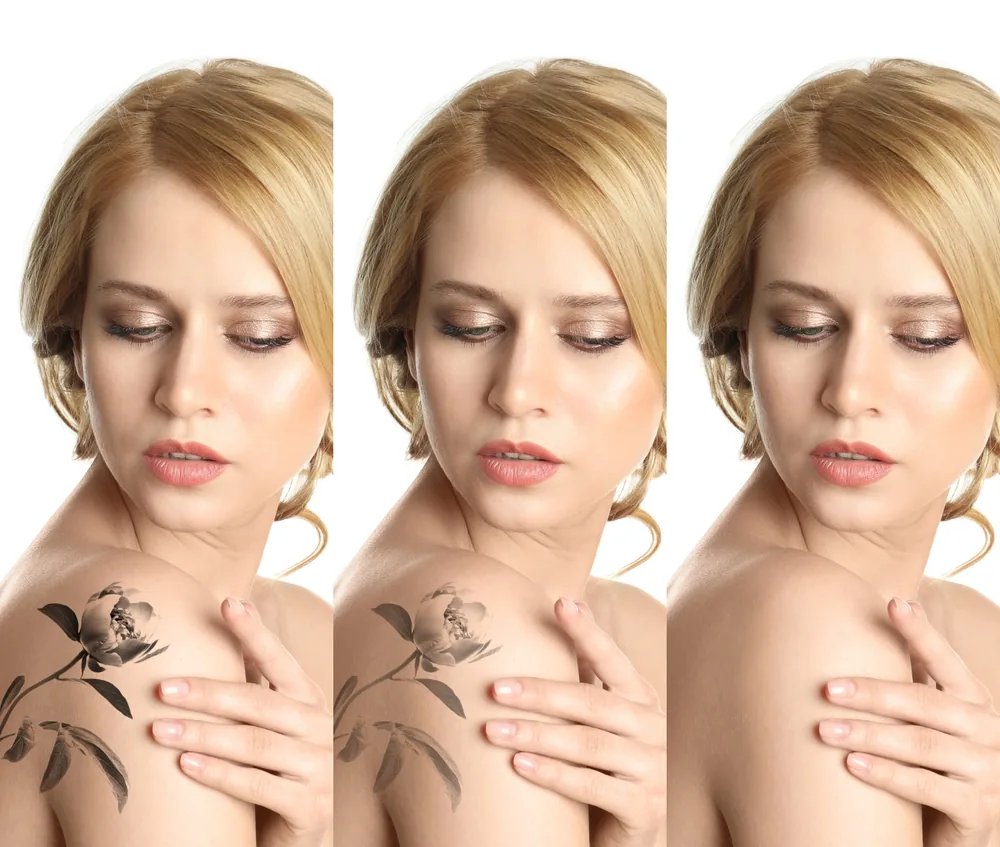
Start 12-18 months before your wedding. Laser tattoo removal takes multiple PicoWay sessions spaced 6-8 weeks apart, so a longer runway lets a tattoo fully clear or fade enough to hide under makeup or a dress. Book a free consultation early so a physician can map a realistic timeline to your date.
How long does tattoo removal take before a wedding?
Laser tattoo removal is a series of sessions, not a single appointment — so the honest answer is that it takes longer than most couples expect. Most tattoos need 8-12 PicoWay sessions to fully clear, and because your skin and immune system need time to flush shattered ink between visits, sessions are spaced roughly 6-8 weeks apart. That spacing, not the laser itself, is what sets your timeline.
Do the math and a full removal can span roughly a year to eighteen months from your first session to your last. That's why the single most important decision is when you start. Beginning 12-18 months before your wedding date gives most tattoos the runway to either disappear completely or fade far enough to vanish under makeup, a sleeve, or the right neckline. Start three months out and your realistic goal shifts from 'gone' to 'noticeably lighter.'
At your free consultation, a physician looks at your actual tattoo — its ink colors, age, density, and placement — and gives you a personalized session estimate mapped to your wedding date, rather than a generic promise. We set honest expectations: no laser guarantees perfect clearance for every tattoo, but a longer runway dramatically improves what's possible.
Wedding planning timeline: start 12-18 months out
Think of tattoo removal like any other long-lead wedding vendor — the venue, the dress, the photographer. It belongs on your earliest planning list, not your final month. The table below shows what's realistically achievable depending on how much time you have before the big day.
These ranges assume the typical 6-8 week spacing between sessions. A physician may adjust the pace slightly based on how your skin responds, but compressing the schedule too aggressively raises the risk of side effects, so we plan around your body's healing, not just the calendar.
| Runway before wedding | Sessions you can realistically fit | What to aim for |
|---|---|---|
| 12-18 months | 8-12 sessions | Full removal possible for many tattoos |
| 6-12 months | 5-8 sessions | Significant fading; often hides under makeup or dress |
| 3-6 months | 2-4 sessions | Noticeable lightening; plan a cover strategy for photos |
| Under 3 months | 1-2 sessions | Minimal change; focus on concealer and styling instead |
The 12-month bridal countdown
Here is a simple way to sequence removal alongside the rest of your wedding to-do list so nothing collides with your final months of planning.
- 12-18 months out: Book your free consultation and start your first sessions while you finalize the venue and date.
- 9-12 months out: Continue sessions every 6-8 weeks; track fading with photos in consistent lighting.
- 6 months out: Reassess with your physician — full removal or fading target? Coordinate with your dress fitting and where the tattoo sits.
- 3 months out: Final sessions if on track; avoid scheduling any laser session immediately before your dress fitting or a spray tan.
- 4-6 weeks out: Stop laser sessions so skin is fully calm and even-toned for photos; no treatment right before the wedding.
- Wedding week: Skin rests. If any tattoo remains, your makeup artist plans coverage in advance.
Most common wedding-related removal requests
We see a handful of situations again and again from couples getting ready for their day. Knowing which one you're in helps set the right goal — because a small, faded name is a very different project from a dense, colorful shoulder piece.
The most emotionally charged request is removing an ex-partner's name. These are often small, single-color, and older, which is the best-case scenario for laser removal — they tend to respond quickly and can frequently be cleared or nearly cleared with enough lead time. Placement pieces that show in wedding attire — a shoulder, upper back, forearm, wrist, or the nape of the neck — are the next most common, since these are exactly the areas a dress, updo, or short sleeves reveal.
- An ex's name or initials — usually small and single-color, often the fastest to remove
- Shoulder, upper back, or chest pieces exposed by a strapless or open-back gown
- Forearm, wrist, or hand tattoos visible in photos and during the ceremony
- A neck or behind-the-ear tattoo revealed by an updo
- A finger tattoo near where the wedding ring sits
- Simply fading a piece enough that makeup can finish the job on the day
Fading vs. full removal: what's realistic before your date
One of the most useful things to understand as a bride or groom on a deadline: you often don't need complete removal to look flawless in your photos. Fading is frequently enough. A tattoo that's been through several sessions becomes lighter and less saturated, at which point a professional makeup artist can conceal it far more easily than a fresh, dark tattoo — and it disappears entirely on camera.
Full removal is the goal when you have 12-18 months and want the tattoo permanently gone regardless of the wedding. Fading is the smart target when your runway is shorter, the tattoo is large or multi-color, or it sits somewhere makeup can easily cover. At your consultation, a physician will tell you honestly which is achievable in your timeframe rather than overselling complete clearance you can't reach in time.
| Factor | Favors full removal | Favors fading + cover |
|---|---|---|
| Time before wedding | 12-18 months | Under 6 months |
| Tattoo size | Small to medium | Large or full piece |
| Ink colors | Black / dark blue (clears fastest) | Greens, yellows, layered color |
| Placement | Visible even with styling | Coverable by dress or makeup |
| Goal | Gone for good | Invisible on the day |
Why physician-led PicoWay treatment matters for your timeline
When you're working against a wedding date, results per session matter — and so does not losing time to complications. Every treatment at Laser Eraser is performed by a licensed medical provider, not a spa technician. Founder Dr. Alvaro Alban is an emergency-medicine physician in New Jersey who pursued specialized training at the Institute for Laser Medicine in Skippack, Pennsylvania, with a focus on tattoo removal including large and multi-color work.
We treat exclusively with the PicoWay picosecond laser, customized to your skin type and the specific ink colors in your tattoo. Its ultra-short pulses shatter pigment into finer particles your body can clear more efficiently, which supports steady progress across the mix of colors a decorative tattoo often contains. A physician can also assess anything that might affect treatment — skin conditions, medications, or a recent tan — and adjust settings to protect your skin, which is exactly what you want when a flawless complexion is part of the plan.
Sessions themselves are quick, often around ten minutes, and most patients describe the sensation as a rubber-band snap. That makes it realistic to keep a steady every-6-to-8-week cadence around a busy engagement schedule.
Pricing and bridal party gift cards
At Laser Eraser, tattoo removal is priced as a single flat-rate Complete Removal Package that covers every session your tattoo needs — not billed per visit — so your number is set before you start. Packages are sized by the surface area treated, starting tailored to your tattoo for an extra-small piece (up to 1 square inch) and scaling up from there. A small ex's-name tattoo often falls at the lower end, while a larger decorative piece sits higher.
The monthly figures reflect financing through our Buy-Now-Pay-Later partner, with no hidden fees — helpful when a wedding budget is already stretched. Because each package is a flat rate covering complete removal, patients typically save around 38% versus paying session by session. Cosmetic tattoo removal is not covered by insurance, which is exactly why we build transparent, financeable packages instead.
Gift cards are also available — a practical option if a member of the bridal party wants their own tattoo addressed before the wedding, or as a gift toward a partner's removal goals. Bring the specifics to a free consultation and a physician will confirm the right package and monthly options.
- Extra Small — up to 1 sq in — tailored to your tattoo
- Small — up to 4 sq in — tailored to your tattoo
- Medium — up to 9 sq in — tailored to your tattoo
- Large — up to 16 sq in — tailored to your tattoo
- Extra Large — up to 25 sq in — tailored to your tattoo
- XXL — 25-88 sq in — tailored to your tattoo
- Gift cards available for the bridal party or as a partner's gift
Skincare and photography tips after your last session
Give your skin time to settle before the wedding. Plan your final laser session at least 4-6 weeks before the date so any temporary redness, pinkness, or texture has fully resolved and the treated area looks calm and even in photos. Never schedule a session in the final weeks — you want rested skin on camera, not freshly treated skin.
Between and after sessions, protect the treated area from the sun. Sun exposure and tanning (including spray tans over a recently lasered area) can affect pigment and are best avoided close to your date; a physician will advise on timing so your tan and your removal don't conflict. Keep the area moisturized, follow your aftercare instructions, and flag any concerns early rather than the week of the wedding.
If a tattoo isn't fully gone, that's okay — a faded tattoo is far easier to conceal. Do a makeup trial with your artist over the actual area so there are no surprises, and choose long-wear, camera-tested concealer. With good lead time, the right styling, and a professional finish, most couples find the tattoo is simply a non-issue on the day.
Complete Removal Packages by Size
8–12 sessions · every session includedOne flat price covers all the sessions your tattoo needs — no per-visit billing. Every tattoo is priced individually, so we give you an exact quote free at your consultation.
Every tattoo is priced individually. Book a free consultation for your exact quote — no obligation.
Get Your Free QuoteFrequently asked questions
Start 12-18 months before your date. Removal takes 8-12 sessions spaced 6-8 weeks apart, so a longer runway is what makes full removal — or enough fading to hide under makeup — realistic. If your wedding is sooner, a physician can still set a fading goal at your free consultation.
Often yes, if you begin 12-18 months out and the tattoo is small to medium with black or dark ink. Larger, multi-color, or last-minute tattoos may only fade in the time available. A physician gives you an honest full-removal-versus-fading estimate mapped to your date at a free consultation.
Fading is often enough. Once a tattoo is lightened over several sessions, a professional makeup artist can conceal it easily and it disappears on camera. Complete removal is the goal only if you want the tattoo permanently gone. Many couples target fading plus makeup when time is short.
Tattoo removal is a flat-rate Complete Removal Package sized by area, tailored to your tattoo for an extra-small piece up to a custom quote for XXL, financed and no hidden fees. That single price covers every session needed. Your exact package is confirmed by a physician at a free consultation; it isn't covered by insurance.
Schedule your final laser session at least 4-6 weeks before the wedding so any temporary redness or texture fully resolves and the skin looks calm and even in photos. Avoid treatment in the final weeks, and coordinate the timing of any spray tan with your physician.
Yes. Gift cards are available and can go toward a bridal party member's own removal or a partner's tattoo goals before the wedding. Bring the details to a free consultation at our Clark or Paramus location and a physician will confirm the right package and custom pricing options.