
When you decide to part ways with a tattoo, one question immediately jumps to the forefront of your mind: “How long is this going to take?”
It is the most common question we hear at Laser Eraser in Clark, NJ. Whether you are removing an impulsive decision from your college years, fading a piece for a cover-up, or erasing the name of an ex-partner, you want the ink gone as quickly as possible. We understand that urgency. Living with a tattoo you no longer want can be frustrating, embarrassing, or even detrimental to your career.
However, the answer to “how many sessions will I need?” is rarely a simple number. Unlike getting a tattoo, which happens in a single sitting (or a few closely spaced ones), removing a tattoo is a biological process that unfolds over months. It is a partnership between advanced laser technology and your body’s own immune system.
In this comprehensive guide, we will break down the tattoo removal timeline, explain the science behind the sessions, and help you understand exactly what influences the speed of your results.
The Short Answer vs. The Real Answer
If you are looking for a quick estimate, the industry standard for most professional tattoos is typically between 5 to 15 sessions.
However, that range is wide. Five sessions is a relatively short commitment, while fifteen sessions can span over two years. Why is there such a massive difference? Because no two tattoos—and no two immune systems—are exactly alike.
Some clients walk into our Clark, NJ clinic with an old, faded homemade tattoo that vanishes in 3 sessions. Others come in with a brand-new, dense, multi-colored sleeve that requires 12 sessions just to fade significantly. To give you an accurate idea of your specific tattoo removal sessions, we need to look at the variables at play.
Understanding the Process: Why It Takes Time
To understand the timeline, you first need to understand what is actually happening during a session.
Many people believe the laser “burns” the tattoo off. This is a misconception. If we simply burned the ink out, you would be left with a scar in the shape of your tattoo. Instead, we use advanced laser technology to shatter the ink.
The Science of Shattering Ink
Tattoo ink is made up of heavy metal compounds. When a tattoo artist injects ink into your dermis (the second layer of skin), your body’s immune system immediately recognizes it as a foreign invader. White blood cells try to attack and remove it. However, the ink particles are massive compared to the white blood cells—imagine a human trying to move a boulder. The cells can’t move the ink, so they encapsulate it, which makes the tattoo permanent.
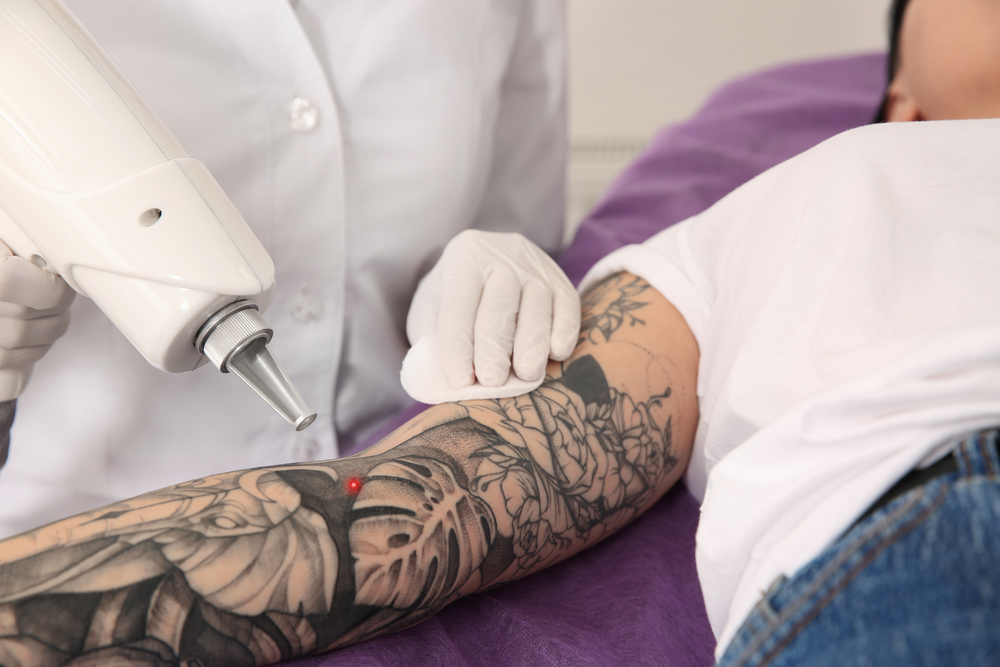
During a laser session, we send ultra-fast pulses of light energy into the skin. This energy heats the ink particles so rapidly that they shatter into tiny, sand-like fragments.
The Waiting Game
Here is the crucial part of the timeline: the laser doesn’t remove the ink; your body does.
Once the laser shatters the “boulders” into “pebbles” and “sand,” your white blood cells can finally do their job. They engulf the tiny particles and transport them to your lymph nodes, where they are processed and flushed out of your body naturally.
This flushing process takes time. It is not immediate. If you come back for another session too soon, you are essentially zapping ink that your body hasn’t had a chance to clear yet. This is why patience is the most critical component of the tattoo removal timeline.
The Kirby-Desai Scale: Predicting Your Sessions
Dermatologists and laser specialists often refer to the Kirby-Desai scale, a clinical tool used to estimate the number of sessions required. While we use our own expertise and modern technology at Laser Eraser, the factors in this scale are still the gold standard for understanding what we are up against.
Let’s break down the six key factors that will determine if you are on the “5 sessions” end of the spectrum or the “15 sessions” end.
1. Skin Type (The Fitzpatrick Scale)
Your skin tone is a major factor. Lasers work by targeting contrast. The ideal scenario is dark ink on pale skin because the laser can easily distinguish the pigment from the surrounding tissue.
- Lighter Skin (Types I and II): Generally easier to treat. We can often use higher power settings because there is little risk of the laser targeting the skin’s natural melanin. This can lead to fewer sessions.
- Darker Skin (Types IV, V, and VI): Requires a more cautious approach. Because darker skin has more melanin, the laser can sometimes confuse the natural skin pigment with the tattoo ink. To prevent hypopigmentation (loss of skin color) or burning, we must use lower, safer settings. This often means more sessions are required to achieve the same result safely.
2. Location of the Tattoo
Location, location, location. It matters in real estate, and it matters in Clark NJ tattoo removal.
The removal process relies on your circulatory system to carry away the shattered ink. Therefore, tattoos located in areas with high blood flow fade faster.
- Fastest Fading: Face, neck, and head. These areas have a massive vascular supply.
- Moderate Fading: Chest, back, and upper arms.
- Slowest Fading: Hands, feet, ankles, and wrists. These extremities have poorer circulation and are furthest from the heart. Removing a tattoo on your ankle will almost always take more sessions than removing the exact same tattoo on your neck.
3. Color of the Ink
Not all ink colors absorb laser energy the same way.
- Black: The easiest color to remove. It absorbs all wavelengths of light, making it the most responsive to treatment.
- Red: Also relatively easy to remove with specific laser wavelengths.
- Blue and Green: Historically difficult, but modern lasers have made great strides here. They still typically require more sessions than black ink.
- Yellow, Orange, and White: The most difficult colors. Sometimes these pigments do not respond well to laser treatment at all, or they require many, many sessions to see a difference.
4. Amount of Ink (Density)
Is your tattoo a light outline, or is it a dense, tribal blackout piece?
- Amateur Tattoos: Often done with less ink and placed more superficially in the skin. These can sometimes be cleared in very few sessions.
- Professional Tattoos: Artists pack a lot of ink into the skin to ensure the tattoo lasts and looks bold. This density means there is simply more “stuff” for the laser to break down and your body to flush out. Layered tattoos (cover-ups) have double the amount of ink and will take significantly longer.
5. Scarring and Tissue Change
If the original tattoo caused scarring (raised skin) when it was applied, it can make removal more difficult. Scar tissue creates a barrier that can protect the ink from the laser energy. If you have significant scarring, we may need more sessions to penetrate that toughened tissue effectively.
6. Layering (Cover-Ups)
If you are removing a tattoo that is already a cover-up of an older tattoo, you are dealing with layers of ink sitting on top of each other. We have to break through the top layer before we can even reach the bottom layer. Expect the tattoo removal sessions count to be on the higher end for cover-ups.
The Interval: Why You Can’t Rush It
A common request we get is, “Can I come in every two weeks to get it done faster?”
The answer is a strict no.
Standard spacing between sessions is 6 to 8 weeks. In some cases, specifically for the extremities or towards the end of the treatment, we might suggest waiting 10 or even 12 weeks.
Here is why:
- Skin Healing: The laser causes temporary trauma to the skin (redness, swelling, sometimes blistering). Your skin needs to fully heal before we can treat it again to avoid scarring.
- Ink Clearance: The most important work happens between visits. If you treat the area again after 4 weeks, your body is still busy flushing out the ink from the first session. Hitting it again too soon doesn’t speed up the process; it just creates unnecessary trauma and wastes your money.
In fact, waiting longer between sessions can sometimes result in fewer total sessions because you are allowing the body to do maximum clearing after each treatment.
A Realistic Timeline: Case Scenarios
To help you visualize the tattoo removal timeline, let’s look at three hypothetical scenarios based on clients we see here in Clark, NJ.
Scenario A: The “Ex-Name”
- Tattoo: A small, black script name on the upper arm.
- Age: 10 years old.
- Skin Type: Light.
- Estimated Sessions: 5 to 8.
- Timeline: With sessions spaced 8 weeks apart, this removal might take about 10 to 14 months for complete clearance.
Scenario B: The “Colorful Art”
- Tattoo: A medium-sized flower with green leaves and red petals on the shoulder blade.
- Age: 3 years old (professional).
- Skin Type: Medium.
- Estimated Sessions: 8 to 12.
- Timeline: Green ink can be stubborn. This process could take 1.5 to 2 years.
Scenario C: The “Ankle Tribal”
- Tattoo: A dense, black tribal band around the ankle.
- Age: 15 years old.
- Skin Type: Light.
- Estimated Sessions: 10 to 15+.
- Timeline: Despite being black ink (which is easy), the density and the location (ankle) make this slow. Circulation is poor here. This could take 2+ years for full removal.
For real-world examples of how these factors play out, you can view our Before & After gallery to see the progression of different tattoos.
How to Speed Up Your Results
While you cannot change your skin type or the location of your tattoo, you are not helpless in this process. There are several lifestyle factors that can significantly speed up your ink clearance. Remember, the laser breaks the ink, but you clear it.
1. Stop Smoking
This is the single biggest factor under your control. Smoking constricts blood vessels and depresses the immune system. Studies have shown that smokers have a 70% lower rate of tattoo removal success after 10 sessions compared to non-smokers. If you want the ink gone, put the cigarettes down.
2. Exercise
Anything that boosts your heart rate and circulation helps. Regular cardio exercise increases blood flow, which helps your lymphatic system flush out the ink particles faster.
3. Hydration
Your lymphatic system needs water to function efficiently. Drinking plenty of water helps mobilize the waste products (the ink) and clear them from your system.
4. Massage
Once the skin is fully healed from a session, gently massaging the area can help stimulate blood flow and lymph drainage.
5. Follow Aftercare Religiously
Proper aftercare ensures your skin heals quickly and perfectly, allowing us to perform the next session on time. Infection or poor healing can delay your timeline by months.
Fading for Cover-Up: A Shorter Timeline
Not everyone wants complete removal. Many of our clients in Clark, NJ are looking to fade an old tattoo so they can get a new, better piece of art over it.
If your goal is a cover-up, your timeline is much shorter. You do not need the skin to be pristine; you just need the old ink light enough that your artist doesn’t have to fight against it.
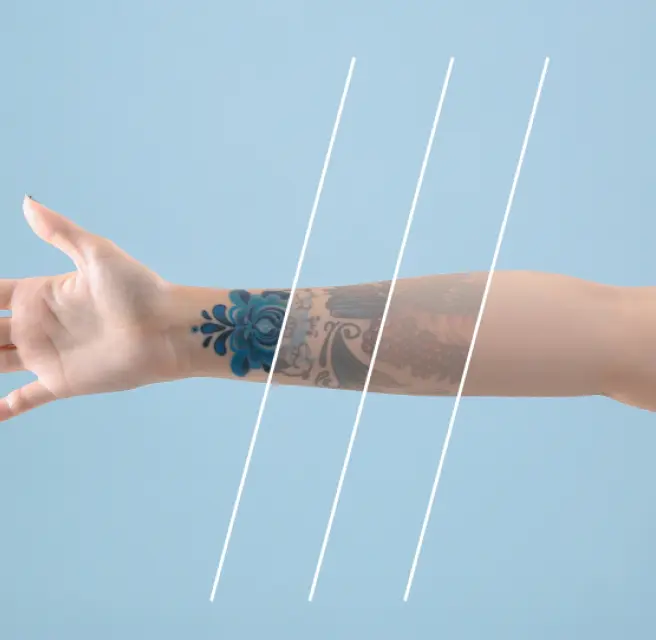
Typically, fading for a cover-up takes only 3 to 5 sessions. This creates a “ghost” of the old image that is easily hidden by new ink. This option opens up a world of design possibilities that wouldn’t be possible with a straight cover-up over dark ink.
Why “Unlimited” Packages Might Be Smart
Because the number of sessions can be unpredictable, the costs can add up. That is why many clinics, including Laser Eraser, offer package options.
Paying per session can be risky if your tattoo ends up being stubborn and taking 15 visits. Discussing a package deal during your consultation can save you money in the long run and remove the stress of “counting sessions.” You simply come in until the tattoo is gone.
For specific questions about pricing and packages, you can visit our Tattoo Removal page or speak to our staff directly.
The Psychological Timeline
We often focus on the physical timeline, but there is an emotional one too.
- The Start (Sessions 1-3): Excitement mixed with impatience. You might not see huge changes yet. The tattoo might look “frosty” or slightly faded, but the structure is still there. This is the hardest part for many clients—trusting the process.
- The Middle (Sessions 4-8): Momentum builds. You start to see parts of the tattoo disappearing. Lines become broken dots. Shading vanishes. You can see the finish line.
- The End (Sessions 9+): The home stretch. The tattoo is very faint. These sessions are about chasing the last stubborn bits of ink.
Why Choose Laser Eraser in Clark, NJ?
The technology used plays a massive role in your timeline. Older lasers (like Q-switched lasers from 10 years ago) heat the ink more slowly. This often results in more sessions, more pain, and a higher risk of scarring.
At Laser Eraser, we utilize state-of-the-art technology designed to shatter ink more efficiently with less heat. This means:
- Fewer Sessions: Our technology breaks ink down into smaller particles faster.
- Better Safety: Less heat means less damage to surrounding tissue.
- Faster Healing: Shorter downtime between sessions.
We are proud to serve the Clark community and help our clients reclaim their skin. Our specialists are honest about timelines. We won’t promise you “3 sessions” if we know it will take 10. We believe in setting realistic expectations so you are happy with the journey and the destination.
Ready to Start the Clock?
The sooner you start, the sooner it’s gone. Since the process takes time, procrastination is your enemy. If you start today, in one year you could be nearly ink-free. If you wait, you’ll still have the tattoo you don’t want.
Don’t let the timeline scare you. Time will pass anyway—you might as well spend it getting the results you want.
Your Next Steps:
- Book a Consultation: We can look at your tattoo, assess the density and ink type, and give you a personalized estimate of how many tattoo removal sessions you will likely need.
- Make a Plan: We will set up a schedule that works for your life and budget.
- Start Removing: Your first session is the biggest step.
If you have questions or want to get a free estimate on your removal journey, please Contact Us today. We are here to help you erase the past and move forward with confidence.
Frequently Asked Questions About Tattoo Removal Sessions
Can I remove a tattoo in one session?
No. There is currently no safe technology that can remove a professional tattoo in a single session without surgically cutting the skin out (excision), which leaves a significant scar. Laser removal is a multi-session process.
Does it hurt more as the sessions go on?
Actually, it often hurts less as time goes on. The laser targets pigment. In the first few sessions, there is a lot of ink to target, so the reaction is stronger. As the tattoo fades, there is less ink to react with the laser, often making the sensation milder in later sessions.
Will the tattoo completely disappear?
In most cases, yes. We aim for 100% clearance. However, some ink colors (like yellow or fluorescent hues) or amateur mixes can be resistant. During your consultation, we will be transparent about what level of clearance you can expect.
What happens if I wait 6 months between sessions?
That is perfectly fine! In fact, your tattoo will likely fade even more during that long break. You never lose progress by waiting longer; you only pause progress by stopping. Taking a break for financial or personal reasons will not undo the work already done.
I had 5 sessions elsewhere and saw no change. Can you help?
Yes. We see this often. It usually indicates that the previous clinic was using under-powered equipment or incorrect wavelengths for your ink color. Our advanced systems can often pick up where others failed and start moving that stubborn ink again.
Ready to get a specific timeline for your tattoo? Contact Us at Laser Eraser in Clark, NJ to get started.
Laser Tattoo Removal in Clark, NJ
Erase the Past with the PicoWay® Laser—Advanced Tattoo Removal Performed by Board-Certified, Physician-Owned & Operated Physicians.
Contact Us