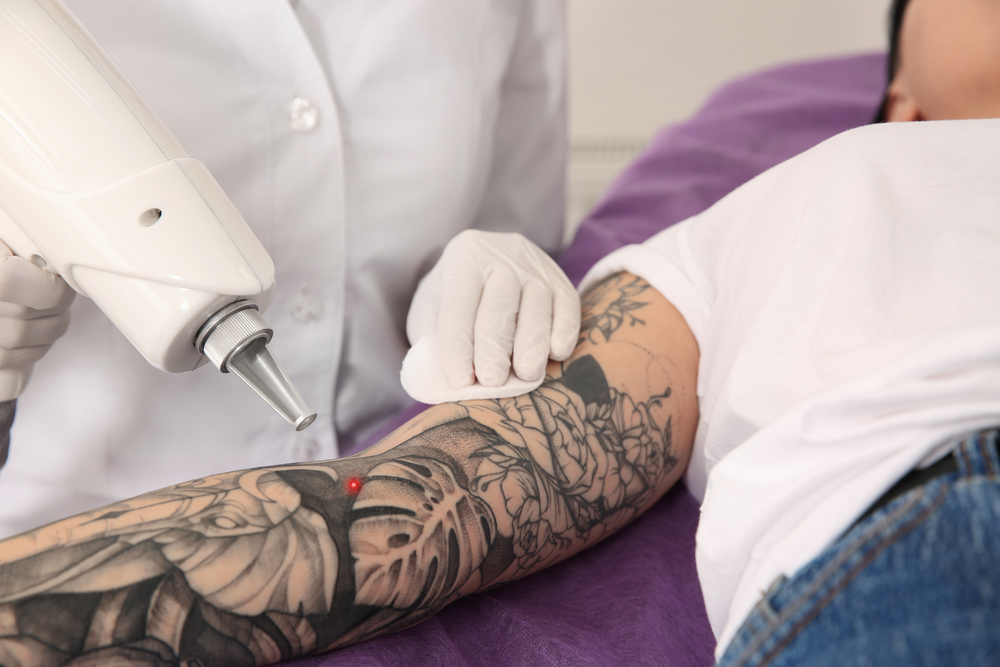

When you first walked out of the tattoo studio, fresh ink gleaming on your skin, you likely weren’t thinking about the physics of light absorption. You were just happy with the vibrant red rose, the deep blue nautical star, or the bold black tribal design. But now that you are considering removing that piece of art, the color of the ink matters more than you might realize.
One of the most common questions we hear at Laser Eraser Now is, “Does the color of my tattoo make it harder to remove?” The short answer is yes. The physics of laser tattoo removal relies heavily on color theory and light absorption. Different ink pigments respond differently to laser energy, meaning some colors fade after just a few sessions, while others require a bit more persistence.
In this comprehensive guide, we will dive deep into the science of tattoo removal, exploring why black ink is the easiest to erase, why neon colors can be stubborn, and how advanced laser technology in Clark, NJ, is changing the game for multicolor tattoo removal.
The Science of Ink: How Lasers Target Color
To understand why color matters, you first need to understand how laser tattoo removal works. It isn’t like an eraser on a chalkboard; it’s a targeted medical procedure that uses physics to break down foreign particles in your body.
The Role of Light Absorption
Lasers work by delivering ultra-short pulses of high-intensity light energy into the skin. This energy is directed at the tattoo ink particles suspended in the dermis (the second layer of skin). When the ink particles absorb this light energy, they heat up instantly and shatter into tiny fragments. Your body’s immune system, specifically white blood cells called macrophages, then flushes these tiny fragments away over the following weeks.
Here is the catch: Ink particles only shatter if they absorb the specific wavelength of light the laser emits. If the laser beam passes right through the ink without being absorbed, no heat is generated, and the ink remains intact.
This is where color comes in. Different colors absorb different wavelengths of light. Think about wearing a black shirt on a sunny day versus a white shirt. The black shirt absorbs sunlight, making you hot. The white shirt reflects it, keeping you cooler. Tattoo removal works on a similar principle of absorption versus reflection.
Wavelengths Matter
Professional laser systems often use multiple wavelengths to treat different colors effectively. The most common wavelengths used in the industry include:
- 1064 nm: Highly effective for dark pigments like black and dark blue.
- 532 nm: Targets warm colors like red, orange, and yellow.
- 694 nm or 755 nm: Often used for difficult greens and bright blues.
Without the right wavelength, a laser specialist cannot effectively treat a multicolor tattoo. This is why it is crucial to visit a clinic with advanced technology capable of switching wavelengths to target your specific artwork.
Which Tattoo Colors Are Easiest to Remove?
If you have a tattoo consisting primarily of dark, bold lines, you are in luck. Darker colors are generally the easiest to treat because of how they interact with laser light.
1. Black Ink
Black is the ideal candidate for laser removal. Because black absorbs all wavelengths of light, it responds exceptionally well to the most common laser wavelength (1064 nm). Whether it is an old amateur tattoo or a professional piece, black ink typically breaks down faster and more completely than any other color.
However, not all black ink is created equal. Amateur tattoos (often done with India ink) are usually shallower and easier to remove than dense, professional tribal tattoos. But regardless of the density, black remains the “gold standard” for removal success.
2. Dark Blue and Brown
Similar to black, dark blue and dark brown pigments absorb a significant amount of laser energy. These colors respond well to the standard wavelengths used in most clinics. While they may take slightly longer than pure black, patients usually see significant fading early in the process.
3. Grey and Shading
Grey wash—often used for shading in black-and-grey portraits—is essentially diluted black ink. Because there is less pigment density, these areas often fade very quickly, sometimes disappearing long before the darker outlines of the tattoo.
If you want to see examples of how effectively these dark pigments fade, check out our Before & Afters gallery. The results on black and grey tattoos are often stunningly clear.
The Challenge of Bright Colors: Reds, Oranges, and Yellows
As we move away from dark pigments, the removal process becomes more specific. Warm colors require a different approach because they don’t absorb the standard 1064 nm wavelength well. Instead, they reflect it.
To treat red, orange, and yellow, specialists switch to a 532 nm wavelength. This green-colored laser light is highly absorbed by red and orange pigments.
Red Ink
Red is actually one of the easiest non-black colors to remove when the correct laser wavelength is used. It absorbs green light spectrums very effectively. Many patients are surprised to find that their red rose or heart tattoo fades almost as reliably as black ink, provided their technician is using the right settings.
Orange and Yellow
These colors are slightly more stubborn than red but generally respond well to the same 532 nm wavelength. Yellow, however, can be tricky. Being the lightest color in the spectrum, it reflects a lot of light and contains very little pigment density compared to darker colors. It often requires more sessions than red or orange to achieve complete clearance.
The “Stubborn” Spectrum: Greens, Teals, and Light Blues
For a long time, green and light blue were the nemeses of laser tattoo removal specialists. Older laser technology struggled to produce the wavelengths necessary to shatter these pigments effectively.
Why? Because green ink reflects the standard red light lasers and the green light lasers used for red ink. It sits in a tricky middle ground.
Solving the Green Ink Problem
Modern technology has largely solved this issue. Lasers that can produce wavelengths in the 694 nm (Ruby) or 755 nm (Alexandrite) range are specifically designed to target green and teal pigments.
If you have a tattoo with vibrant turquoise, teal, or forest green, it is vital to ask your provider if they have the specific handpieces or wavelengths required to treat these colors. Without them, those parts of your tattoo may remain while the black outlines fade away.
Can White and Flesh-Tone Ink Be Removed?
This is the most complicated category in tattoo ink removal process. White, beige, cosmetic flesh tones, and some light pinks present a unique chemical challenge known as “oxidation.”
The Paradox of White Ink
White ink is often composed of titanium dioxide or zinc oxide. These compounds can sometimes darken immediately upon contact with laser energy—a reaction called oxidation. instead of fading, the white ink turns a grey or black color.
While this darkened pigment can often be treated in subsequent sessions like standard black ink, it prolongs the process significantly. Because of this risk, we always perform a “test spot” on tattoos containing white or flesh-tone ink to see how the pigment reacts before treating the entire area.
Factors Beyond Color That Affect Removal
While color is a massive factor, it isn’t the only variable in the equation. You might have a black tattoo that takes longer to remove than a red one simply because of other biological and technical factors.
1. Ink Depth and Density
Professional tattoos inject ink deeper into the dermis and use a much higher density of pigment than amateur tattoos. A dense, solid black tribal armband has physically more ink for the laser to break down than a light, shaded script. More ink means more sessions, regardless of the color.
2. Age of the Tattoo
Older tattoos are generally easier to remove. Over years, your body’s immune system naturally attacks the foreign ink particles, causing them to drift deeper or break down slightly. This gives the laser a head start. A brand-new tattoo (once healed) will hold its pigment much more stubbornly.
3. Location on the Body
Circulation plays a huge role in tattoo color removal. After the laser shatters the ink, your blood flow is responsible for carrying the debris away. Tattoos on areas with high blood supply—like the chest, neck, face, and back—tend to fade faster. Tattoos on the extremities, like fingers, ankles, and feet, often take longer because circulation is slower in these areas.
4. Skin Tone (Fitzpatrick Scale)
Your natural skin color affects how laser settings are adjusted. Lasers target pigment, and they don’t always distinguish between tattoo pigment and the melanin in your skin.
- Lighter skin tones usually allow for more aggressive laser settings because there is less risk of the laser targeting natural skin pigment.
- Darker skin tones require more cautious settings and specific wavelengths (like 1064 nm) to avoid hypopigmentation (lightening of the skin). This can sometimes mean the process takes slightly longer to ensure safety.
At Laser Eraser Now, our specialists are experts in treating all skin types safely. You can learn more about our specific approach on our main Tattoo Removal page.
What About “Cover-Up” Tattoos?
Cover-ups present a unique challenge regarding color. A cover-up usually involves packing dense, dark ink over an existing tattoo to hide it. This results in layers upon layers of pigment.
When removing a cover-up, we are essentially removing two tattoos in one spot. We often have to break through the top layer of fresh, dense ink before we can even reach the older tattoo underneath. Furthermore, cover-ups often mix colors to neutralize the old design, creating a complex mix of pigments that may require multiple wavelengths to treat effectively.
Despite the difficulty, cover-ups can absolutely be removed or significantly faded to make room for new artwork.
The Laser Eraser Now Advantage in Clark, NJ
If you are searching for laser tattoo removal Clark NJ, it is critical to choose a provider who understands the nuances of ink chemistry and laser physics. At Laser Eraser Now, we don’t just zap and hope for the best. We analyze your tattoo’s color palette, density, and location to create a customized treatment plan.
Advanced Technology
We utilize state-of-the-art laser systems capable of delivering the specific wavelengths needed for your unique tattoo. Whether you have a stubborn green sleeve or a simple black name, we have the tools to target it precisely.
Board-Certified Specialists
Safety is paramount. Our team includes board-certified doctors who understand skin interaction. We ensure that while the ink is destroyed, your surrounding tissue remains healthy and safe. The goal is to remove the art, not leave a scar.
Realistic Expectations
We believe in honesty. During your consultation, we will look at the colors in your tattoo and give you a realistic timeline. We won’t promise that a dense green tribal tattoo will vanish in two sessions because the science says otherwise. We help you understand the journey so you can be confident in the destination.
Optimizing Your Body for Ink Removal
While we handle the laser technology, you can actually help speed up the removal of any color ink by taking care of your body. Remember, the laser breaks the ink, but you do the removal.
- Hydration: Drinking plenty of water helps your lymphatic system function efficiently, flushing out the shattered ink particles faster.
- No Smoking: Smoking constricts blood vessels and significantly slows down the removal process. Studies show that smokers have a 70% lower rate of successful removal after 10 sessions compared to non-smokers.
- Exercise: Getting your blood pumping increases circulation, which helps carry away ink debris.
- Sun Protection: Sunburned or tanned skin is difficult to treat safely. Keep your tattoo out of the sun or cover it up to ensure you don’t miss scheduled sessions.
Frequently Asked Questions About Ink Colors
Is black ink really the easiest to remove?
Yes, overwhelmingly so. Because it absorbs all light wavelengths, it shatters most efficiently under the laser.
Why is my yellow tattoo not fading?
Yellow reflects a lot of light and is often difficult for lasers to “see.” It usually requires more sessions than darker colors.
Can you remove neon colors?
Neon or fluorescent inks can be tricky because they often contain a mix of chemicals and plastics that behave unpredictably. However, with advanced multi-wavelength lasers, significant fading is usually possible.
Will the laser remove the color but leave a “ghost” image?
Sometimes, a faint shadow or “ghost” of the tattoo remains if the ink was placed very deep. However, this is usually barely noticeable and can often be covered easily or accepted as a vast improvement over the original tattoo.
Does the brand of ink matter?
Yes. There are hundreds of tattoo ink manufacturers, and they all use different chemical compositions. Some inks contain heavy metals that make them more stubborn, while others are organic and break down faster. Since tattoo artists rarely document exactly which brand they used, we often have to observe how the ink reacts during the first treatment to gauge its stubbornness.
Conclusion: Don’t Let Color Stop You
Does color affect tattoo removal? Absolutely. But having a colorful tattoo doesn’t mean you are stuck with it forever. It simply means you need a tailored approach.
At Laser Eraser Now, we have successfully treated the full spectrum of the rainbow, from deep blacks to vibrant teals. We understand the science behind the ink and have the technology to handle it.
If you are living with a tattoo you no longer love—regardless of its color—don’t assume it can’t be removed. The technology has evolved, and so can your skin.
Ready to start your journey to a clean slate?
Contact us today to schedule your free consultation. Let our experts in Clark, NJ, assess your tattoo and build a plan to erase the past.
Whether your tattoo is a simple black script or a colorful masterpiece, we are here to help you get the results you deserve.
Laser Tattoo Removal in Clark, NJ
Erase the Past with the PicoWay® Laser—Advanced Tattoo Removal Performed by Board-Certified, Physician-Owned & Operated Physicians.
Contact Us