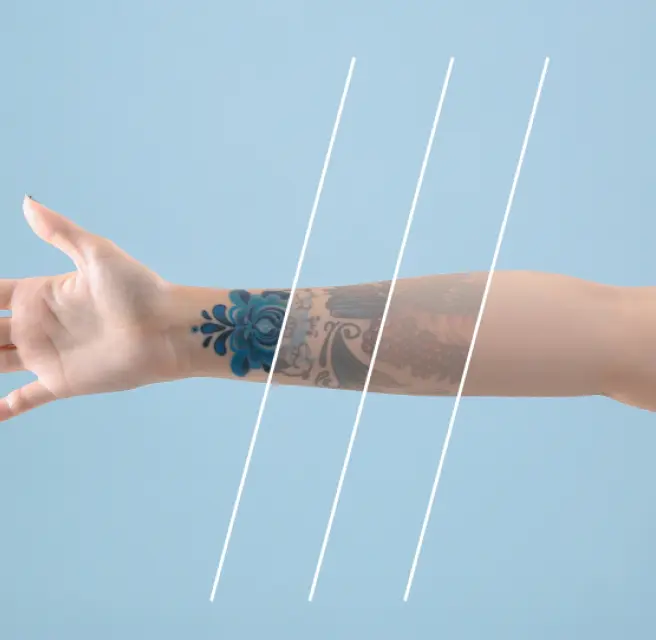
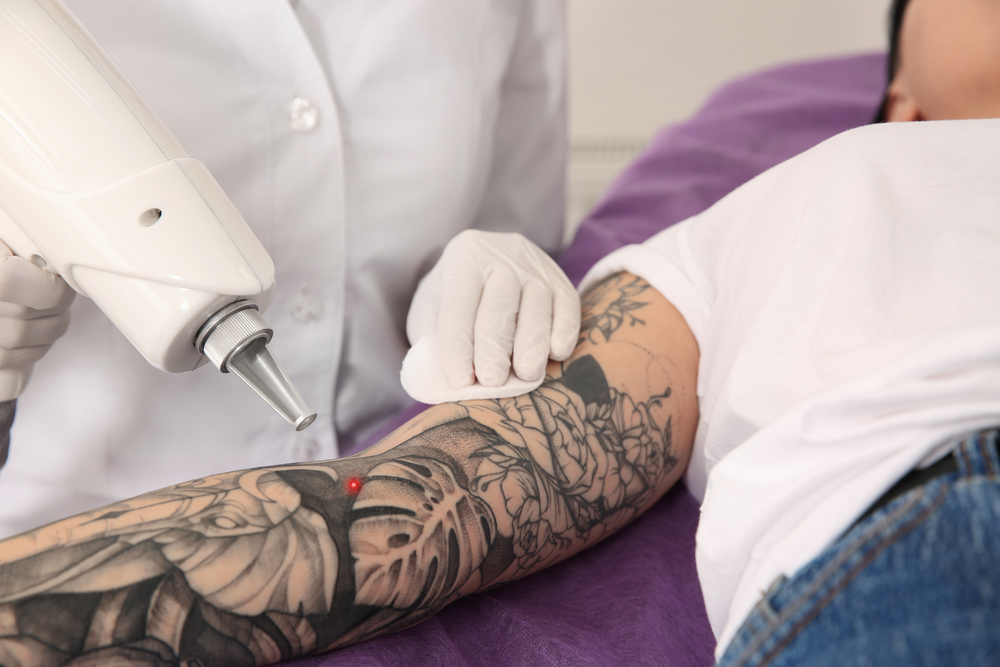
Tattoos are often designed to flow with the specific contours of the body. A sleeve wraps intricately around the muscles of the arm; a small script sits delicately on a wrist; a large back piece spans the broad canvas of the shoulders. Just as the application of a tattoo varies depending on where it sits on your body, the removal process does, too.
When you start looking into tattoo removal Clark NJ, you might wonder if the location of your ink affects how easily it can be removed. The answer is a resounding yes. The skin on your ankle is different from the skin on your neck, and your circulatory system works differently in your fingers than it does in your chest. These biological nuances play a massive role in how quickly—and successfully—a tattoo fades.
At Laser Eraser Now, we have treated tattoos on virtually every part of the human body. From full sleeves to tiny finger tattoos, our specialists understand the unique anatomical challenges of each area. In this guide, we will break down the specific considerations for removing tattoos from hands, arms, legs, and more, helping you understand what to expect based on where your ink is located.
The Anatomy of Removal: Why Location Matters
Before we dive into specific body parts, it is crucial to understand why location matters. Laser tattoo removal isn’t just about the laser; it is about your body’s ability to clean up the mess.
When our advanced lasers break down the ink particles in your skin, they don’t vanish into thin air. They are shattered into microscopic fragments that your immune system—specifically your lymphatic system—must flush away. This flushing process relies heavily on blood flow.
The Rule of Circulation
The general rule of thumb in the tattoo removal industry is simple: The closer the tattoo is to your heart, the faster it typically fades.
Areas with high vascularity (lots of blood vessels and strong blood flow) allow immune cells to reach the shattered ink quickly and carry it away efficiently. Areas further from the heart, or with poorer circulation, take longer because the “cleanup crew” arrives more slowly.
Arms: From Sleeves to Wrist Scripts
Arms are one of the most common sites for tattoos—and consequently, one of the most common areas we treat. Whether you are looking to fade a full sleeve for a cover-up or remove a single bicep piece, laser tattoo removal for arms is generally very effective.
Upper Arms and Shoulders
The upper arm and shoulder area is a prime location for removal. This area benefits from excellent blood supply due to the large muscle groups (biceps, triceps, deltoids). Tattoos here often fade faster than those on the forearms or wrists.
- Pain Level: Moderate. The fleshy muscle provides a bit of a cushion, making the sensation more tolerable than on bony areas.
- Healing: Usually rapid, with minimal swelling compared to extremities.
Forearms
Forearm tattoos are incredibly popular, but they are also highly visible, which is why many clients prioritize removing them for professional reasons.
- Visibility Factor: Because you use your arms daily, keeping the area out of the sun during the healing process is critical. Sun exposure can lead to hyperpigmentation (darkening of the skin), so we always recommend long sleeves or high-SPF sunscreen during your treatment series.
- Circulation: Slightly slower than the upper arm but still relatively efficient.
The Wrist Challenge
Wrist tattoos are often small—names, dates, symbols—but they can be stubborn. The skin on the wrist is thin, and the area is bony.
- Sensitivity: This area can be more sensitive during treatment due to the lack of muscle and fat cushioning the bone.
- Movement: We constantly flex and rotate our wrists. After treatment, we advise minimizing strenuous repetitive motion for a day or two to allow any potential swelling to subside comfortably.
If you are curious about how arm tattoos fade over time, take a look at our Before & After gallery to see real results from our Clark, NJ clinic.
Hands and Fingers: The Extremity Challenge
Hand and finger tattoos have surged in popularity, but they are notoriously some of the most difficult to maintain—and to remove. If you are searching for tattoo removal Clark NJ specifically for hand tattoos, here is what you need to know.
Why Fingers are “Stubborn” Zones
Fingers are the furthest point from your heart. The blood circulation here is significantly slower than in your chest or upper arms. This means that even if the laser shatters the ink perfectly, your body takes longer to carry the debris away.
Additionally, the skin on the fingers is very thin, yet the ink in finger tattoos (especially amateur ones) can sometimes be placed unevenly deep. This combination requires a skilled technician to adjust laser settings carefully to avoid damaging the delicate skin while still targeting the ink.
Cosmetic Considerations for Hands
Because your hands are always visible, healing can be a social concern.
- Swelling: It is common for fingers to swell slightly after treatment.
- Blistering: Because the skin is thin, there is a slightly higher risk of minor blistering on fingers compared to fleshier areas. However, proper aftercare usually manages this easily.
Despite the slower process, complete removal on hands is absolutely possible. It simply requires patience and often a few more sessions than a shoulder tattoo would.
Legs: Thighs, Calves, and Ankles
Tattoo removal for legs follows the same gravitational logic as the arms: higher is faster, lower is slower.
Thighs
The thigh is an excellent area for laser removal. Like the upper arm, it has large muscle mass and good blood flow.
- Large Canvas: Thigh pieces are often large. For massive tattoos, we may break the treatment into sections (treating half the tattoo in one visit and the other half a few weeks later). This prevents your immune system from being overwhelmed by too much shattered ink at once.
- Comfort: Generally one of the less painful areas to treat due to the thicker skin and fat/muscle layers.
Calves and Shins
Moving down the leg, circulation begins to fight against gravity. Blood has to pump “uphill” to return to the heart, which can slow down the lymphatic drainage of ink particles.
- Shin Sensitivity: Tattoos directly over the shin bone can be more sensitive during the laser pulses because there is no cushion between the skin and the bone. We use cooling technology to manage this discomfort effectively.
Ankles and Feet
Similar to fingers, ankles and feet are “terminal” areas for circulation.
- Gravity’s Effect: Because we stand on our feet, fluid naturally pools there. After laser treatment on an ankle or foot, we strongly recommend keeping the leg elevated as much as possible for the first 24-48 hours. This helps reduce swelling and aids the lymphatic system in moving the ink out.
- Shoe Choice: You will need to wear loose, comfortable footwear after treatment. Friction from tight boots or sneakers can irritate the treated skin and slow healing.
The Torso: Chest, Back, and Ribs
The trunk of the body is often the “gold standard” zone for removal speed due to its proximity to the heart.
Chest
Chest tattoos typically respond beautifully to laser treatment. The vascular supply is abundant, leading to efficient ink absorption.
- Skin Sensitivity: The skin on the chest (especially the décolletage for women) can be prone to scarring if treated too aggressively. Our board-certified specialists at Laser Eraser Now are highly trained to find the perfect balance between effective power and skin safety.
The Back
The back is a massive canvas, often hosting large murals.
- Treatment Segmentation: As with large thigh pieces, full back tattoos are almost always treated in sections. Treating an entire back in one session would cause significant swelling and be physically taxing on the body.
- Aftercare Access: The biggest challenge with back removal is simply reaching it! You will likely need a friend or partner to help apply aftercare ointments and keep the area clean.
Ribs
The ribcage is famous for being a painful spot to get tattooed, and it remains a sensitive spot for removal.
- Sensation: The vibration of the laser over the rib bones can be intense. However, because the sessions are incredibly fast (often just minutes), most clients find it manageable.
Face and Neck: Delicate Precision
Facial and neck tattoos require the highest level of trust in your provider. These are high-stakes areas where precision is non-negotiable.
The Neck
The neck is a fantastic area for removal success. It has incredible blood flow, so tattoos here often fade faster than almost anywhere else.
- Healing: The skin on the neck heals quickly, but it is also sensitive. We take extra care to minimize irritation.
The Face (including Cosmetic Tattoos)
We frequently treat facial tattoos, including microblading removal for eyebrows.
- Eye Safety: When treating near the face, we use specialized medical-grade eye protection (often stainless steel eye shields for eyebrow work) to ensure the laser never affects your vision.
- Ink Oxidation: Cosmetic inks (like those used for eyebrows or lip liner) often contain iron oxides or titanium dioxide. These can sometimes darken (oxidize) before they fade. We always perform a test spot on cosmetic tattoos to ensure the ink reacts predictably.
For more on our approach to safety and skin types, visit our main Tattoo Removal page.
Customizing the Process for Every Body Part
At Laser Eraser Now in Clark, NJ, we don’t use a “one setting fits all” approach. We customize the laser protocols based on the body part we are treating.
Adjusting for Skin Thickness
The skin on your back is thick and tough; the skin on your inner wrist is paper-thin. We adjust the laser’s fluence (energy level) and pulse width to account for these differences. Thinner skin requires a more delicate touch to prevent texture changes, while thicker skin can handle higher energy to break deep ink.
Managing Pain by Area
Pain perception varies by body part.
- Bony areas (ankles, wrists, ribs, spine) tend to be sharper.
- Fleshy areas (thighs, buttocks, arms) are often described as feeling like a rubber band snap or bacon grease splatter—annoying, but bearable.
We utilize cooling systems that blow freezing air onto the skin before, during, and after the laser pulses. This numbs the area significantly and protects the top layer of skin from thermal damage.
Aftercare Differences by Location
Your aftercare routine should be tweaked based on where you were treated.
- Legs/Feet: Elevate! Keep them up on a pillow when sleeping or watching TV to reduce swelling. Avoid restrictive socks or boots.
- Hands: Keep them clean. Hands touch everything—door handles, phones, keyboards—which are covered in bacteria. Wash your treated hands frequently with gentle soap to prevent infection.
- Torso/Back: Wear loose cotton clothing. A tight bra strap or heavy backpack rubbing against a treated shoulder or ribcage can cause blistering and irritation.
- Face: Sun protection is paramount. Wear a hat and use high-quality sunscreen once the skin has healed enough to apply it.
Why Choose Laser Eraser Now in Clark, NJ?
Regardless of where your unwanted tattoo is located, you need a team that understands the anatomy of removal. At Laser Eraser Now, we combine medical expertise with cutting-edge technology to treat hands, arms, legs, and everything in between.
We understand that a tattoo on your neck affects your life differently than one on your foot. We tailor our treatment plans not just to the ink, but to your lifestyle and your body’s specific needs.
Ready to Erase the Past?
Don’t let the location of your tattoo hold you back. Whether it is a stubborn ring finger tattoo or a sleeve you are ready to part with, we can help.
Contact us today for a free consultation. We will assess your tattoo’s location, give you a realistic timeline based on circulation and ink density, and help you get back to the skin you want.
No matter where the ink is, we have the solution.
Laser Tattoo Removal in Clark, NJ
Erase the Past with the PicoWay® Laser—Advanced Tattoo Removal Performed by Board-Certified, Physician-Owned & Operated Physicians.
Contact Us