
Yes — But the Real Problem Is Sunburns, Not Summer
If you search online for “summer tattoo removal,” half the internet acts like you need to become a vampire until October.
We’re here to tell you that’s mostly a myth.
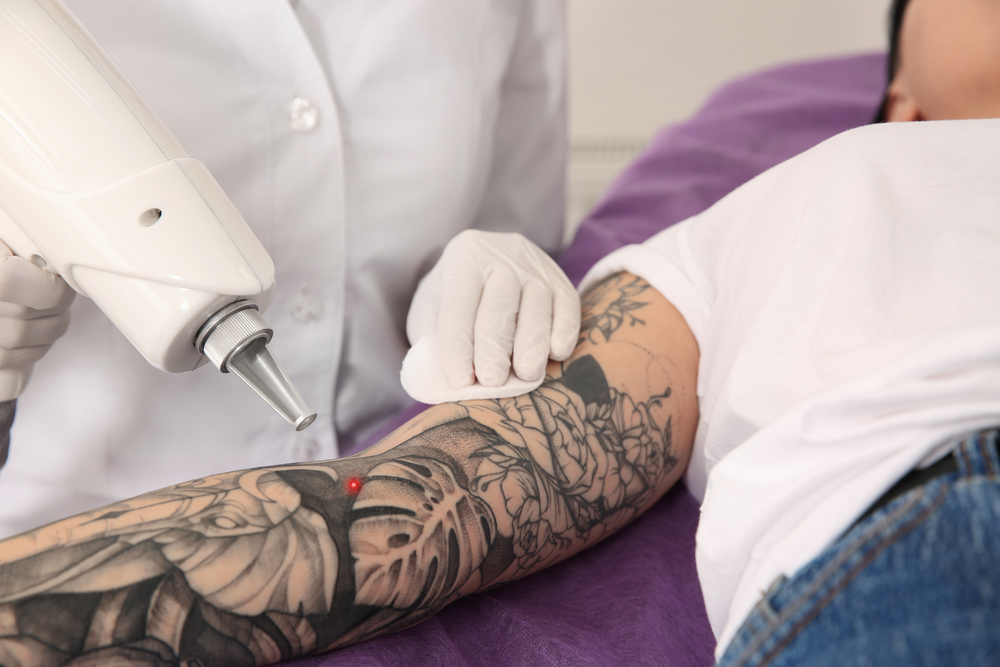
You do not need to pause your tattoo removal journey every time the weather gets nice. Modern laser technology — especially advanced picosecond lasers like the PicoWay — has made laser tattoo removal during the summer months possible for many patients when proper precautions are followed.
That said, there’s a huge difference between:
- Enjoying summer responsibly
- Showing up looking like a lobster after six hours at the Jersey Shore
Let’s break down the science behind summer tattoo removal, what’s actually risky, and how to safely keep your progress moving all year long.
Your Immune System Is the Real MVP
Most people think the laser magically “erases” the tattoo on contact. Not exactly.
The laser’s actual job is to break large tattoo ink particles into tiny, microscopic fragments. Once that happens, your body’s immune system takes over. Specialized immune cells called macrophages act like tiny cleanup crews. They grab the shattered ink particles and slowly flush them away through your lymphatic system over time.
That’s why tattoo removal is a gradual process — not a one-day magic trick.
A Fun Summer Bonus for Ink Clearance
People often move more, sweat more, stay more active, and drink more fluids during the warmer months. Because your lymphatic system relies entirely on movement and hydration to function, healthy summer circulation may actually help support your body’s natural ink-clearing process between treatments.
So no — summer itself is not the enemy.
The Real Issue Is Skin Damage, Not Sun Exposure
The internet tends to lump all sun exposure together, but medically, there’s a major difference between a mild tan and an active sunburn. Your laser provider should absolutely know the difference.
A Mild Tan Is NOT the Same as a Sunburn
When your skin is exposed to UV light, your pigment cells (melanocytes) produce melanin to help protect your DNA. That’s what creates a tan.
Older laser systems generated significant heat and had more difficulty distinguishing tattoo pigment from excess melanin in the skin. This increased the risk of burns or pigment complications in tanned patients.
Modern picosecond technology works differently. The PicoWay uses ultra-short picosecond pulses designed to target tattoo pigment while minimizing unnecessary heat injury to surrounding tissue. Because of this, many patients with mild to moderate tanning may still be safe candidates for treatment after a proper evaluation by an experienced provider.
Sunburns Are a Completely Different Story
A sunburn is not “just an extra dark tan.” It’s active inflammation and physical skin injury.
When skin becomes sunburned:
- Blood vessels dilate (causing the redness)
- Inflammatory cells rush to the area
- The skin barrier becomes compromised
- Pigment cells become unstable
Applying laser energy to actively inflamed skin can significantly increase the risk of blistering, burns, hyperpigmentation (darkening), hypopigmentation (lightening), delayed healing, and scarring.
If you show up to your appointment sunburned, it will be rescheduled. No exceptions. No “but I drove an hour.” No “it’s only a little pink.” Your skin safety comes first.
The Self-Tanner Trap
Ironically, fake tans are often more problematic than real tans. Self-tanners, bronzing lotions, and spray tans contain chemical agents (commonly DHA) that artificially darken the surface of the skin.
Lasers may interact unpredictably with these surface pigments, drastically increasing the risk of irritation, blistering, or uneven skin reactions.
If you use self-tanners, you must stop using them well before treatment and fully scrub away any residual product prior to your session. In other words: your tattoo removal appointment is probably not the ideal time to cosplay as a bronze Greek statue.
Protecting Your Skin: Sunscreen & Swimming
The Sunscreen We Recommend (And Why It Matters)
Not all sunscreens behave the same way. For tattoo removal patients, we typically recommend a broad-spectrum mineral SPF 50+ sunscreen containing Zinc Oxide or Titanium Dioxide.
Think of it like this:
Chemical sunscreen = acts like a sponge, absorbing UV rays into the skin. Mineral sunscreen = acts like a shield, physically reflecting UV light away from the skin.
For small tattoos, an even easier trick is simply covering the area with a bandage, UV sleeves, clothing, or kinesiology tape. Simple usually wins.
What About Swimming?
Good news: Most people do not need to avoid the water all summer. However, freshly treated skin still needs a window to recover.
For the first 48–72 hours after treatment, it’s generally best to avoid pools, hot tubs, lakes, and oceans. This reduces your exposure to bacteria or harsh chemicals (like chlorine) while the skin barrier closes. Once the area has adequately healed and there is no open irritation, you can safely jump back in. Just don’t forget your SPF.
Don’t Pause Your Progress for Three Months
Tattoo removal already takes time. Because sessions must be spaced weeks apart to let your immune system work, pausing treatment every summer can add an extra 6 to 12 months to your overall timeline.
With proper sun protection, honest skin evaluations, and appropriate laser settings, safe year-round treatment is absolutely possible. You can enjoy your summer and continue removing that tattoo from 2012. Yes — even the infinity symbol.
Thinking About Tattoo Removal This Summer?
At Laser Eraser, we use advanced picosecond laser technology to help safely treat a wide range of tattoo colors and skin types year-round. Schedule a consultation with our experienced team today to evaluate your skin and map out your safe, summer-friendly treatment plan.
Frequently Asked Questions
- Can I get laser tattoo removal if I have a tan? In many cases, mild to moderate tanning may still allow for safe treatment depending on your natural skin type, laser settings, and a provider’s assessment. Active sunburns, however, must always be avoided.
- Is PicoWay safer than older tattoo lasers for summer removal? Yes. Picosecond lasers like PicoWay deliver energy in ultra-short pulses, which shatters ink mechanically rather than overheating the surrounding skin, reducing the risks associated with sun-exposed skin.
- How long after laser tattoo removal can I swim? Most providers recommend avoiding swimming for approximately 48–72 hours, or until the initial skin irritation subsides and the skin barrier closes.
- What sunscreen should I use after tattoo removal? A physical, broad-spectrum mineral sunscreen containing zinc oxide or titanium dioxide is highly recommended to protect the treated area.
Laser Tattoo Removal in Clark, NJ
Erase the Past with the PicoWay® Laser—Advanced Tattoo Removal Performed by Board-Certified, Physician-Owned & Operated Physicians.
Contact Us